Stone Entrance Gate
Skopje, North Macedonia
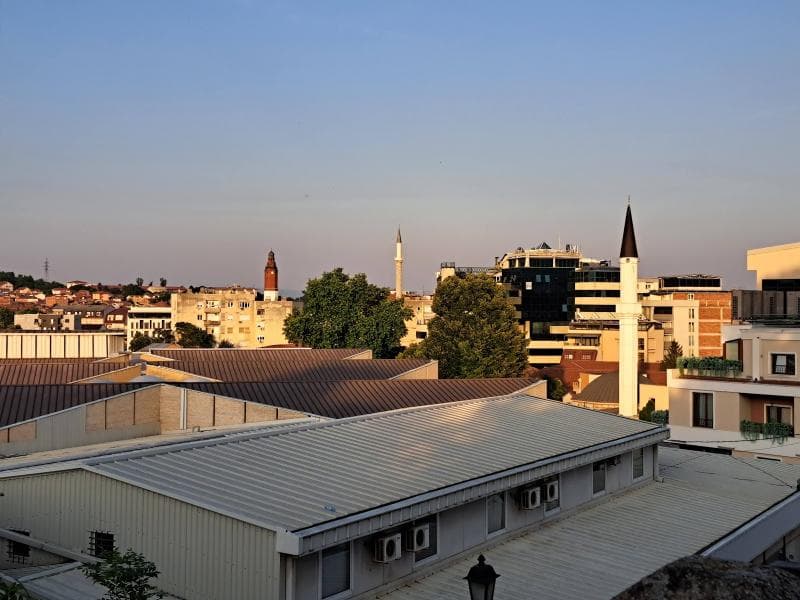
Explore the majestic Stone Entrance Gate of Mustafa Pasha Mosque in Skopje, North Macedonia. Discover its rich Ottoman history and stunning architecture.
Overview
Perched majestically above Skopje's historic Old Bazaar, the Mustafa Pasha Mosque stands as a timeless emblem of Ottoman architecture. Within this architectural masterpiece, the ‘Stone Entrance Gate’ serves not merely as an entry point, but as a grand statement of craftsmanship and history, inviting visitors into a realm of serene contemplation. This revered sub-spot, an integral part of the mosque, is a testament to the enduring legacy of the Ottoman Empire in North Macedonia, offering a glimpse into centuries of cultural and religious devotion. Its prominent position ensures it is visible from various points across the city, commanding attention with its elegant lines and historical depth.
The Mustafa Pasha Mosque, with its striking dome and slender minaret, is one of the most well-preserved religious monuments from the Ottoman period in the Balkans. The Stone Entrance Gate, framed within a beautiful porch, acts as a visual prelude to the mosque's tranquil interior and its rich history, offering a profound sense of arrival for every traveler.
History & Cultural Background
The Mustafa Pasha Mosque was erected in 1492 by Çoban Mustafa Pasha, a prominent vizier who served under Ottoman Sultans Bayezid II and Selim I. The founding date of the mosque is notably inscribed on a marble plaque positioned directly above the main portal, further cementing its historical significance.
Originally, the mosque was part of a much larger complex, known as a waqf, which included a caravanserai (an inn for travelers), a medresse (religious school), an imaret (a communal soup kitchen), and a mekteb (an elementary school). Over the centuries, while many of these ancillary structures have faded into history, the mosque itself, along with Mustafa Pasha's türbe (mausoleum) and the stone sarcophagus of his daughter Umi, have remarkably endured.
The mosque has witnessed the passage of time, surviving various historical events, including the devastating 1963 Skopje earthquake. Following this, a comprehensive five-year restoration, generously funded by the Turkish government agency TİKA, concluded in 2011, ensuring the preservation of its original 15th-century form for future generations.
What Makes It Special
The Stone Entrance Gate of the Mustafa Pasha Mosque is far more than just an entryway; it is a meticulously crafted portal that showcases the pinnacle of early Ottoman architectural artistry. Characterized by its monumentality, the entrance portal is framed within a richly profiled rectangular frame. The top of this frame is elegantly adorned with a wreath of alternating trefoil motifs, reflecting the artistic achievements in the treatment of marble during its construction.
Preceding the main entrance, a magnificent porch spans the northern side of the mosque, supported by four slender marble columns that form three pointed arches. This entire antechamber is gracefully covered by three smaller domes, adding to the grandeur and aesthetic appeal of the approach. The choice of white marble for this porch, along with the detailed stonework of the gate itself, highlights the high quality of materials and the skilled craftsmanship employed in its creation.
The entrance is a key element of the mosque's Constantinople architectural style, designed to create a sense of awe and reverence even before one steps inside. It embodies the harmonious proportions and aesthetic values typical of monumental Ottoman structures of its era.
Stories, Fun Facts & Local Details
One of the most compelling details lies in the inscription above the Stone Entrance Gate itself. This marble plaque, with its Arabic texts, precisely marks the construction year of 1492, offering a direct historical link to its founder, Mustafa Pasha.
Within the mosque complex, you'll discover not only the mosque but also the hexagonal türbe of Mustafa Pasha, built in 1519, which is unique for its entirely white marble exterior—a rare feature for Ottoman tombs in North Macedonia. Nearby lies a lavishly decorated stone sarcophagus believed to house the remains of his daughter, Umi, adorned with intricate vegetative ornaments and Persian calligraphic inscriptions.
The serene public grounds also feature a traditional fountain and a beautifully maintained rose garden, offering a peaceful respite from the bustling city below. It is said that the vibrant floral ornamentation inside the mosque, with grey plant motifs against a blue background, represents one of the most resplendent achievements in Islamic wall painting in the region, mirroring the artistic excellence found in Istanbul.
Visitor Perspective
Approaching the Mustafa Pasha Mosque and its Stone Entrance Gate is an experience that transports you back in time. Situated on a plateau, the mosque offers sweeping panoramic views of the Old Bazaar with its tiled roofs and the modern city beyond, providing a unique vantage point to appreciate Skopje's diverse landscape.
As you step through the monumental gate, you are greeted by a tranquil courtyard, often adorned with a fragrant rose garden. Visitors are welcome to explore the mosque outside of prayer times. To ensure a respectful visit, guests are kindly asked to adhere to customary modesty rules, which include wearing modest attire and removing shoes before entering the prayer hall.
The journey through the Stone Entrance Gate is more than just passing a threshold; it's an immersive step into Skopje's rich Ottoman heritage, offering a moment of peace and a deep connection to the city's profound cultural and architectural story. Information pamphlets are often available at the entrance, offering historical context and guidelines for visitors.
Coordinates: 21.435417, 42.00194
View on Google Maps💬 How Travelers Describe This Place
Based on community votes
Must See
853Unique
639Interesting
569Photogenic
128Beautiful
93
Traveler Stories
Discover memorable experiences shared by travelers who have visited this place.
No traveler stories yet.
Be the first traveler to share what made this place memorable.

Tour
By
Spot
Discover amazing places around the world. Your journey starts here.
Explore
© 2026 TourBySpot. All rights reserved.