Minaret
Skopje, North Macedonia
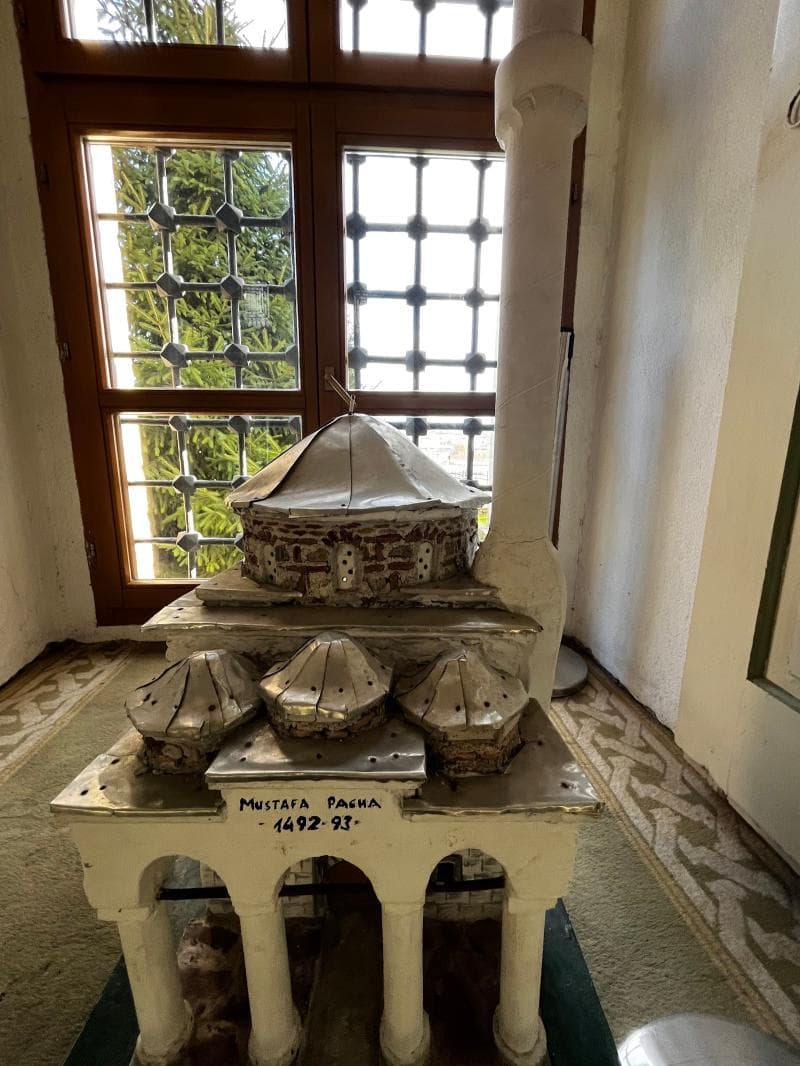
Explore the Minaret of Mustafa Pasha Mosque in Skopje, North Macedonia. Discover this 15th-century Ottoman landmark's history, architecture, and cultural significance.
Overview
Perched majestically above Skopje's bustling Old Bazaar, the Minaret of the Mustafa Pasha Mosque stands as a timeless sentinel, a slender spire reaching towards the heavens. This iconic structure is an integral part of one of North Macedonia's most significant Ottoman monuments, embodying centuries of history and cultural confluence. Built in 1492, the mosque and its minaret represent a pristine example of early imperial Ottoman architecture, having largely retained their original form despite the passage of time and various historical events. The minaret itself is more than just a functional element for the call to prayer; it is a landmark, a guiding beacon for both locals and travelers navigating the historic heart of Skopje.
History & Cultural Background
The Mustafa Pasha Mosque, including its distinctive minaret, was commissioned in 1492 by Çoban Mustafa Pasha, a prominent vizier under Ottoman Sultans Bayezid II and Selim I. Its construction dates are notably preserved on a marble plaque above the main portal, serving as a direct link to its origins. The mosque was designed in the Constantinople architectural style, which is characteristic of early Ottoman design and emphasizes harmonious proportions and a certain dignified simplicity. Unlike many historical structures that undergo numerous alterations, the Mustafa Pasha Mosque has remained remarkably intact from its initial construction, with no major structural additions throughout the centuries.
Its enduring presence testifies to the longevity of Ottoman influence in the Balkans. Although it sustained damage during the powerful 1963 Skopje earthquake, a comprehensive five-year restoration, generously funded by the Turkish government, ensured its meticulous preservation, concluding in August 2011. This dedication to maintaining its original splendor allows visitors today to experience a piece of history almost exactly as it was conceived over 500 years ago.
What Makes It Special
The Minaret of the Mustafa Pasha Mosque is particularly special due to its remarkable preservation and its commanding presence in Skopje's skyline. Rising to an impressive height of 47 meters, or sometimes cited as 42 meters, it is one of Skopje's most prominent landmarks. Constructed from limestone, its slender and elegant form is a quintessential example of Ottoman minaret design, characterized by its delicate stonework details.
Unlike the more elaborate, multi-balconied minarets seen in later Ottoman periods, this single minaret embodies the refined aesthetics of the 15th century. It stands as a testament to the architectural prowess of its time, its sturdy yet graceful structure having withstood centuries of natural forces. The minaret's pristine condition, coupled with the largely unaltered mosque complex, offers an authentic glimpse into the past, distinguishing it from many other historical sites that have undergone significant modernization or reconstruction.
Stories, Fun Facts & Local Details
Beyond its architectural grandeur, the Minaret of the Mustafa Pasha Mosque is intertwined with fascinating stories and local charm. From its elevated position, the minaret offers breathtaking panoramic views, serving as a natural vantage point over the tiled roofs of the Old Bazaar and the modern city stretching towards the Vardar River. Many locals and returning visitors speak of the unique experience of hearing the call to prayer (adhan) emanating from this minaret, a sound that has echoed across Skopje for over five centuries, connecting daily life to a profound spiritual heritage.
The mosque complex also includes a tranquil rose garden, considered one of the most beautiful in the city, adding a serene and fragrant dimension to the historic site. Within the grounds, visitors can find the türbe (mausoleum) where Mustafa Pasha himself is interred, alongside the intricately carved stone sarcophagus believed to belong to his daughter, Umi, adorned with detailed Persian calligraphic inscriptions. These personal details add a layer of human story to the imposing stone architecture, inviting contemplation about the lives connected to this enduring monument.
Visitor Perspective
For the curious traveler, visiting the Minaret and the Mustafa Pasha Mosque offers a deeply enriching experience. Approaching the mosque, situated on a plateau above the Old Bazaar, provides an immediate sense of entering a sacred and historical space. As an active place of worship, the mosque welcomes non-Muslim visitors outside of prayer times, allowing an opportunity to appreciate its interior beauty, including the intricate 16th-century grey-and-blue floral paintings and calligraphic Quranic levhas adorning its walls and dome.
To ensure a respectful visit, modest attire is required; women are generally asked to cover their hair, and both men and women should avoid shorts or short-sleeved shirts. Visitors are also asked to remove their shoes before entering the prayer hall. There is typically no entrance fee, though donations are appreciated and contribute to the mosque's ongoing preservation. A visit often includes time spent wandering through the peaceful courtyard and rose garden, absorbing the calm atmosphere that beautifully contrasts with the lively bazaar below. The opportunity to witness such a well-preserved piece of history, offering both spiritual tranquility and magnificent views, makes the Minaret of the Mustafa Pasha Mosque an unforgettable stop in Skopje.
Coordinates: 21.435417, 42.00194
View on Google Maps💬 How Travelers Describe This Place
Based on community votes
Must See
545Unique
211Photogenic
123Interesting
74Beautiful
20
Traveler Stories
Discover memorable experiences shared by travelers who have visited this place.
No traveler stories yet.
Be the first traveler to share what made this place memorable.

Tour
By
Spot
Discover amazing places around the world. Your journey starts here.
Explore
© 2026 TourBySpot. All rights reserved.