Mount Lycabettus
Athens, Greece
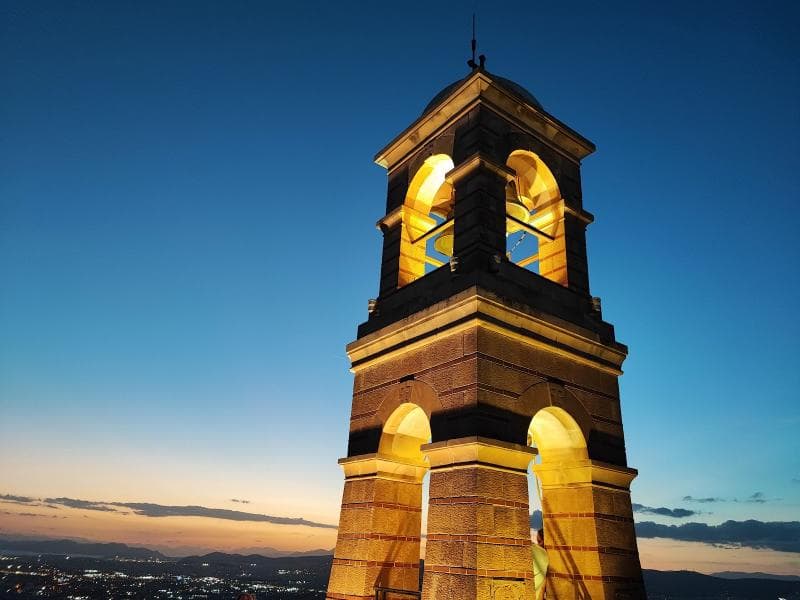
Discover Mount Lycabettus, the highest point in central Athens, Greece. Enjoy 360-degree panoramic views, visit St. George Chapel, and explore its rich history and mythology.
Overview
Mount Lycabettus, also known as Lycabettos or Lykavittos, is a prominent Cretaceous limestone hill soaring above the heart of Athens, Greece. Standing at an elevation of 277 meters (about 909 feet) above sea level, it proudly claims the title of the highest point in central Athens. Its distinct conical shape, often seen dominating the city's skyline, makes it a natural landmark, offering unparalleled panoramic views that stretch across the sprawling urban landscape to the distant Aegean Sea. The base of the hill is beautifully covered with pine trees, a result of reforestation efforts in the late 1800s, providing a striking green contrast against the jagged limestone summit.
History & Cultural Background
The history of Mount Lycabettus is deeply intertwined with ancient Greek mythology. The most famous legend attributes its creation to the goddess Athena. It is said that while she was carrying a massive limestone rock from the Pallene peninsula to fortify the Acropolis, she received surprising news about the opening of the 'box of Erichthonius' – a secret child she was meant to guard. Startled by this revelation, Athena accidentally dropped the rock, and it landed to form Mount Lycabettus. Another theory suggests the name 'Lycabettus' originates from the Greek word 'lycos,' meaning 'wolf,' translating roughly to 'the hill that is walked by wolves,' reflecting a time when wolves might have roamed the area. Before 1832, the hill was also known by the name Angchesmos.
In classical antiquity, the summit of Lycabettus was home to a smaller temple dedicated to Zeus. Despite its prominent position, the mountain remained a relatively quiet place without significant permanent human habitation throughout much of its history. During the Byzantine period, it served as a refuge for Christian hermits. The 19th century saw the construction of the Chapel of St. George, a whitewashed church that now crowns the summit, often built upon the site of older structures, including possibly the ancient temple of Zeus or an older Byzantine church dedicated to Prophet Elijah.
What Makes It Special
The primary allure of Mount Lycabettus is its breathtaking 360-degree panoramic vista. From its summit, visitors can witness the entire city of Athens unfolding beneath them, with iconic landmarks such as the Acropolis and Parthenon, the Temple of Olympian Zeus, the Panathenaic Stadium, and the Ancient Agora clearly visible. On clear days, the view extends far beyond the urban sprawl, encompassing the Saronic Gulf and its scattered islands.
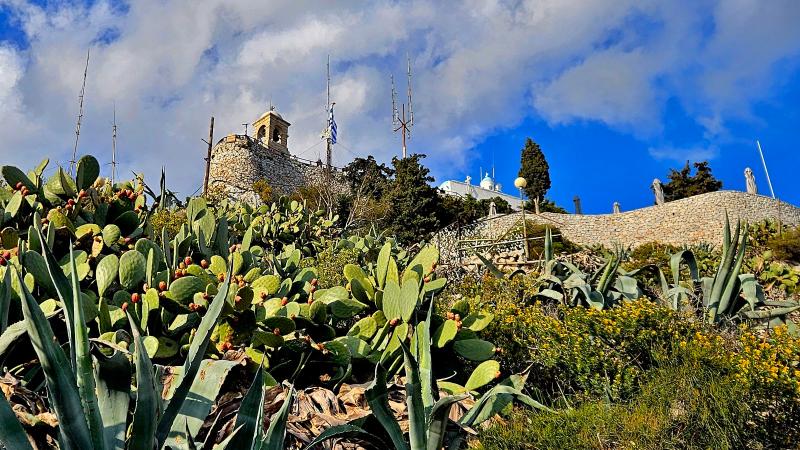
Perched atop the peak is the charming, whitewashed Chapel of St. George, a 19th-century Orthodox church that stands as a beacon. Inside, visitors can often admire intricate religious art and frescoes. Just below the chapel, the open-air Lycabettus Theatre, with a capacity of 3,000 seats, has historically hosted numerous national and international concerts and cultural events, especially during the summer months.
Stories, Fun Facts & Local Details
Beyond the well-known myth of Athena dropping the rock, local lore suggests various origins for Lycabettus' name, tying it to wolves ('lycos') or even a Pelasgian, pre-Mycenaean origin meaning 'mastoid hill'. The Chapel of St. George, a beloved pilgrimage site, holds special significance. On the eve of Easter Sunday, a poignant candlelit procession gracefully winds its way down the hill's wooded slopes, a truly meaningful local tradition. Interestingly, during World War II, Mount Lycabettus played a strategic role in the city's defense, housing an anti-aircraft gun, a subtle reminder of its tumultuous past.
Visitor Perspective
Mount Lycabettus is a must-visit for any traveler to Athens, offering a unique perspective of the city. While it's possible to hike up the winding paths through the pine trees, which can be a challenging but rewarding experience, especially during cooler months, many visitors opt for the Lycabettus Funicular. This funicular railway, inaugurated in 1965, takes passengers through a tunnel directly to the summit in just about three minutes, providing a convenient and quick ascent. Alternatively, taxis can take visitors to a parking area near the top, from where a short walk leads to the summit.
The views are particularly magical during sunset, as the city lights begin to twinkle and the Acropolis glows, creating a truly unforgettable spectacle. At the summit, a cafe and a fine-dining restaurant, Orizontes, offer opportunities to relax and enjoy refreshments or a meal with a view.
Coordinates: 23.7392, 37.9757
View on Google Maps💬 How Travelers Describe This Place
Based on community votes
Beautiful
996Interesting
673Must See
585Unique
143Photogenic
80
Traveler Stories
Discover memorable experiences shared by travelers who have visited this place.
No traveler stories yet.
Be the first traveler to share what made this place memorable.
Things to see at Mount Lycabettus




Tour
By
Spot
Discover amazing places around the world. Your journey starts here.
Explore
© 2026 TourBySpot. All rights reserved.