St. George Chapel
Athens, Greece
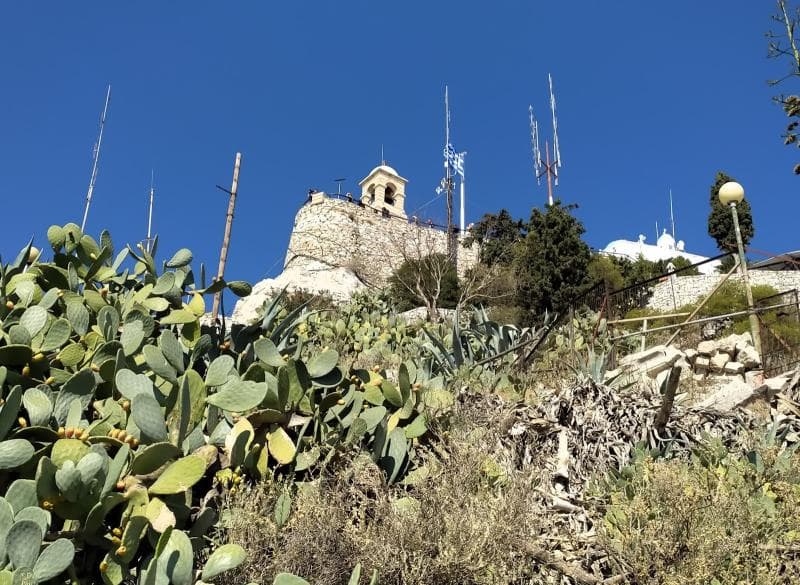
Discover St. George Chapel on Mount Lycabettus, Athens, Greece. Explore its rich history, iconic whitewashed architecture, and enjoy unparalleled panoramic views of the city.
Overview
Perched majestically atop Mount Lycabettus, the highest point in central Athens, Greece, St. George Chapel (Agios Georgios) stands as a dazzling white beacon against the Athenian sky. This iconic, single-aisle, domed basilica offers more than just spiritual solace; it provides unparalleled, panoramic vistas that stretch across the entire city, encompassing legendary landmarks like the Acropolis, the Temple of Olympian Zeus, and even the shimmering Aegean Sea on clear days. Visible from almost every corner of the Greek capital, the chapel is a testament to enduring faith and a highlight for any traveler seeking both breathtaking views and a touch of history.
History & Cultural Background
The history of St. George Chapel is deeply intertwined with the ancient and spiritual layers of Mount Lycabettus itself. The current whitewashed church, a striking example of a single-aisle, domed basilica, was primarily constructed and shaped into its present form during the latter part of the 18th century, with some sources dating its establishment to around 1782. However, its roots delve much deeper. Before this Christian edifice, an older Byzantine church occupied the sacred site. Remarkably, historical and archaeological findings suggest that even further back in antiquity, the summit was home to an altar dedicated to Zeus Akraios, the 'Zeus of the Heights'.
For a period, due to the challenging ascent of the hill, the site fell into disrepair. It was a Cretan monk named Emmanuel Louloudakis who, in 1834, undertook the task of clearing the ruins and rebuilding a chapel, dedicating it to both Prophet Elias and St. George. The distinctive bell tower that graces the chapel today was a significant addition, built in 1902 through a donation from Nicholas Thon, a prominent landowner, with the large bell itself being a gift from Queen Amalia to the church. Flanking the main chapel are two smaller chapels, dedicated to Prophet Elias and St. Constantine, both added around 1885.
The chapel honors Saint George, one of Christianity's most revered soldier saints. Born in Cappadocia around 280 AD, St. George rose through the ranks of the Roman army. He was martyred in 303 AD for his Christian faith during the persecutions under Emperor Diocletian. His feast day is traditionally celebrated on April 23, though it moves to Easter Monday if April 23 falls before Easter. He is widely known as the 'dragon-slayer' and is a patron saint, particularly associated with soldiers, and his image often depicts him on horseback, spearing a dragon.
What Makes It Special
Beyond its deep historical layers and religious significance, St. George Chapel offers an experience that captivates the senses and soul. What truly sets it apart is its commanding position atop Mount Lycabettus, providing an unmatched 360-degree panoramic spectacle of Athens and its sprawling basin. From this vantage point, visitors can trace the city's ancient past and vibrant present, viewing architectural marvels and the natural beauty of the Saronic Gulf.
The whitewashed simplicity of the chapel's exterior, a stark contrast against the clear blue Athenian sky or the dramatic hues of sunset, makes it an unforgettable landmark. Inside, despite its modest size, the chapel houses impressive wall frescoes and iconic imagery, including a famous metal icon depicting Saint George on his horse, embodying a sense of enduring tradition and artistry. It stands as a symbol of spiritual continuity, having evolved from an ancient pagan worship site, through Byzantine Christianity, to its present form, reflecting the ebb and flow of Athenian history.
Stories, Fun Facts & Local Details
Mount Lycabettus itself is steeped in captivating Greek mythology. One of the most famous legends attributes the hill's very formation to the goddess Athena. The myth tells that Athena was carrying a large limestone rock to fortify the Acropolis, but upon receiving some bad news from a raven, she was startled and dropped the rock, which then became Lycabettus.
The name 'Lycabettus' is also a subject of local lore, believed by many to derive from the Greek word 'lykos', meaning 'wolf'. This suggests that in ancient times, the hill was a haven for wolves, earning it the evocative name, 'the one that is walked by wolves'. Adding to its mystique, local stories whisper of hidden caves and secret tunnels beneath the hill, possibly used for military purposes, leading to an 'underground Athens'.
At night, St. George Chapel is beautifully illuminated, transforming it into a glowing landmark that shines brightly over the nocturnal city, a reassuring presence visible from below.
Visitor Perspective
Reaching St. George Chapel is an experience in itself, offering a choice between convenience and a rewarding climb. The most popular method is the Lycabettus Funicular, a cable car that ascends from Aristippou Street in the Kolonaki neighborhood. The journey itself is swift, lasting approximately three minutes, though it is entirely enclosed within a tunnel, meaning there are no views during the ride.
For those who prefer a more active approach, walking trails wind up the hill. While steep, especially during the warmer months, the ascent offers increasingly spectacular vistas with every step. Upon reaching the upper station of the funicular or the end of the walking path, a final set of approximately 133 stairs leads directly to the chapel. Taxis can also take visitors close to the summit, leaving only a short climb to the chapel. From the viewing platform directly in front of the chapel, photographers and sightseers alike can capture the breathtaking expanse of Athens. Many travelers recommend timing a visit for sunrise or sunset, when the light paints the city in dramatic colors, creating truly unforgettable moments. Near the summit, visitors will find restaurants and cafes, perfect for savoring a meal or a drink while soaking in the majestic scenery. Occasionally, the air might carry the evocative sound of monks chanting from within the chapel, adding to the spiritual ambiance of this remarkable Athenian landmark.
Coordinates: 23.74339, 37.98191
View on Google Maps💬 How Travelers Describe This Place
Based on community votes
Beautiful
839Photogenic
445Must See
388Unique
289Interesting
141
Traveler Stories
Discover memorable experiences shared by travelers who have visited this place.
No traveler stories yet.
Be the first traveler to share what made this place memorable.

Tour
By
Spot
Discover amazing places around the world. Your journey starts here.
Explore
© 2026 TourBySpot. All rights reserved.