Sunset Viewpoints
Athens, Greece
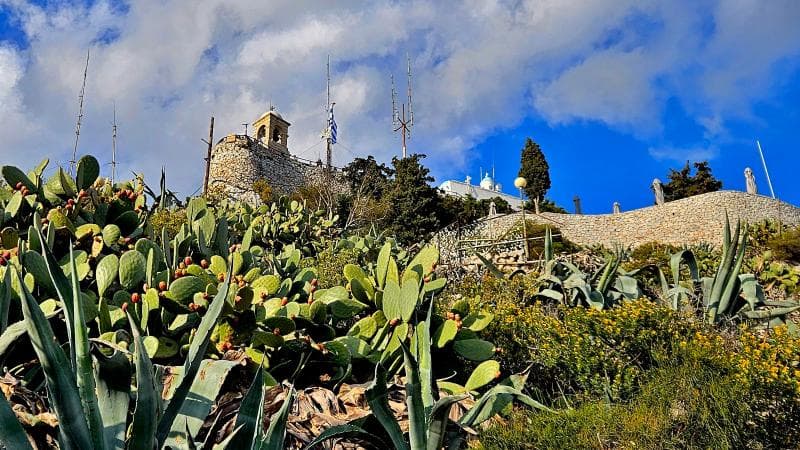
Experience breathtaking sunset views from Mount Lycabettus in Athens, Greece. Discover panoramic vistas of the Acropolis, Saronic Gulf, and city lights from this iconic peak.
Overview
Perched majestically above the vibrant cityscape, the Sunset Viewpoints of Mount Lycabettus in Athens, Greece, offer an unparalleled spectacle. As the highest point in central Athens, standing at 277 meters (908 feet) above sea level, Lycabettus provides a breathtaking 360-degree panorama of the sprawling Attic basin, stretching from the ancient Acropolis to the shimmering Saronic Gulf. It is a favored destination for both locals and travelers seeking to witness the enchanting Athenian sunset, transforming the city into a canvas of golden hues and twinkling lights. At its summit, visitors will discover the charming 19th-century Chapel of Saint George, a popular restaurant, and a historic open-air theater.
History & Cultural Background
Mount Lycabettus is steeped in ancient Greek mythology. One popular legend attributes its formation to the goddess Athena, who, while carrying a colossal limestone rock from the Pallene peninsula to fortify the Acropolis, dropped it upon receiving startling news from a raven. This dropped stone is said to have become Mount Lycabettus. The mountain's name itself, 'Lycabettus' or 'Lykavittos,' is believed to derive from the Greek word 'lycos,' meaning 'wolf,' suggesting that the hill was once a refuge for these wild animals.
Historically, the hill has served various purposes. In ancient times, it was a sacred site dedicated to Zeus, the king of the gods, and Pan was also worshipped on its slopes. During the Byzantine period, it became a sanctuary for Christian hermits establishing monasteries and chapels. While it once appeared bare, significant afforestation efforts between 1880 and 1915 transformed its slopes into the lush, pine-covered landscape seen today. The whitewashed Chapel of Saint George, a prominent landmark at the peak, dates back to the 19th century. During the Greco-Italian war (1940-1941), underground structures within the mountain housed air defense headquarters and a repository for important government documents, revealing its strategic significance through the ages.
What Makes It Special
The allure of Mount Lycabettus lies in its unparalleled vantage point. From its summit, visitors are treated to a magnificent, unobstructed panorama that captures Athens in its entirety. You can gaze upon iconic landmarks such as the Acropolis and Parthenon, the Temple of Olympian Zeus, the Panathenaic Stadium, and the Ancient Agora. Beyond the city's historical heart, the view extends to the bustling port of Piraeus, the sparkling waters of the Saronic Gulf, and the distant mountains that frame the Attica region. It's widely regarded as the city's prime location for sunset viewing, where the setting sun bathes the ancient city in a warm, golden light, and as darkness falls, Athens transforms into a mesmerizing tapestry of illuminated buildings and historical sites.
Adding to its charm, the summit hosts the picturesque Chapel of Saint George, an open-air theater that has seen numerous international concerts, and a selection of cafes and restaurants, including the fine-dining establishment Orizontes. These amenities allow visitors to extend their experience, enjoying a meal or a drink with one of the most spectacular backdrops in Europe.
Stories, Fun Facts & Local Details
The mythical creation of Lycabettus by Athena's dropped rock is a vivid reminder of the deep connection between Greek geography and its rich pantheon of gods and goddesses. The name 'Lycabettus' is not only linked to wolves but also, in some interpretations, to 'lykavges,' signifying the 'first light,' as the hill's peak is among the first places in Athens to catch the morning sun. A lesser-known detail is the small Church of Saint Isidore, tucked away in a cave on the hill's southwest side, adding to the mountain's mystical aura.
For those planning a visit, a crucial tip is to arrive approximately 30 to 60 minutes before sunset to secure a prime viewing spot, as it can get quite crowded, especially during peak season. Many seasoned travelers also recommend staying a little longer after the sun dips below the horizon to experience the magical 'blue hour,' when the city lights fully come alive, creating a different yet equally stunning vista.
Visitor Perspective
Reaching the summit of Mount Lycabettus is part of the adventure. Travelers have several options: a scenic hike through the pine-covered paths, a quick ride via the funicular, or a taxi which drops off near the final stairwell. While the funicular offers convenience, it travels through a tunnel, so there are no views during the ascent. The hike, though potentially challenging, particularly during Athens' hot summers, rewards with closer engagement with the natural beauty and quieter viewpoints along the way. Essential items for hikers include comfortable footwear, ample water, sunscreen, and a hat. Regardless of how you ascend, the destination is a truly rewarding experience, offering an iconic Athens perspective that stays with you long after the sun has set. The Chapel of Saint George welcomes visitors, though modest attire is appreciated for entry.
Coordinates: 23.7392, 37.9757
View on Google Maps💬 How Travelers Describe This Place
Based on community votes
Must See
673Photogenic
336Interesting
219Unique
186Beautiful
80
Traveler Stories
Discover memorable experiences shared by travelers who have visited this place.
No traveler stories yet.
Be the first traveler to share what made this place memorable.

Tour
By
Spot
Discover amazing places around the world. Your journey starts here.
Explore
© 2026 TourBySpot. All rights reserved.