Funicular Railway
Athens, Greece
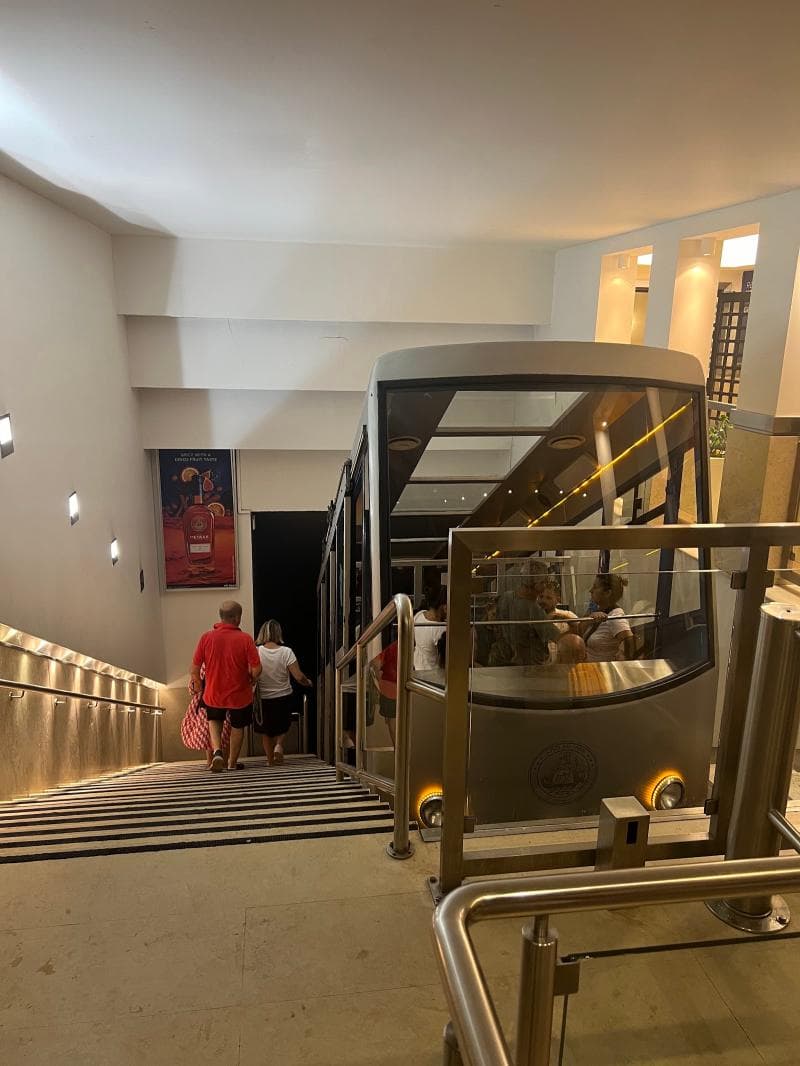
Ascend Mount Lycabettus with the Funicular Railway in Athens, Greece. Explore its history, unique tunnel journey, and panoramic city views.
Overview
Perched majestically above Athens, Greece, Mount Lycabettus offers unparalleled panoramic views of the sprawling city, extending all the way to the Saronic Gulf. For those seeking an effortless ascent to this breathtaking vantage point, the Funicular Railway provides a convenient and intriguing journey. Known locally as the 'Teleferik', this unique mode of transport swiftly carries visitors through the heart of the mountain, directly to its summit. While the ride itself unfolds entirely within a tunnel, concealing the cityscapes until arrival, the reward at the top is an expansive 360-degree spectacle of Athens' historical and modern tapestry. Operating consistently, the Funicular Railway makes reaching the highest point in central Athens an accessible adventure for all.
History & Cultural Background
Mount Lycabettus itself is steeped in myth and legend. Popular stories recount that its name, 'Lycabettus' (Lykavittos), derives from ancient Greek, suggesting it was once a refuge for wolves ('lycos' meaning wolf). Mythologically, the creation of the hill is attributed to the goddess Athena, who is said to have accidentally dropped a limestone mountain she was carrying for the construction of the Acropolis. This historical and mythical richness provides a compelling backdrop to the modern marvel of the Funicular Railway.
The Lycabettus Funicular Railway was brought into existence by the Greek Tourist Organisation (EOT), or Greek National Tourism Organization (GNTO), and first opened its doors to the public on April 18, 1965, with regular operations commencing the very next day. This engineering feat was designed to make the summit of Lycabettus, rising 277 meters (908 feet) above sea level, readily available to both Athenians and tourists alike. For nearly four decades, it served without interruption, becoming an integral part of the Athenian experience. In 2002, the Funicular underwent extensive refurbishment, including the replacement of its motor, hydraulic brake unit, electronic safety systems, control room, and even the two passenger cars, ensuring its continued safe and efficient operation.
What Makes It Special
The defining characteristic of the Lycabettus Funicular Railway is its subterranean journey. Unlike most funiculars that offer scenic views throughout their ascent, this one travels entirely within a tunnel cut into the hillside. While some might find the lack of immediate views during the three to five-minute ride surprising, it creates a sense of anticipation for the grand reveal at the top. Each of the two carriages can accommodate 30 to 34 passengers, operating simultaneously from opposite ends on a single track with a passing loop in the middle. This system efficiently transports approximately 300,000 visitors annually, highlighting its popularity and importance as an access point to one of Athens' most iconic landmarks.
Stories, Fun Facts & Local Details
The Funicular Railway is often referred to by locals as the 'Teleferik', a common term for cable cars or funiculars. Although the ride itself is within a tunnel, visitors have noted occasional, somewhat quirky, lighting displays inside, adding a touch of unexpected charm to the underground passage. The base station of the Funicular is conveniently located in the chic Kolonaki neighborhood, at the junction of Aristippou and Plutarchiou Streets. This area is known for its upscale shops and cafes, making the start of the journey to Lycabettus an experience in itself. From the summit, the sweeping views encompass major Athenian sights such as the Acropolis, the Parthenon, the ancient Temple of Olympian Zeus, the Panathenaic Stadium, and even the distant port of Piraeus. Many consider sunrise and sunset to be the most magical times to visit, when the city is bathed in golden light or sparkles with countless evening lights.
Visitor Perspective
The Funicular Railway offers a practical and comfortable alternative to hiking up Mount Lycabettus, especially appealing for those who prefer to conserve energy or are visiting during the warmer months. Operating daily from morning until late into the night, typically from 9:00 AM to 2:30 AM during summer, its frequent departures ensure minimal waiting times. While standard departures are every 30 minutes, during busy periods, services can be as frequent as every 10 minutes. At the peak of Lycabettus, visitors will find not only the quaint 19th-century Chapel of Saint George but also a restaurant and a cafe, providing opportunities for refreshment and relaxation with an unparalleled backdrop. It is worth noting, however, that the tunnel journey might not be suitable for individuals prone to claustrophobia. For those capable, hiking up and taking the Funicular down is often recommended, allowing for a diverse experience of the mountain's trails and saving the knees on the descent.
Coordinates: 23.7439, 37.9802
View on Google Maps💬 How Travelers Describe This Place
Based on community votes
Beautiful
953Unique
658Photogenic
585Interesting
69Must See
22
Traveler Stories
Discover memorable experiences shared by travelers who have visited this place.
No traveler stories yet.
Be the first traveler to share what made this place memorable.

Tour
By
Spot
Discover amazing places around the world. Your journey starts here.
Explore
© 2026 TourBySpot. All rights reserved.