Kunsthistorisches Museum
Vienna, Austria
Explore the Kunsthistorisches Museum in Vienna, Austria, home to the vast Habsburg art collections and masterpieces from across five millennia.
Overview
Nestled in the heart of Vienna, Austria, the Kunsthistorisches Museum, or Museum of Art History, stands as a magnificent testament to centuries of artistic patronage and cultural heritage. It is Austria's largest art museum, drawing over a million visitors annually to its opulent halls. The museum is one of the world's foremost institutions, housing rich collections that span an incredible five millennia, from ancient Egypt to the late 18th century. More than just a repository of art, the building itself is a breathtaking architectural marvel, an imperial statement designed to house the unparalleled treasures amassed by the powerful Habsburg dynasty.
Situated on the iconic Maria-Theresien-Platz, the Kunsthistorisches Museum forms a striking architectural ensemble with its identical twin, the Natural History Museum, directly opposite. This grand setting, part of Emperor Franz Joseph I's ambitious Kaiserforum project, invites visitors into a world where art, history, and imperial grandeur converge.
History & Cultural Background
The story of the Kunsthistorisches Museum is deeply intertwined with the legacy of the Habsburg Empire, one of Europe's most influential royal houses. For centuries, Habsburg rulers were avid collectors, accumulating an extraordinary array of paintings, sculptures, antiquities, and curiosities that served not only as decoration but as instruments of prestige and political power. These vast imperial collections, once scattered across various residences, eventually required a grand, centralized home, leading Emperor Franz Joseph I to commission the museum's construction.
Construction commenced in 1871 and concluded two decades later in 1891, when the museum officially opened its doors to the public. Renowned architects Gottfried Semper and Baron Karl von Hasenauer were responsible for its design. They envisioned a Neo-Renaissance masterpiece that would mirror the Natural History Museum, creating a harmonious and monumental facade on the Ringstrasse. The exterior, adorned with marble pilasters and statues of famous artists, perfectly encapsulates the museum's purpose, while the interior dazzles with magnificent halls, sweeping staircases, and richly decorated rooms featuring frescoes, stucco work, and gilt accents.
What Makes It Special
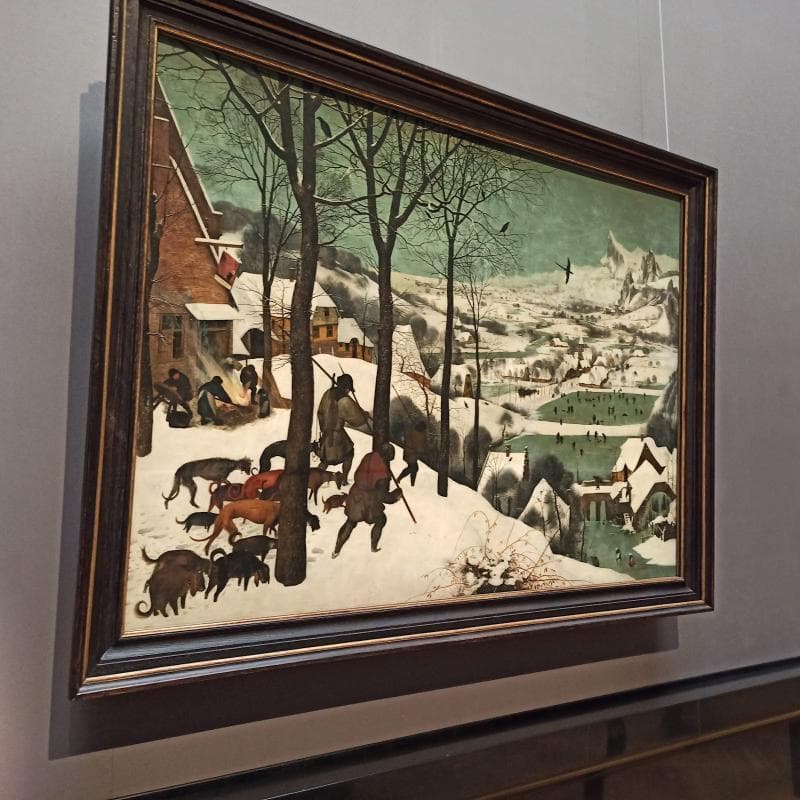
What truly sets the Kunsthistorisches Museum apart is the sheer breadth and quality of its collections, carefully curated over generations by the Habsburgs. It is a 'veritable fine art wonderland' with diverse departments each deserving of world fame. The museum's Picture Gallery is unparalleled, boasting masterpieces by some of the most celebrated artists in European history. Here, you'll find the world's largest collection of works by Pieter Bruegel the Elder, including his iconic 'The Tower of Babel' and 'Hunters in the Snow'. Other luminaries like Jan Vermeer ('The Art of Painting'), Rembrandt, Raphael ('Madonna in the Green'), Caravaggio, Velázquez, Titian, and Rubens also grace its walls.
Beyond paintings, the Kunstkammer Wien, or Chamber of Art and Wonders, is a museum within a museum, showcasing over 2,200 exquisite objects from the Renaissance and Baroque periods. Among its treasures is Benvenuto Cellini's 'Saliera', a magnificent gold and enamel salt cellar, and other intricate items like bronze statuettes, ivories, and precious stone vessels. The Egyptian and Near Eastern Collection takes visitors on a journey back thousands of years with over 17,000 artifacts, including mummies, sarcophagi, and the Chapel of Ka-ni-nisut. Similarly, the Collection of Greek and Roman Antiquities offers a rich display of ancient cameos, sculptures, and mosaics, while the Coin Collection boasts over 600,000 pieces spanning three millennia.
Stories, Fun Facts & Local Details
The Kunsthistorisches Museum is rich with stories. Imagine the Habsburg emperors, driven by a passion for collecting, acquiring these artistic marvels from across Europe and beyond. The very act of commissioning such a grand building was a statement of power and cultural sophistication. A fascinating detail for art enthusiasts is the Grand Staircase, where between the arches and columns, you can discover stunning paintings by Gustav Klimt, his younger brother Ernst Klimt, and Franz Matsch, commissioned in 1890 to portray important eras of European art.
A well-known incident involved the theft of Cellini's 'Saliera' in 2003, which was eventually recovered in a forest years later, marking the greatest art theft in Austrian history. For those who appreciate unique dining experiences, the museum's Cupola Hall transforms into an elegant café during the day and offers special gourmet dinners on Thursday evenings, allowing guests to enjoy refined cuisine under its lavish dome, sometimes even with after-hours access to the galleries.
Visitor Perspective
Visiting the Kunsthistorisches Museum is an immersive experience. From the moment you step through its main entrance on Maria-Theresien-Platz, the opulent architecture itself is part of the exhibition. Many visitors liken entering the museum to stepping into a palace, rather than a traditional art institution, with its grandiose rooms and halls. It's advisable to allocate at least half a day to explore its extensive collections properly. The museum aims to be accessible to all, offering special services for visitors with reduced mobility via its Burgring 5 entrance and providing touch tours for the blind and visually impaired, featuring cast reproductions of famous artworks. Whether you're a seasoned art historian or a curious traveler, the Kunsthistorisches Museum offers a profound journey through the artistic achievements of humanity, framed by the grandeur of imperial Vienna.
Coordinates: 16.3616, 48.203881
View on Google Maps💬 How Travelers Describe This Place
Based on community votes
Interesting
951Beautiful
748Must See
499Photogenic
491Unique
427
Traveler Stories
Discover memorable experiences shared by travelers who have visited this place.
No traveler stories yet.
Be the first traveler to share what made this place memorable.
Things to see at Kunsthistorisches Museum



Tour
By
Spot
Discover amazing places around the world. Your journey starts here.
Explore
© 2026 TourBySpot. All rights reserved.