Kunstkammer
Vienna, Austria
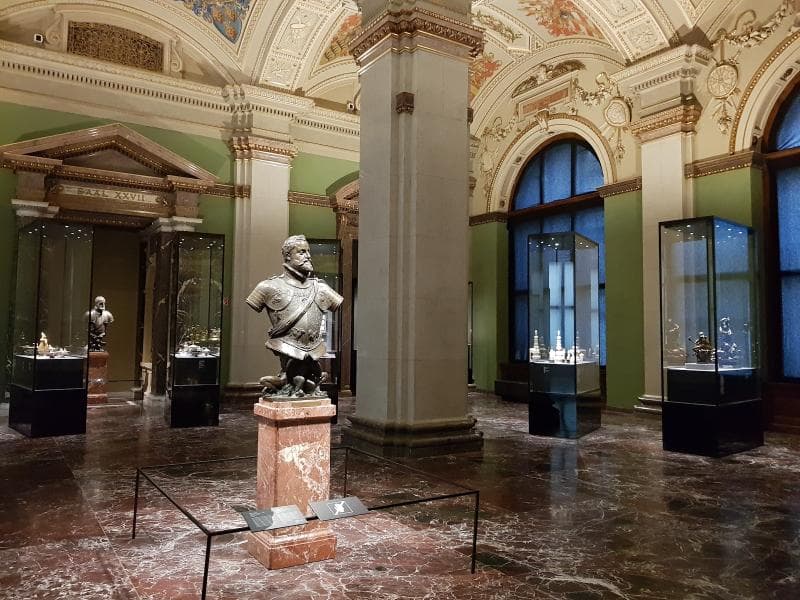
Explore the Kunstkammer, a spectacular chamber of art and wonders in Vienna, Austria's Kunsthistorisches Museum, home to Habsburg treasures like Cellini's 'Saliera'.
Overview
Deep within the opulent halls of the Kunsthistorisches Museum in Vienna, Austria, lies a captivating 'museum within a museum' – the Kunstkammer. This extraordinary collection, often referred to as a chamber of art and wonders or a cabinet of curiosities, offers a unique window into the fascinating world of the late Middle Ages through the Baroque era. It stands as one of the most significant collections of its kind globally, housing approximately 2,200 remarkable objects curated for their beauty, intellectual appeal, and sheer wonder.
Visitors can explore a meticulously arranged display of intricate artistry, rare natural artifacts, and ingenious mechanical devices. At the heart of this treasure trove is Benvenuto Cellini's iconic 'Saliera', a golden salt cellar that epitomizes the collection's grandeur and historical significance.
History & Cultural Background
The concept of a Kunstkammer emerged during the Renaissance and Baroque periods as a reflection of its owners' wealth, religious convictions, power, and the scientific and artistic advancements of their time. These encyclopedic collections aimed to encapsulate the entire spectrum of knowledge, presenting the world in miniature.
The Kunstkammer at the Kunsthistorisches Museum owes its existence largely to the passionate collecting efforts of the Habsburg dynasty. Notable contributors include Archduke Ferdinand II of Tyrol, Emperor Rudolf II, and Archduke Leopold Wilhelm, who diligently amassed these precious artifacts over centuries. Archduke Ferdinand II, for instance, built the prestigious collection at Ambras Castle, which later became part of the KHM's holdings.
The Kunsthistorisches Museum itself was a grand undertaking, commissioned by Emperor Franz Joseph I in the late 19th century to house the Habsburgs' extensive art collections and make them accessible to the public. Construction began in 1871 and the museum officially opened its doors in 1891, becoming a magnificent repository for these imperial treasures.
What Makes It Special
What truly sets the Kunstkammer apart is its unparalleled global significance and the sheer diversity of its exhibits. It showcases an astonishing array of objects crafted from rare and precious materials, including gold, silver, ivory, and exotic substances like ostrich eggs, corals, and even shark teeth.
Beyond its material value, the collection is a testament to human ingenuity. It features masterful bronze statuettes, delicate ivory carvings, virtuoso stone vessels, intricate timepieces, complex automata, and curious scientific instruments.
The undisputed centerpiece is the 'Saliera' by Benvenuto Cellini, a masterpiece of Mannerist goldsmithing created between 1540 and 1543. This ornate salt cellar, depicting Neptune representing the sea and Tellus symbolizing the earth, was commissioned by Francis I of France and later came into Habsburg possession. It is far more than a mere condiment holder; it's a symbolic representation of the cosmos and a profound statement of power and prestige.
Stories, Fun Facts & Local Details
One of the most captivating stories associated with the Kunstkammer involves the infamous theft of the 'Saliera' in 2003. This audacious heist saw the 16th-century gold and enamel sculpture disappear for nearly three years before its recovery in 2006. The thief, who had a background in alarm systems, eventually led police to its whereabouts, buried in a forest near Zwettl. This incident brought the 'Saliera' additional fame and cemented its legendary status.
The collection also includes fascinating objects like the 'Natternzungenkredenz' (Serpent's Tongue Credenza) from around 1450, which incorporates fossilized shark teeth. These teeth were once believed to be the mystical remains of dragons, adding a layer of ancient folklore to the scientific curiosities of the era.
Among the oldest exhibits is an ivory table dating back to the 9th century, showcasing the incredible longevity and historical depth of the Kunstkammer's holdings.
Visitor Perspective
Visiting the Kunstkammer is an immersive journey through history and art. The collection is thoughtfully presented across approximately 20 thematically designed spaces, allowing for a natural narrative flow as you explore.
Visitors typically spend around 1.5 hours marveling at the 'world of beauty, intellect, curiosities, and wonders'. Each gallery offers insights into its theme and historical relevance, with individual items accompanied by concise descriptions.
The Kunsthistorisches Museum, which houses the Kunstkammer, is accessible for all visitors. Those with reduced mobility or baby carriages can use a dedicated side entrance at Burgring 5, where visitor services are available to assist with access to elevators and within the building.
Coordinates: 16.36179, 48.20397
View on Google Maps💬 How Travelers Describe This Place
Based on community votes
Must See
948Beautiful
913Photogenic
499Unique
337Interesting
94
Traveler Stories
Discover memorable experiences shared by travelers who have visited this place.
No traveler stories yet.
Be the first traveler to share what made this place memorable.

Tour
By
Spot
Discover amazing places around the world. Your journey starts here.
Explore
© 2026 TourBySpot. All rights reserved.