Egyptian Collection
Vienna, Austria
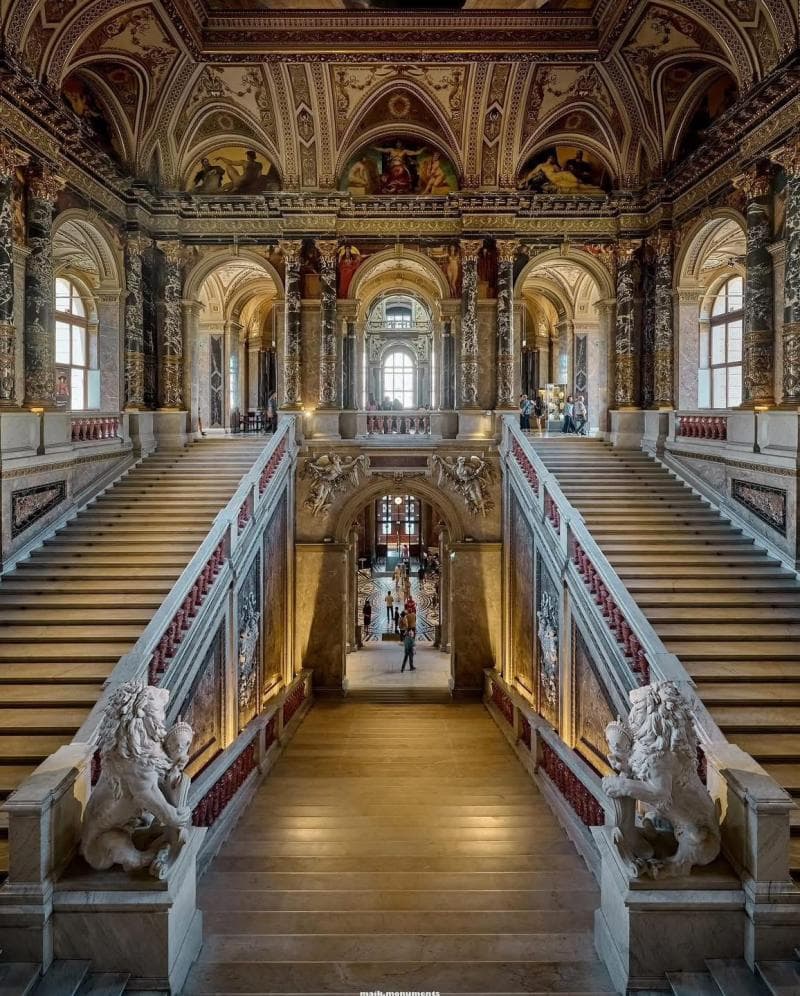
Explore the majestic Egyptian Collection at Vienna's Kunsthistorisches Museum, showcasing thousands of ancient artifacts from pharaohs to funerary items.
Overview
Step into the magnificent Kunsthistorisches Museum in Vienna, Austria, and journey back in time through its renowned Egyptian and Near Eastern Collection. This impressive sub-spot houses one of the most significant collections of ancient Egyptian antiquities in Europe, boasting between 17,000 and 18,500 objects. The artifacts on display span an incredible period of approximately 4,000 to 5,000 years, stretching from the Predynastic Period (around 4500 BCE) to the early Christian era. Located on the ground floor of the grand museum, the collection offers a comprehensive look at the artistic and cultural history of ancient Egypt, as well as contributions from Nubia, Mesopotamia, and the Arabian Peninsula.
History & Cultural Background
The origins of Vienna's Egyptian Collection are deeply intertwined with the Habsburg imperial family's passion for collecting. Its roots trace back to the 18th-century Cabinet of Coins and Antiques. While some early acquisitions, such as the statue of Gemnefhorbak, date back to around 1560, the collection saw substantial growth in the 19th century. A pivotal moment occurred in 1821 when physician Dr. Ernst August Burghard acquired nearly 4,000 objects in Egypt, significantly expanding the collection's holdings. Further enrichment came in 1878 with the integration of Archduke Ferdinand Maximilian's Miramar collection.
In the early 20th century, Austrian-financed archaeological excavations in Giza, led by Hermann Junker, played a crucial role in shaping the collection, contributing significantly to its status as one of the most important outside of Egypt for Old Kingdom monuments. When the Kunsthistorisches Museum officially opened in 1891, the Egyptian Collection was given a prominent role, with its galleries lavishly designed in an authentic Egyptian style. This architectural commitment included the installation of three original 6-meter-high monolithic columns, brought directly from Egypt and gifted to Emperor Franz Joseph I in 1869, which dramatically support the ceiling of the main gallery.
What Makes It Special
What truly sets the Egyptian Collection apart is its remarkable breadth and depth, particularly its unparalleled representation of Old Kingdom monuments outside of Egypt. Visitors are treated to an immersive experience, where the very architecture of the exhibition space, with its Egyptian-themed walls, ceilings, and door arches, enhances the journey through ancient history. The collection showcases a diverse array of artifacts, from majestic royal statues and intricate reliefs to beautifully decorated caskets, vital funerary items, and even an original cult chamber from an official's tomb in Giza.
Beyond ancient Egypt, the collection thoughtfully includes significant objects from neighboring regions such as Nubia, Mesopotamia, and the Arabian Peninsula, demonstrating the interconnectedness of these ancient cultures. This vast array provides a unique opportunity to explore thousands of years of human civilization through meticulously preserved and presented objects.
Stories, Fun Facts & Local Details
Among the countless artifacts, some hold particularly intriguing tales. For instance, the statue of Khai-hapi has a unique provenance, as it was discovered right in Vienna in 1800, within Roman-period finds, before joining the imperial collections. Archduke Ferdinand Maximilian, brother of Emperor Franz Joseph, was such an avid collector that his impressive collection of around 2,000 objects was originally destined for a museum in Mexico, where he briefly reigned as emperor. His untimely death, however, led to its incorporation into Vienna's imperial collection instead.
A fascinating local detail is the presence of reproductions of wall paintings from the tomb of nomarch Chnum-hotep II. These magnificent replicas were initially created for the 1873 Vienna World's Fair and were later incorporated into the museum's Egyptian galleries, offering a glimpse into how ancient Egypt captured the imagination of 19th-century Vienna. These wall tapestries and ceiling paintings underwent extensive restoration in 2021, bringing their splendor back to life. The collection also features some charmingly unusual items, including mummified animals like a cat, crocodile, fish, and even a snake, alongside a tiny coffin crafted for a shrew, a divine animal associated with the sky god Horus.
Visitor Perspective
Exploring the Egyptian and Near Eastern Collection is an engaging experience that typically takes visitors about 1.5 hours. The immersive presentation, with its themed decor and impressively preserved artifacts, creates a profound sense of connection to a bygone era. As you wander through the galleries, which are thoughtfully divided by themes such as funerary cults, cultural history, sculpture and relief, and the development of writing, you'll encounter numerous highlights.
Must-see pieces include a rare 4th dynasty Reserve Head from Giza, the 5th dynasty tomb chapel of Ka-ni-nisut, and a captivating blue faience hippopotamus statuette. The monumental sarcophagus of Pa-de-pep from the 26th dynasty also leaves a lasting impression. For those seeking deeper insights, audio guides are available, and the museum regularly offers guided tours of the collection, providing expert commentary and revealing even more of its treasures. Prepare to be transported to the land of pharaohs and ancient civilizations right in the heart of Vienna.
Coordinates: 16.3617874, 48.2038016
View on Google Maps💬 How Travelers Describe This Place
Based on community votes
Interesting
950Must See
929Unique
858Photogenic
287Beautiful
275
Traveler Stories
Discover memorable experiences shared by travelers who have visited this place.
No traveler stories yet.
Be the first traveler to share what made this place memorable.

Tour
By
Spot
Discover amazing places around the world. Your journey starts here.
Explore
© 2026 TourBySpot. All rights reserved.