Grand Staircase
Vienna, Austria
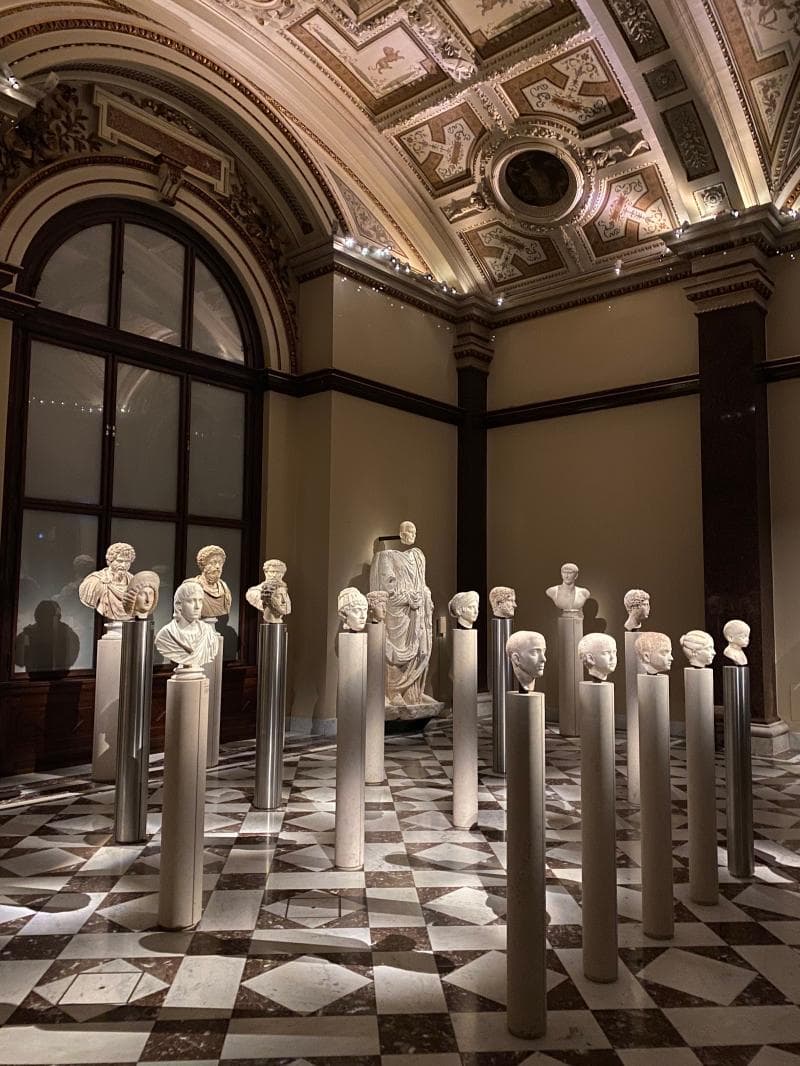
Explore the Grand Staircase of Vienna's Kunsthistorisches Museum, a breathtaking architectural and artistic marvel featuring Klimt's early works.
Overview
The Grand Staircase of the Kunsthistorisches Museum in Vienna, Austria, is far more than just a means of ascent; it is a monumental work of art and architecture in its own right. As visitors step into the opulent Kunsthistorisches Museum, they are immediately greeted by this breathtaking structure, a grand prelude to the artistic treasures housed within. Designed by architects Gottfried Semper and Baron Karl von Hasenauer, the staircase, inaugurated in 1891, stands as a testament to the grandeur of the late 19th-century Austro-Hungarian Empire. Its lavish design, adorned with marble, sculptures, and impressive paintings, sets the stage for an immersive cultural experience, guiding curious travelers to the museum's world-renowned collections.
History & Cultural Background
The construction of the Kunsthistorisches Museum, along with its twin, the Natural History Museum, was a pivotal part of Emperor Franz Joseph I's ambitious Ringstrasse project. These majestic buildings were conceived to house the vast art collections of the Habsburg dynasty and make them accessible to the public. The Grand Staircase, central to the museum's design, reflects the Renaissance Revival style prevalent at the time, characterized by its symmetry and elaborate ornamentation. The decoration of the staircase involved some of the era's most prominent artists. Hans Makart was initially commissioned for the overall scheme, completing the lunette pictures before his untimely death in 1884. Subsequently, the 'Maler-Compagnie' – a collective comprising the young Gustav Klimt, his brother Ernst Klimt, and their colleague Franz Matsch – was tasked with creating the spandrel and intercolumniation paintings. The magnificent ceiling painting, titled 'Apotheosis of the Renaissance,' was executed by Mihály Munkácsy.
What Makes It Special
What truly distinguishes the Grand Staircase is its harmonious blend of architectural splendor and artistic masterpieces. At its halfway point, visitors encounter Antonio Canova's striking sculpture, 'Theseus Defeating the Centaur.' Commissioned by Napoleon and later acquired by Emperor Franz I, this white marble piece has graced the staircase since 1891, adding a classical touch to the imperial setting. However, perhaps the most renowned artistic contributions are the spandrel paintings by Gustav Klimt, Ernst Klimt, and Franz Matsch. Gustav Klimt, then only 29, personified various periods of European art in human form within the triangular areas between the columns and arches. These works depict eras such as Early Italian Painting, Ancient Egypt, Ancient Greece, and the Roman and Venetian Quattrocento, offering a captivating journey through art history even before reaching the galleries. The staircase's lavish materials, including black and white marble, stucco ornamentation, and gold-leaf accents, contribute to its overwhelming sense of majesty and make it a masterpiece of 19th-century imperial architecture.
Stories, Fun Facts & Local Details
A fascinating detail about the Grand Staircase involves Gustav Klimt's contributions. While he would later become a leading figure of the Viennese Secession, his early works here, particularly the spandrel paintings, are almost 'hidden in plain sight' amidst the museum's grandiosity. For a period, special temporary bridges were even installed, allowing visitors an up-close perspective of these remarkable, often-overlooked murals. The entire interior concept and naming of its decorative elements were guided by art historian Albert Ilg, further cementing the staircase's role as a cohesive artistic statement. The collaboration between the Klimt brothers and Matsch, known as the 'Maler-Compagnie,' highlights a significant moment in Viennese art before Gustav Klimt ventured into his more distinctive, symbolic style. This staircase was designed to powerfully convey the might and cultural sophistication of the Austro-Hungarian Empire, and it certainly succeeds in doing so, with its 'marble upon marble' and 'gold leaf curling around every edge.'
Visitor Perspective
Ascending the Grand Staircase is an integral part of the Kunsthistorisches Museum experience, transcending mere transition. It is an architectural and artistic journey in itself, often described as 'overwhelming in the best possible way.' The sheer scale and intricate detailing of the marble, the classical sculpture of Theseus, and the captivating ceiling and wall paintings create an atmosphere of awe and anticipation. Many visitors find themselves pausing to absorb the lavish decorations and the artistic narrative unfolding around them. This initial immersion prepares the senses for the vast collections housed upstairs, from ancient artifacts to the masterpieces of the Picture Gallery. It's an entrance designed not just for practical function, but to impress, educate, and inspire, ensuring that the journey through the museum begins with an unforgettable visual spectacle.
Coordinates: 16.3617874, 48.2038016
View on Google Maps💬 How Travelers Describe This Place
Based on community votes
Must See
951Beautiful
491Unique
414Photogenic
310Interesting
277
Traveler Stories
Discover memorable experiences shared by travelers who have visited this place.
No traveler stories yet.
Be the first traveler to share what made this place memorable.

Tour
By
Spot
Discover amazing places around the world. Your journey starts here.
Explore
© 2026 TourBySpot. All rights reserved.