Jade Buddha Temple
Shanghai, China
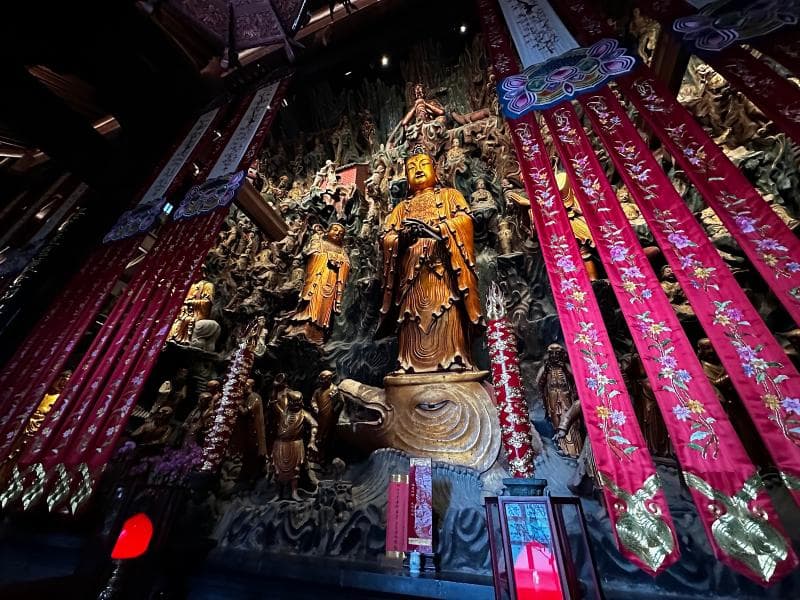
Discover Shanghai's Jade Buddha Temple, a serene sanctuary housing exquisite jade Buddha statues. Explore its rich history, unique architecture, and spiritual tranquility in China.
Overview
Nestled amidst the dynamic urban landscape of Shanghai, China, the Jade Buddha Temple stands as a profound oasis of spiritual tranquility and cultural heritage. This active Buddhist monastery is renowned globally for its two magnificent jade Buddha statues, which are not only exquisite works of art but also hold deep religious significance. The temple's traditional architecture, a stark yet beautiful contrast to the surrounding modernity, offers a peaceful retreat where visitors can experience a tangible connection to Buddhist traditions and Chinese history.
The temple is a living institution, hosting over 70 monks and serving as a center for Buddhist activities and practice, merging the Pure Land and Chan traditions of Mahayana Buddhism. It represents a spiritual haven, drawing both devoted pilgrims and curious travelers seeking serenity and a glimpse into China's rich religious tapestry.
History & Cultural Background
The story of the Jade Buddha Temple begins in 1882 during the Qing Dynasty, born from the extraordinary pilgrimage of a monk named Huigen. While on a spiritual journey that took him to Tibet, Mount Wutai, and Mount Emei, Huigen visited Burma (modern-day Myanmar). There, he was gifted five jade Buddha statues by a local Chinese resident, Chen Jun-Pu, and the Burmese king.
Upon his return journey to China, Huigen brought two of these precious statues back to Shanghai. An initial temple was constructed in 1882 to house these sacred relics. However, this original structure was unfortunately destroyed during the tumultuous revolution of 1911 that ended the Qing Dynasty. Thankfully, the precious statues were safely moved, and a new temple was built on the present site between 1918 and 1928, adopting the distinctive and harmonious architectural style of the Song Dynasty. This enduring sanctuary has witnessed over a century of Shanghai's evolution, maintaining its spiritual essence even through challenging periods, including its remarkable survival during the Cultural Revolution when monks ingeniously affixed Mao Zedong posters to its exterior to deter destruction.
What Makes It Special
The undisputed heart of the Jade Buddha Temple's allure lies in its two primary jade Buddha statues, which are considered rare cultural relics and treasures.
- The Sitting Buddha: This majestic statue, carved from a single piece of lustrous white jade, stands approximately 1.95 meters (6.4 feet) tall and weighs around 3 tons. Adorned with sparkling agate and emeralds, it beautifully portrays the Buddha in a meditative posture, symbolizing profound enlightenment. The statue's serene countenance radiates a calm and inviting presence.
- The Reclining Buddha: Measuring about 96 centimeters (3.1 feet) long, this smaller statue also carved from white jade, depicts the Buddha's peaceful transition into Nirvana. Its 'lucky repose' posture, with the right hand supporting the head, conveys a sense of profound serenity.
Beyond these original masterpieces, the temple also houses a larger reclining Buddha made of marble, donated from Singapore in 1989, which some visitors might initially mistake for the original due to its size. The temple's architecture itself is a testament to traditional Chinese design, with its characteristic curved roofs and ornate wooden structures, reminiscent of the Song Dynasty. Visitors can explore various halls, each housing a multitude of other sacred figures, including the Three Golden Buddhas in the Grand Hall, the Twenty Devas, and the 18 Arhats, all contributing to an awe-inspiring display of Buddhist art.
Stories, Fun Facts & Local Details
The journey of Monk Huigen, who brought the jade Buddhas from Myanmar to Shanghai, is a testament to unwavering faith and determination. He carried these precious carvings across vast distances, ultimately leading to the establishment of this revered temple. The material itself, jade, holds immense cultural significance in China, symbolizing purity, wisdom, prosperity, and protection. This adds another layer of meaning to the statues, embodying not just Buddhist ideals but also deeply rooted Chinese cultural values.
A remarkable fun fact is the temple's survival during the turbulent Cultural Revolution. While many religious sites across China were destroyed, the monks at Jade Buddha Temple famously affixed posters of Mao Zedong to the temple's exterior, a clever tactic that reportedly prevented its destruction. This act speaks volumes about the community's dedication to preserving their sacred space. The temple also offers a public vegetarian restaurant, where enjoying a meal is often considered a small blessing and provides a quiet moment for reflection, echoing ancient Buddhist traditions.
Visitor Perspective
For those seeking a moment of peace in the energetic metropolis of Shanghai, the Jade Buddha Temple offers a truly immersive experience. It's easily accessible via public transport, with Metro Line 13's Jiangning Road Station just a short walk away. The early morning hours are often recommended for a visit, as the soft light and fewer crowds enhance the tranquil atmosphere, allowing for a more contemplative experience amidst the scent of incense.
Visitors are encouraged to dress modestly, covering shoulders and knees, as a sign of respect for this active place of worship. While photography is generally permitted in the courtyards and general areas, it is respectfully prohibited near the main jade Buddha statues themselves, encouraging visitors to simply observe and be present. Following local etiquette, such as moving clockwise through the halls and keeping voices low, enhances the spiritual journey. Experiencing the rhythmic chanting of monks or witnessing devotees light incense offers a profound connection to the living traditions of Buddhism within this extraordinary Shanghai landmark.
Coordinates: 121.4405278, 31.2431917
View on Google Maps💬 How Travelers Describe This Place
Based on community votes
Photogenic
996Must See
953Beautiful
658Interesting
585Unique
69
Traveler Stories
Discover memorable experiences shared by travelers who have visited this place.
No traveler stories yet.
Be the first traveler to share what made this place memorable.
Things to see at Jade Buddha Temple



Tour
By
Spot
Discover amazing places around the world. Your journey starts here.
Explore
© 2026 TourBySpot. All rights reserved.