Grand Hall
Shanghai, China
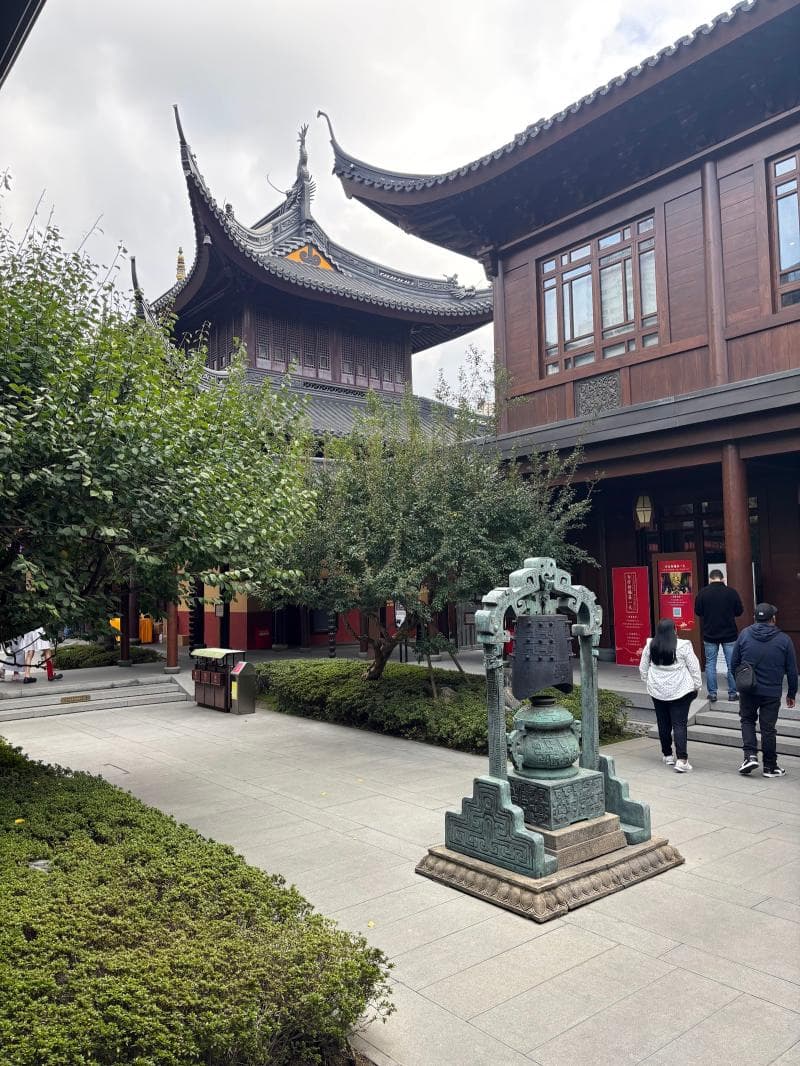
Explore the Grand Hall of Jade Buddha Temple in Shanghai, China, a spiritual heart housing golden Buddhas and ancient traditions.
Overview
Stepping into the Grand Hall, also known as the Great Hero Hall or Mahavira Hall, within Shanghai's revered Jade Buddha Temple, offers a profound encounter with Buddhist artistry and spiritual serenity. This is not merely a structure but the very heart of the temple complex, where the essence of Buddhist teaching is vividly embodied. Located along the central axis, it is the most significant building in the temple, serving as a focal point for worship and reflection. Its majestic presence, with its traditional Song Dynasty architectural elements, provides a striking contrast to the bustling modern city that surrounds it, offering a peaceful sanctuary for all who enter.
History & Cultural Background
The history of the Grand Hall is deeply intertwined with the Jade Buddha Temple itself, a testament to resilience and unwavering faith. The original temple was established in 1882 to house precious jade Buddha statues brought from Myanmar by the monk Huigen. However, the first temple was tragically destroyed during the revolution that ushered in the Republic of China. Fortunately, the statues were saved, and a new temple, including the Grand Hall, was meticulously rebuilt between 1918 and 1928, largely in the elegant Song Dynasty style.
In a remarkable display of modern engineering coupled with deep respect for heritage, the Grand Hall underwent an extraordinary relocation in 2017. To ensure its long-term safety and preserve its venerable wooden structure, the entire 2000-tonne hall was moved 31 meters north and raised by one meter. This painstaking operation, involving hydraulic jacks and special rails, progressed at a mere three centimeters per minute, safeguarding the priceless artifacts within. This monumental effort underscores the profound cultural significance of the Grand Hall and the community's dedication to its preservation.
What Makes It Special
The Grand Hall is distinguished by its breathtaking array of sacred imagery and architectural grandeur. Dominating the interior are three magnificent golden Buddha statues, each seated in a full cross-legged position. In the center, Sakyamuni Buddha, the historical Buddha, holds the wheel of dharma, his form modeled according to the thirty-two distinctive bodily marks, representing perfection. To his east resides Bhaisajyaguru Buddha, the Medicine Buddha, and to his west, Amitabha Buddha. Together, these are revered as the Buddhas of the Three Worlds, symbolizing healing, enlightenment, and infinite life.
Flanking these central figures, along the eastern and western walls, are twenty gilded statues of dharma protectors, also known as the Twenty Devas. Additionally, eighteen unique golden Arhats are arranged in two groups of nine, each an enlightened disciple of Buddha. At the northern entrance of the hall stands a large, golden statue of Guanyin, the Bodhisattva of Compassion, often accompanied by Sudhana and sculptures depicting his fifty-three teachers. Architecturally, the hall showcases a traditional hip-and-gable roof with grey tiles, and its outer walls are painted in a distinctive yellow, adorned with intricate cornices, brackets, stone carvings, and plaques that create a solemn and elegant atmosphere.
Stories, Fun Facts & Local Details
The very name 'Grand Hall' in Chinese, 'Da Xiong Bao Dian', translates to 'Great Hero Treasure Hall', with 'Da Xiong' referring to Sakyamuni Buddha's immense determination to overcome life's agonies and conquer the 'four evils'. This name encapsulates the spiritual fortitude celebrated within these walls. The dramatic relocation of the hall in 2017 was not only an engineering marvel but also revealed an interesting historical tidbit: its original foundation was not cement or steel, but a robust mixture of rocks glued together with lime and glutinous rice. This ancient building technique speaks volumes about the ingenuity of past builders.
For many local devotees, visiting the Grand Hall is a deeply personal and ritualistic experience. They come to offer incense, pray for peace, and connect with the spiritual energy emanating from the revered Buddhas. The temple, still an active monastery, resonates with the sounds of daily chanting and prayers, creating a living, breathing testament to Buddhist practice that continues to thrive amidst Shanghai's urban pulse.
Visitor Perspective
Upon entering the Jade Buddha Temple, visitors will typically proceed through the Hall of Heavenly Kings before reaching the Grand Hall. The atmosphere shifts from the dynamic presence of guardians to the serene and contemplative space of the main hall. Inside, a sense of tranquility prevails, inviting quiet reverence. Visitors are encouraged to observe temple etiquette, such as moving in a clockwise direction and maintaining a low voice, to preserve the sanctity of the space. While photography restrictions may apply to certain jade statues within the temple, the general ambiance of the Grand Hall encourages respectful observation rather than documentation.
Experiencing the Grand Hall is to witness a vibrant spiritual tradition in action. Pilgrims and curious travelers alike find themselves immersed in a setting that encourages introspection and appreciation for both religious devotion and traditional Chinese artistry. The intricate details of the statues, the quiet dedication of worshippers, and the harmonious architecture collectively offer a deeply enriching and memorable cultural experience.
Coordinates: 121.43985, 31.24359
View on Google Maps💬 How Travelers Describe This Place
Based on community votes
Must See
797Interesting
695Unique
396Beautiful
286Photogenic
22
Traveler Stories
Discover memorable experiences shared by travelers who have visited this place.
No traveler stories yet.
Be the first traveler to share what made this place memorable.

Tour
By
Spot
Discover amazing places around the world. Your journey starts here.
Explore
© 2026 TourBySpot. All rights reserved.