Independence Monument
Phnom Penh, Cambodia
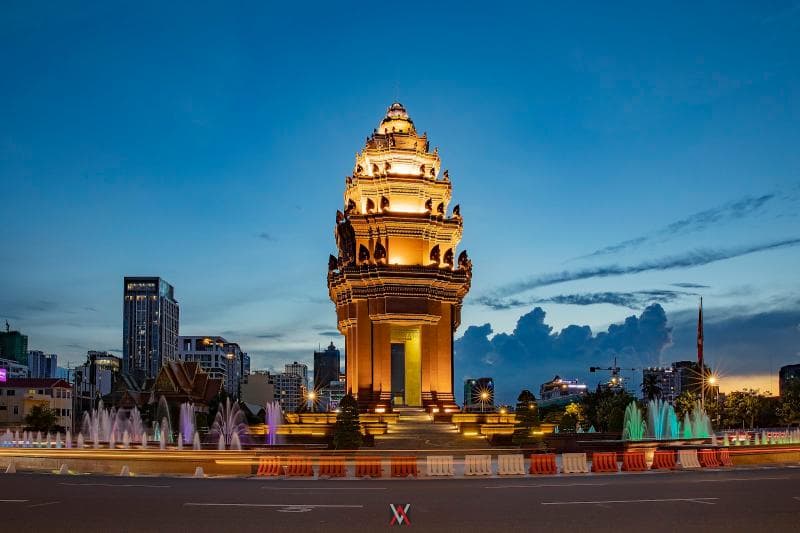
Explore Phnom Penh's iconic Independence Monument, a lotus-shaped symbol of Cambodia's freedom from French rule and a memorial to its heroes.
Overview
Standing majestically at the heart of Phnom Penh, Cambodia, the Independence Monument, known locally as Vimean Ekareach, is much more than just a structure; it is a profound symbol of the nation's hard-won freedom and enduring spirit. Located centrally at the intersection of Norodom and Sihanouk Boulevards, this iconic landmark commemorates Cambodia's liberation from nearly a century of French colonial rule in 1953. Designed with a striking resemblance to a lotus-shaped stupa, echoing the grandeur of ancient Khmer architecture, the monument commands attention with its intricate details and imposing presence. At 37 meters tall, it serves as a powerful reminder of national pride and the sacrifices made for sovereignty, becoming a focal point for national celebrations and a significant site for both locals and curious travelers alike.
History & Cultural Background
The story of the Independence Monument begins with Cambodia's arduous journey to self-governance. After decades under French protectorate, the nation finally regained its independence on November 9, 1953. To commemorate this pivotal moment, the monument's construction began in 1958, with its official inauguration taking place in 1962. It was envisioned by the then-Prince Norodom Sihanouk, who personally guided the design process. The task of bringing this vision to life fell to the distinguished Cambodian architect Vann Molyvann, a pioneer of New Khmer Architecture. Molyvann's design masterfully blends religious and secular elements, creating a structure that not only celebrates political freedom but also honors the spiritual and historical roots of the Cambodian people. Beyond marking independence, the monument also stands as a cenotaph, paying tribute to the brave patriots and war heroes who sacrificed their lives for the welfare and freedom of the country throughout its turbulent history.
What Makes It Special
The Independence Monument's unique appeal lies in its profound symbolism and architectural brilliance. Its design, a multi-tiered lotus-shaped stupa, draws direct inspiration from the magnificent temples of Angkor, particularly the style seen at places like Banteay Srei and the Bakong Temple. This connection to ancient Khmer heritage imbues the modern monument with a timeless quality, linking contemporary Cambodia to its glorious past. The reddish-brown stone structure is adorned with intricate carvings, most notably the multi-headed Naga serpents that grace each of its five levels. These mythical creatures are deeply significant in Khmer culture, often symbolizing protection, fertility, and the bridge between the human and divine worlds. Furthermore, the monument truly comes alive after dusk when it is bathed in the national colors of Cambodia – blue, red, and white – by floodlights, creating a mesmerizing spectacle against the Phnom Penh skyline.
Stories, Fun Facts & Local Details
The Independence Monument is the vibrant heart of Cambodian national celebrations. Every year on November 9th, Independence Day, and on September 24th, Constitution Day, the area around the monument becomes a hub of activity. A special ceremonial flame is lit on the monument's interior pedestal by a royal official or a high-ranking government figure, marking the start of solemn and festive observances. Floral wreaths are laid at its base to honor fallen heroes, and the surrounding park often sees military parades and cultural performances. While visitors cannot enter the monument itself, its surrounding grounds are a popular spot for locals. In the cooler hours of the late afternoon and evening, you'll find families relaxing, friends gathering, and individuals enjoying a stroll or a jog in the well-maintained open park. It's a place where the pulse of daily life in Phnom Penh often harmonizes with the quiet dignity of national remembrance, offering a glimpse into the everyday rhythm of Cambodian city life.
Visitor Perspective
Experiencing the Independence Monument is an immersion into Cambodian history and national pride. Situated prominently in a large roundabout, it is impossible to miss and easily accessible from most parts of the city. While you can't walk inside the monument, its external grandeur provides ample opportunity for reflection and photography. The best times to visit are typically in the late afternoon, when the sun casts dramatic shadows across its intricate details, or in the evening, to witness its stunning illumination. The monument is surrounded by a spacious, well-landscaped park, offering a peaceful respite from the city's hustle and bustle. Visitors often take the opportunity to walk around the base, admiring the architectural nuances and reading about its significance from nearby information plaques. It's an excellent starting point for exploring other nearby landmarks such as the Royal Palace, Wat Phnom, and the riverside area, making it a central point in any Phnom Penh itinerary.
Coordinates: 104.92806, 11.55639
View on Google Maps💬 How Travelers Describe This Place
Based on community votes
Must See
639Beautiful
569Interesting
476Photogenic
465Unique
128
Traveler Stories
Discover memorable experiences shared by travelers who have visited this place.
No traveler stories yet.
Be the first traveler to share what made this place memorable.
Things to see at Independence Monument



Tour
By
Spot
Discover amazing places around the world. Your journey starts here.
Explore
© 2026 TourBySpot. All rights reserved.