Central Monument Tower
Phnom Penh, Cambodia
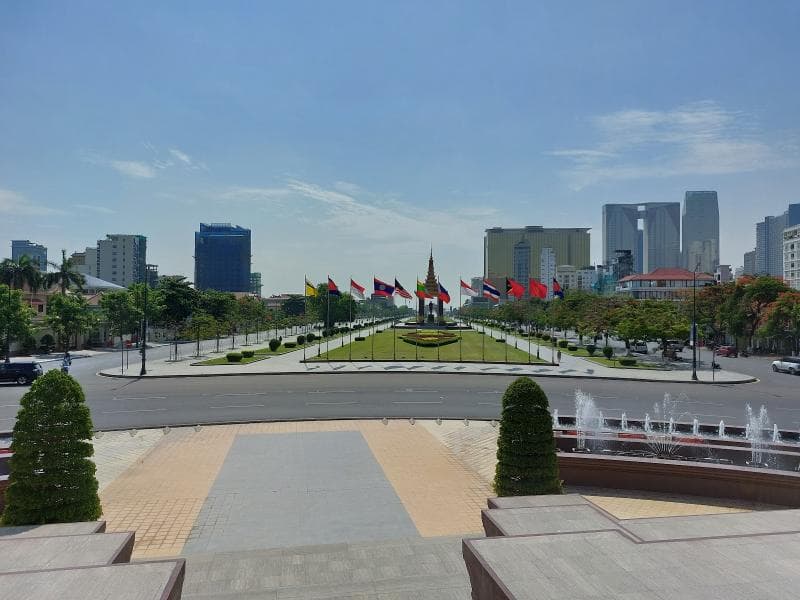
Explore Phnom Penh's Central Monument Tower at the Independence Monument, a powerful symbol of Cambodian freedom and heritage. Discover its history and design.
Overview
Standing majestically at the intersection of Norodom and Sihanouk Boulevards, the Independence Monument, with its striking central tower, is an undeniable symbol of Phnom Penh, Cambodia. This iconic structure serves as a perpetual reminder of Cambodia's hard-won liberation from French colonial rule in 1953, a pivotal moment in the nation's history. Far more than just a landmark, the monument embodies the spirit and resilience of the Cambodian people. Its elegant, lotus-shaped design commands attention, symbolizing purity and rebirth, and honoring the country's past while looking towards its future. As the focal point of national pride, it is not only a monument to independence but also a solemn memorial to those who sacrificed their lives for the country's freedom.
History & Cultural Background
The Independence Monument, known in Khmer as 'Vimeanek Suor' or 'Vimean Ekareach', was officially built in 1958, though some sources mention an inauguration in 1962. Its construction marked a new era for Cambodia, commemorating the end of nearly a century of French colonial dominance. The brilliant mind behind its design was the renowned Cambodian architect, Vann Molyvann, who was personally selected and guided by then-Prince Norodom Sihanouk. Molyvann's vision skillfully blended traditional Khmer architectural styles, drawing inspiration from ancient temples like Angkor Wat and Banteay Srei, with a modernist approach. This fusion resulted in a monument that respectfully acknowledges Cambodia's rich cultural heritage while signifying its progress and aspirations as a newly independent nation. The monument's design also subtly combines 'the religious and the secular', reflecting the multifaceted identity of Cambodia.
What Makes It Special
The Central Monument Tower's distinctiveness lies in its profound symbolism and intricate architectural details. Standing approximately 37 meters tall, its most recognizable feature is its lotus-shaped stupa. This form is deeply rooted in Buddhist symbolism, representing purity, enlightenment, and rebirth. The monument is comprised of five levels, each said to represent the five core principles of the Sangkum Reastr Niyum movement championed by Prince Norodom Sihanouk: neutrality, independence, peace, prosperity, and democracy. Adorning these levels are intricately carved multi-headed Nagas, mythical serpent beings prevalent in Buddhist and Hindu mythology. These Nagas, sometimes depicted with seven tiers or as many as 100 snake heads on the upper levels, symbolize protection, freedom, and safety, serving as a powerful cultural emblem of Cambodia. The monument's construction from reddish-brown stone, particularly crushed red marble, further evokes the aesthetic of ancient Khmer temples, creating a visual link to the nation's glorious past and its enduring artistic traditions.
Stories, Fun Facts & Local Details
Beyond its architectural grandeur, the Independence Monument is steeped in the collective memory and ongoing life of Phnom Penh. It is the heart of national celebrations, particularly on November 9th, Cambodia's Independence Day. On this significant day, the area surrounding the monument transforms into a vibrant hub of activity. A deeply symbolic tradition involves a ceremonial flame, which is lit on an interior pedestal within the monument by a royal dignitary or high official, honoring those who fought for freedom. Floral tributes often line the stairs, and colorful balloons are released into the sky, creating a poignant and festive atmosphere. The monument also serves as a remembrance for all soldiers and casualties who perished during Cambodia's tumultuous history, reinforcing its role as a sacred national memorial. Designed by Vann Molyvann, a leading figure in Khmer modern architecture, the monument is a testament to his ambition to integrate Cambodia's rich heritage with contemporary design, shaping the visual identity of a newly independent nation.
Visitor Perspective
For any traveler exploring Phnom Penh, a visit to the Independence Monument offers a powerful and reflective experience. While the monument itself is not open for interior access, its exterior grandeur and symbolic weight can be fully appreciated from the surrounding open spaces and gardens. There is no admission fee, and it is accessible to the public 24/7. The best times to visit are generally in the early morning or, more notably, in the late afternoon and evening. As the sun sets, the monument becomes particularly striking, with the reddish stone illuminated beautifully. After dark, blue, red, and white floodlights, reflecting the colors of the Cambodian flag, dramatically highlight its intricate details, creating a truly mesmerizing sight. The lush, serene gardens provide a peaceful environment for contemplation, a stark contrast to the bustling city life just beyond. It's a place where locals often gather for exercise or relaxation, offering visitors a glimpse into daily Cambodian life. Viewing the Independence Monument is not merely a sightseeing activity; it's an opportunity to connect with Cambodia's enduring spirit, its struggle for freedom, and its rich cultural identity.
Coordinates: 104.9281, 11.5564
View on Google Maps💬 How Travelers Describe This Place
Based on community votes
Photogenic
722Interesting
698Must See
465Beautiful
276Unique
126
Traveler Stories
Discover memorable experiences shared by travelers who have visited this place.
No traveler stories yet.
Be the first traveler to share what made this place memorable.

Tour
By
Spot
Discover amazing places around the world. Your journey starts here.
Explore
© 2026 TourBySpot. All rights reserved.