Photography Spots
Phnom Penh, Cambodia
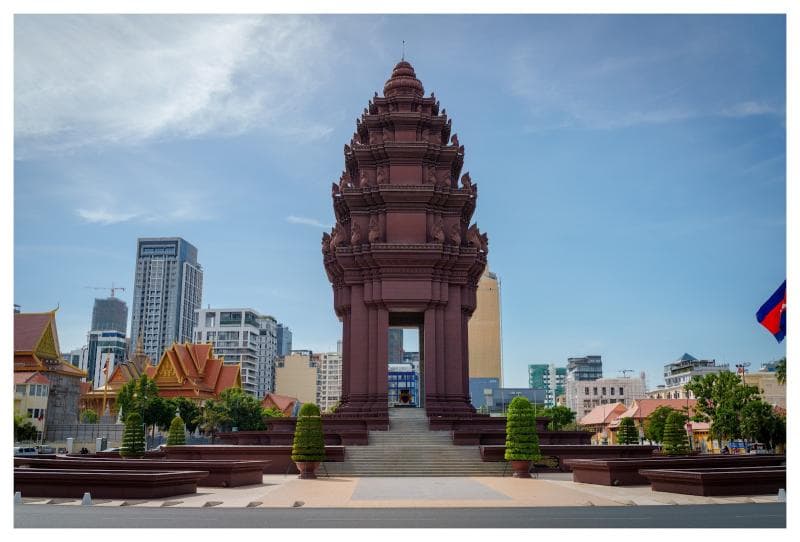
Discover the Independence Monument, a powerful symbol and iconic photography spot in Phnom Penh, Cambodia, showcasing unique Khmer architecture and rich history.
Overview
Standing proudly at the nexus of Norodom and Sihanouk Boulevards, the Independence Monument in Phnom Penh, Cambodia, is more than just a landmark; it is a powerful symbol of national sovereignty and enduring spirit. This majestic, lotus-shaped stupa was erected to commemorate Cambodia's liberation from French colonial rule in 1953 and serves as a solemn memorial to those who sacrificed their lives for the nation's freedom. Accessible and visible from many points in the city, the monument draws both locals and visitors, inviting contemplation and admiration of its unique architecture.
The monument's design skillfully blends traditional Khmer artistry with a modernist touch, making it a compelling subject for photography throughout the day and into the evening. Surrounded by well-maintained green spaces and fountains, it offers a serene contrast to the bustling city life, providing ample opportunities for capturing its grandeur. Visitors can easily approach the monument, which is a focal point for national celebrations, making it a vibrant cultural hub in the heart of the capital.
History & Cultural Background
The Independence Monument, known locally as 'Vimean Ekareach', was built between 1958 and 1962, a significant period following Cambodia's hard-won independence. Its construction was commissioned by then-Prince Norodom Sihanouk, who personally guided the vision for its design.
The architectural genius behind this iconic structure was Vann Molyvann, a celebrated Cambodian architect. Molyvann drew inspiration from the ancient Khmer temples of Angkor, particularly the intricate styles seen at Banteay Srei and the symbolic grandeur of Angkor Wat. The monument embodies the 'Sangkum Reastr Niyum' political philosophy of neutrality, independence, peace, prosperity, and democracy through its five levels.
Culturally, the monument holds immense significance. It is the central gathering place for national festivities, most notably Independence Day on November 9th and Constitution Day on September 24th. During these events, a ceremonial flame is lit on an interior pedestal by a royal or high official, and floral tributes are placed, reinforcing its role as a beacon of national pride and remembrance.
What Makes It Special
What truly sets the Independence Monument apart is its profound symbolic depth, combined with its striking architectural beauty. Standing 37 meters tall, its lotus-shaped stupa is adorned with approximately one hundred seven-headed Naga figures, mythical serpents central to Cambodian iconography, symbolizing protection and regeneration.
The choice of materials is equally remarkable: crushed red marble gives it a distinctive reddish-brown hue reminiscent of the Banteay Srei temple, while elegant grey Chinese marble forms its steps and precincts. At its pinnacle, a flame sculpted by French goldsmiths symbolizes eternal liberty.
The monument's strategic placement on a prominent roundabout makes it a constant, visible reminder of Cambodia's resilience and identity. It is a masterpiece that seamlessly integrates religious and secular elements, reflecting Cambodia's rich heritage and its journey towards self-determination. The surrounding open park, with its fountains and green lawns, enhances its aesthetic appeal and provides a tranquil space for reflection in the bustling urban landscape.
Stories, Fun Facts & Local Details
Beyond its grand appearance, the Independence Monument holds many layers of meaning. The lotus bud shape is a sacred symbol in Buddhist culture, representing purity and rebirth. The multi-headed Nagas, often seen guarding ancient Khmer temples, here symbolize the protection of the nation's independence.
A fun fact for photographers is the monument's dramatic transformation from day to night. During daylight hours, its reddish-brown structure stands boldly against the blue sky, creating vivid contrasts. As dusk approaches and evening falls, the monument undergoes a spectacular change, illuminated by floodlights in the colors of the Cambodian flag – blue, red, and white. This illumination, coupled with the glow of golden lights, creates a truly unforgettable spectacle, making it a prime spot for evening photography.
Locals often use the surrounding park for exercise, leisurely walks, and enjoying the evening breeze, adding to the monument's lively atmosphere. It's not uncommon to see families and friends gathered, making it a living part of the city's social fabric. The monument is also conveniently located near other key Phnom Penh landmarks, including the Norodom Sihanouk Memorial, making it an easy addition to any city exploration.
Visitor Perspective
For a curious traveler, the Independence Monument offers a compelling visual and emotional experience. As a photography spot, it presents diverse opportunities. During the day, the intricate details of its Angkorian-inspired architecture, the Naga carvings, and the textures of the stone are best captured. The monument stands out beautifully against a clear sky, especially with the surrounding green park and nearby fountains providing a picturesque foreground.
For those seeking dramatic shots, visiting in the late afternoon and staying until evening is highly recommended. This allows for capturing the soft light of sunset, which casts long shadows that highlight the monument's features, followed by the enchanting display of its nighttime illumination. The blue, red, and white lights transform the monument into a patriotic beacon, offering a unique photographic challenge and a stunning visual reward.
While direct entry into the monument is not permitted, its accessibility in the center of a large roundabout ensures excellent viewing angles from all sides. The surrounding park provides safe vantage points and a pleasant environment for both casual observers and serious photographers to capture this significant piece of Cambodian history and art.
Coordinates: 104.9281, 11.5564
View on Google Maps💬 How Travelers Describe This Place
Based on community votes
Unique
722Beautiful
698Photogenic
358Must See
126Interesting
19
Traveler Stories
Discover memorable experiences shared by travelers who have visited this place.
No traveler stories yet.
Be the first traveler to share what made this place memorable.

Tour
By
Spot
Discover amazing places around the world. Your journey starts here.
Explore
© 2026 TourBySpot. All rights reserved.