Hôtel De Ville De Lyon
Lyon, France
Discover the Hôtel de Ville de Lyon, a magnificent 17th-century landmark in Lyon, France. Explore its rich history, Baroque architecture, and cultural significance.
Overview
In the heart of Lyon, France, stands the magnificent Hôtel de Ville, a grand testament to the city's rich history and architectural prowess. Facing the bustling Place des Terreaux and the impressive Opéra Nouvel, this historic edifice serves as Lyon's City Hall and is widely regarded as one of its most remarkable buildings. Since its designation as a Monument historique in 1886, it has captivated visitors with its intricate Baroque and classical design, a true symbol of civic pride and endurance. While primarily an active municipal office, hosting city council meetings ten times a year, its stunning exterior and storied past invite curious travelers to delve into centuries of Lyonnaise heritage.
History & Cultural Background
The journey of the Hôtel de Ville began in the 17th century, a period of significant urban development for Lyon. Construction commenced on September 5, 1646, a date intentionally chosen to coincide with the birthday of King Louis XIV, and concluded in 1672. The city's architect, Simon Maupin, designed the original structure, intending to create a town hall worthy of Lyon's burgeoning influence, as the previous one, the Hôtel de la Couronne, had become too modest. This ambitious project quickly established the Place des Terreaux as Lyon's administrative heart.
However, the building's early years were marked by adversity. A devastating fire ravaged the Hôtel de Ville in 1674, just two years after its completion, causing significant damage to the main hall, chapel, and belfry. King Louis XIV then commissioned Jules Hardouin-Mansart, the celebrated architect renowned for his work on the Palace of Versailles, to oversee its redesign and restoration. The building's tumultuous history continued through the French Revolution, when its Consulate Hall was transformed into a revolutionary tribunal. In a striking act of symbolic defiance, paintings depicting former city officials were deliberately destroyed by the new municipality, aiming to erase all vestiges of the old regime. Another fire struck on July 14, 1803, leading to further extensive renovations during the Second Empire, ensuring its continued grandeur.
What Makes It Special
The Hôtel de Ville de Lyon is a masterpiece of architectural design, blending Baroque extravagance with classical elegance. Its imposing and symmetrical facade is adorned with intricate details, including ornate sculptures, majestic Corinthian columns, and decorative reliefs that tell stories of Lyon's rich allegorical past. The building is ingeniously organized around two courtyards, the Cour basse and the elevated Cour d'honneur, contributing to its grand scale.
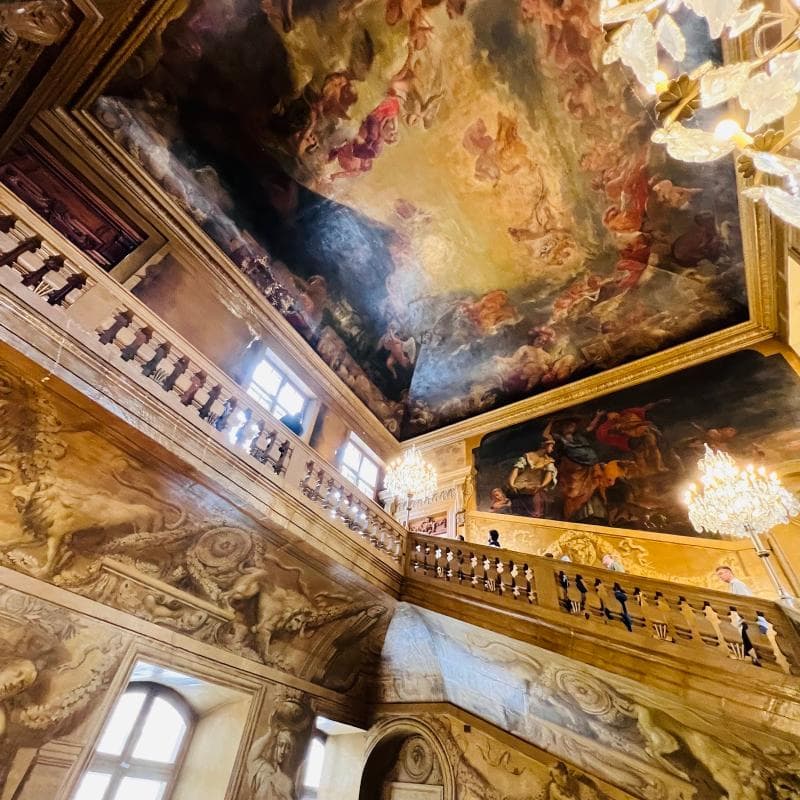
While interior access is typically limited, visitors fortunate enough to glimpse inside during special events are treated to an opulent world of gilded reception rooms, shimmering crystal chandeliers, and lavish marble floors. The Escalier d'Honneur, or Staircase of Honor, is a particular highlight, featuring impressive paintings by Thomas Blanchet. Dominating the central axis, the belfry is home to one of Europe's largest carillons, boasting 65 bells since its expansion in 2000. This impressive carillon, originally inaugurated with 29 bells in 1919, occasionally fills the air with its melodious chimes. Adding to its unique charm, the belfry also houses a remarkable lunar clock. At the heart of the main facade, an equestrian statue of King Henry IV stands proudly, overseeing the square.
Stories, Fun Facts & Local Details
Imagine the spectacle of the Hôtel de Ville's foundation stone being laid on the very birthday of King Louis XIV, a deliberate move to link the city's ambition with royal prestige. The building's initial design aimed to portray 'the Glory of the Sovereign and that of the City' through its rich decor. Sadly, the magnificent Great Hall and its artworks by Blanchet were among the casualties of the 1674 fire, only to be meticulously restored and reimagined.
During the intense period of the French Revolution, this grand building transformed into a formidable court of justice, where many were tried and numerous executions took place, particularly after October 30, 1793. It's said that the celebrated anarchist Mikhaïl Bakounine once declared Lyon the 'capital of socialism' from the very balcony of the Hôtel de Ville during the Commune de Lyon, a vivid snapshot of its role in revolutionary fervor. Interestingly, the vibrant Place des Terreaux, where the Hôtel de Ville now majestically stands, was once a rather unglamorous swampy area, a stark contrast to its current bustling grandeur. From its earliest days, the Hôtel de Ville quickly earned a reputation across Europe as one of France's most splendid city halls.
Visitor Perspective
For any traveler exploring Lyon, encountering the Hôtel de Ville is an essential experience. While its primary function means that interior access is generally restricted, the exterior facade alone is a breathtaking sight, best admired at any time of day to appreciate its intricate details. The true gem for those wishing to step inside is often during special cultural events, such as the annual European Heritage Days in September, when doors might open to reveal its gilded splendor. The Lyon Office du Tourisme may also offer guided tours, providing a rare glimpse into its magnificent halls.
The Hôtel de Ville is perfectly situated amidst the lively atmosphere of the Place des Terreaux. This bustling square, with its famous Bartholdi Fountain (designed by the sculptor of the Statue of Liberty) and the impressive Opéra Nouvel, offers a wonderful environment for relaxation and people-watching. Whether you are an avid history buff or an architecture enthusiast, the Hôtel de Ville de Lyon promises to be a memorable highlight of your visit, a place where centuries of history are etched into every stone and facade.
Coordinates: 4.835, 45.7676
View on Google Maps💬 How Travelers Describe This Place
Based on community votes
Must See
847Photogenic
712Beautiful
513Unique
482Interesting
62
Traveler Stories
Discover memorable experiences shared by travelers who have visited this place.
No traveler stories yet.
Be the first traveler to share what made this place memorable.
Things to see at Hôtel De Ville De Lyon



Tour
By
Spot
Discover amazing places around the world. Your journey starts here.
Explore
© 2026 TourBySpot. All rights reserved.