Interior Staircases
Lyon, France
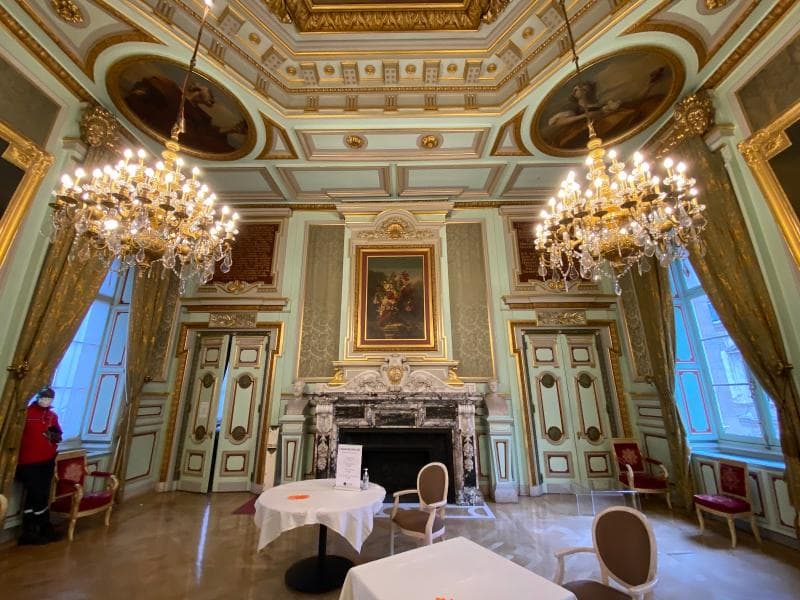
Explore the magnificent interior staircases of Hôtel de Ville de Lyon in Lyon, France. Discover their rich history, exquisite architecture, and cultural significance.
Overview
Nestled in the vibrant heart of Lyon, France, the Hôtel de Ville stands as a monumental testament to French Baroque architecture and civic grandeur. While its imposing facade and public squares are often admired, the true architectural and historical treasures are often found within, particularly its magnificent interior staircases. These staircases are not merely functional elements but serve as elaborate works of art, embodying centuries of history, artistic prowess, and the city's enduring spirit. As an active municipal building, the Hôtel de Ville continues to host civic functions, making its splendid interiors, including its grand staircases, a cherished symbol of Lyon's rich heritage.
History & Cultural Background
The construction of the Hôtel de Ville de Lyon began in 1646, driven by the desire for a city hall befitting Lyon's growing stature. Architects Simon Maupin and Girard Desargues were instrumental in its initial design, with Desargues notably credited for the plans of the grand staircase and the oval staircase. The building was largely completed by 1672, but tragedy struck just two years later when a devastating fire in 1674 ravaged significant portions, including the Grand Hall, the belfry, and crucially, the 'escalier d'honneur' (staircase of honor). This led to a comprehensive reconstruction and redesign between 1700 and 1703, overseen by the eminent Jules Hardouin-Mansart, a key architect of the Palace of Versailles. Mansart's intervention, alongside artists like Thomas Blanchet and Germain Panthot, shaped the opulent interiors seen today. The building has witnessed pivotal moments in French history, including the French Revolution, when it became a revolutionary tribunal, further underscoring its deep historical roots and cultural significance.
What Makes It Special
The interior staircases of the Hôtel de Ville de Lyon are extraordinary for their ambitious scale, intricate design, and rich artistic embellishment. The 'Grand Escalier' or 'Escalier d'Honneur' is particularly noteworthy. Originally conceived by Girard Desargues, it was a focal point of the initial design. After the 1674 fire, its reconstruction by Hardouin-Mansart ensured its continued prominence, integrating elements of classicism and grandeur. The decorative program for the interior, including the staircases, was a collaborative effort. Thomas Blanchet, a painter brought from Rome, alongside Germain Panthot, worked under the guidance of Father Claude-François Ménestrier, a Jesuit historian and heraldist known for his expertise in iconography. This collaboration ensured that the painted and sculpted decorations were rich in symbolism and allegorical representations, transforming functional passageways into narratives of power, history, and civic pride. While the original decoration of the Grand Staircase depicting 'The Fire of Lyon under Nero' was destroyed in the fire, its restoration and the subsequent artistry still capture the imagination, reflecting the period's aesthetic ideals and the city's resilience.
Stories, Fun Facts & Local Details
Imagine the lavish receptions and formal processions that once ascended these very steps, where every detail, from the carved balustrades to the painted ceilings, was designed to impress. The reconstruction after the 1674 fire by Mansart, an architect of such renown, speaks volumes about the importance placed on restoring the Hôtel de Ville to its former glory, and even surpassing it. The precise architectural contributions of Desargues to the staircases, alongside the later artistic input of Blanchet and Panthot, showcase a confluence of brilliant minds working to create a masterpiece. It's fascinating to consider how these staircases have silently observed centuries of civic life, from royal visits to revolutionary fervor, serving as a constant backdrop to Lyon's unfolding story. Today, the Hôtel de Ville remains an active administrative hub, with the municipal council convening within its historic walls approximately ten times a year, meaning these architectural wonders are still very much alive and in use.
Visitor Perspective
For the curious traveler, experiencing the interior staircases of the Hôtel de Ville de Lyon is a journey into the heart of French architectural and civic history. While the building functions as an active city hall, public access to its magnificent interiors, including the grand staircases, is sometimes available. These opportunities typically arise during special cultural events such as the European Heritage Days. On such occasions, visitors can walk in the footsteps of history, marveling at the intricate details, the grandeur of the scale, and the artistic achievements that define these spaces. It's advisable to check the official Lyon tourism website or the Hôtel de Ville's own site for specific opening times and tour schedules, as access can be limited. However, even a glimpse inside offers a profound appreciation for this architectural jewel and its enduring legacy in Lyon.
Coordinates: 4.835, 45.7676
View on Google Maps💬 How Travelers Describe This Place
Based on community votes
Must See
876Unique
875Photogenic
820Interesting
718Beautiful
648
Traveler Stories
Discover memorable experiences shared by travelers who have visited this place.
No traveler stories yet.
Be the first traveler to share what made this place memorable.

Tour
By
Spot
Discover amazing places around the world. Your journey starts here.
Explore
© 2026 TourBySpot. All rights reserved.