Place Des Terreaux
Lyon, France
Explore Place des Terreaux in Lyon, France, a historic square featuring the Bartholdi Fountain, Hôtel de Ville, and Musée des Beaux-Arts.
Overview
Place des Terreaux, an expansive and historically rich public square, lies at the heart of Lyon, France. Situated on the Presqu'île, the peninsula formed by the confluence of the Rhône and Saône rivers, it rests at the base of the Croix-Rousse hill. This iconic square is bordered dramatically by the magnificent Hôtel de Ville (City Hall) to its east and the impressive Musée des Beaux-Arts (Museum of Fine Arts) to its south, forming an architectural ensemble of grand significance. As a central fixture in Lyon's urban landscape, Place des Terreaux is not merely a crossroads but a destination, renowned for its distinctive Bartholdi Fountain and its captivating history. The entire area holds the distinguished status of a UNESCO World Heritage Site, underscoring its profound cultural and historical importance to the city and beyond.
History & Cultural Background
The origins of Place des Terreaux are unexpectedly humble, rooted in the city's medieval defenses. In the 13th century, this area was not a grand square but a swampy defensive ditch, or 'pit', known as 'Terralia Nova' (new pit of earth and water) or 'Fossés de la Lanterne'. It served as a crucial fortification against northern invaders, even allowing for the pit to be filled with water during attacks.
Over centuries, its purpose evolved. The defensive pit was filled in during the 16th century, paving the way for a public paved square by the 17th century. The construction of the Hôtel de Ville between 1646 and 1672 by architect Simon Maupin solidified the square's role, transforming it into the administrative heart of Lyon. The Place des Terreaux has witnessed pivotal moments in French history, including its use as a site for public executions, most notably during the tumultuous French Revolution. The former Benedictine convent, Palais Saint-Pierre, which now houses the Musée des Beaux-Arts, was established on the square's southern side, opening as a museum in 1803.
A significant modern transformation occurred in 1994, when the square was redeveloped by architect Christian Drevet and artist Daniel Buren. This redesign introduced the innovative ground-level jet fountains and repositioned the iconic Bartholdi Fountain to its current prominent place.
What Makes It Special
Place des Terreaux stands out due to its unique blend of historical architecture and artistic masterpieces. Its most striking feature is undoubtedly the magnificent Bartholdi Fountain. Crafted by Frédéric Auguste Bartholdi, the renowned sculptor behind New York's Statue of Liberty, this fountain is a work of compelling artistry. It depicts a powerful female figure, symbolizing the River Garonne, guiding a chariot pulled by four vigorous horses, which represent the river's four main tributaries. Initially designed for Bordeaux, it found its home in Lyon in 1892. Made of hammered lead on an iron frame, it weighs a substantial 21 tons and underwent a meticulous restoration in 2018, bringing back its original splendor.
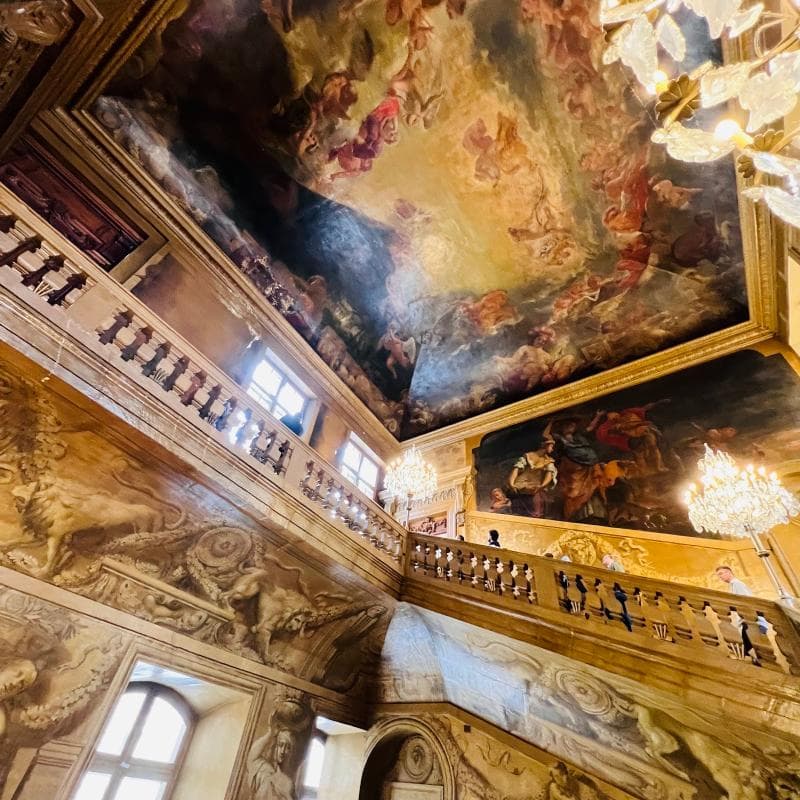
Flanking the square are two architectural marvels. To the east, the Hôtel de Ville de Lyon is a grand 17th-century classical edifice, rebuilt and enhanced after devastating fires in 1674 and 1803, with contributions from renowned architect Jules Hardouin-Mansart. Its richly ornate interiors can be admired during special events like the European Heritage Days. To the south, the Musée des Beaux-Arts, housed within the former Palais Saint-Pierre, is one of France's largest and most significant art museums outside Paris. Its extensive collections span 5,000 years of art history, from ancient Egyptian antiquities to modern works, encompassing paintings, sculptures, and decorative arts.
Stories, Fun Facts & Local Details
The very name 'Terreaux' offers a glimpse into the square's past, deriving from the Latin 'terralia,' meaning 'ditch' or 'fossé,' a nod to its original defensive purpose. Before its transformation, historical accounts suggest it was even used as a market for pigs. The 1994 redevelopment by Buren and Drevet introduced 69 ground-level jet fountains along with 14 pillars, a modernist touch that initially raised 'eyebrows' among some Lyonnais. However, these modern features now blend with the historical surroundings to create a dynamic public space.
Place des Terreaux truly comes alive each December as the undisputed epicenter of Lyon's annual Fête des Lumières (Festival of Lights). During this celebrated event, the square's magnificent buildings become canvases for breathtaking light projections, drawing millions of visitors and transforming the space into a mesmerizing spectacle. Locals affectionately refer to the square simply as 'Les Terreaux' and frequent its many cafés, embodying the Lyonnaise way of life where history and contemporary vibrancy seamlessly intertwine. The powerful imagery of Bartholdi's fountain, with its horses appearing to 'leap from the water,' adds a dramatic and theatrical flair to the square's already rich atmosphere.
Visitor Perspective
For any curious traveler, Place des Terreaux offers a multifaceted experience. As a largely pedestrian square, it invites leisurely exploration, whether it's admiring the architectural grandeur of the surrounding buildings or simply sitting at one of the many cafés and restaurants that line its edges. It serves as an excellent starting point for discovering the wider Presqu'île area, with its proximity to the Opéra de Lyon and various shopping streets.
The atmosphere of Place des Terreaux can shift dramatically, from a serene spot for quiet contemplation during the day to a bustling hub of activity in the evenings or during special events. The rhythmic play of the ground-level fountains provides a soothing backdrop, while the opportunity to perch on the steps of the Musée des Beaux-Arts offers a unique vantage point for observing the rhythm of Lyonnaise life. While the Hôtel de Ville is generally used for official functions, its ornate interiors can often be glimpsed during designated public access days, such as the European Heritage Days, offering a deeper dive into its rich history. Whether you're seeking art, history, or simply a vibrant urban space to soak in the local culture, Place des Terreaux provides a memorable and engaging experience, reflecting the very essence of Lyon.
Coordinates: 4.8336, 45.7669
View on Google Maps💬 How Travelers Describe This Place
Based on community votes
Unique
982Photogenic
876Must See
458Interesting
235Beautiful
197
Traveler Stories
Discover memorable experiences shared by travelers who have visited this place.
No traveler stories yet.
Be the first traveler to share what made this place memorable.

Tour
By
Spot
Discover amazing places around the world. Your journey starts here.
Explore
© 2026 TourBySpot. All rights reserved.