Hofbräuhaus München
Munich, Germany
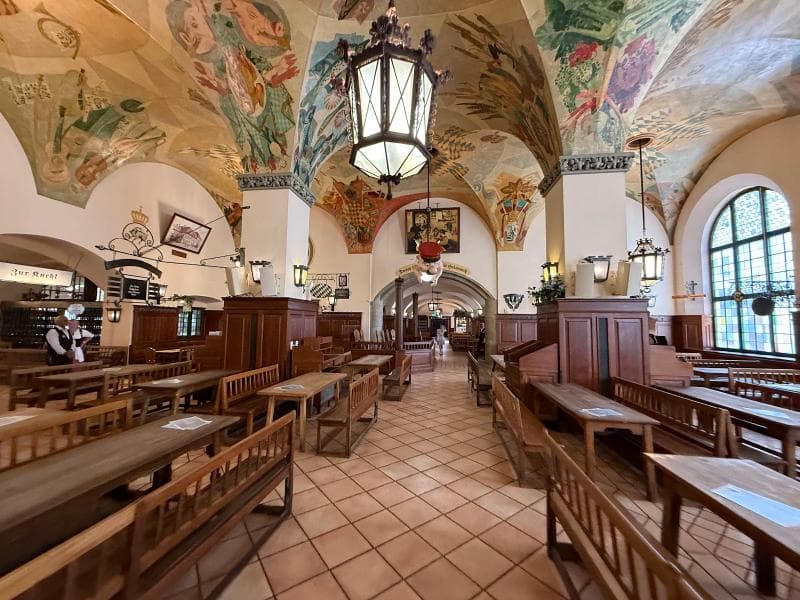
Discover Hofbräuhaus München, a legendary beer hall in Munich, Germany, famed for its rich history, Bavarian culture, and lively atmosphere.
Overview
Nestled in the heart of Munich, Germany, the Hofbräuhaus München stands as one of the world's most renowned beer halls, an emblem of Bavarian culture and conviviality. Originally conceived as a royal brewery in 1589 by Duke Wilhelm V, its purpose was to supply the Bavarian court with its own high-quality brew, circumventing the need for expensive imported beer. Today, it operates as a state-owned enterprise, welcoming millions of visitors annually from across the globe.
More than just a beer hall, the Hofbräuhaus is a vibrant hub known for its lively atmosphere, traditional Bavarian music, and communal long wooden tables where locals and travelers mingle. Guests can savor authentic Bavarian cuisine paired with its famous Hofbräu beers, brewed strictly according to the 1516 Reinheitsgebot, or Bavarian Beer Purity Law. Its imposing Neo-Renaissance building at Platzl is a destination that promises an immersive cultural experience, often described as having an Oktoberfest-like feel throughout the year.
History & Cultural Background
The story of the Hofbräuhaus began in 1589 when Duke Wilhelm V, dissatisfied with the cost of imported beer for his 600-strong court, decided to establish a local brewery. His son, Duke Maximilian I, further shaped its destiny by introducing Weissbier production in 1602. The growing demand for this popular white beer led to the brewery's relocation to its current site on Platzl in 1607.
A significant turning point came in 1828 when King Ludwig I opened the previously court-exclusive brewery to the general public, transforming it into the iconic Munich tavern it is today. This act democratized Bavarian beer culture, allowing everyone to partake in its rich heritage.
Beyond its brewing innovations, like the creation of Maibock beer in 1614, which famously helped save Munich from plunder during the Thirty Years' War in 1632 by serving as a tribute to Swedish troops, the Hofbräuhaus has witnessed pivotal historical moments. In the early 20th century, its banquet halls became a stage for political gatherings, including the proclamation of the Communist Council Republic in 1919 and, tragically, Adolf Hitler's announcement of the Nazi Party's program in 1920. Severely damaged during World War II, the building underwent extensive reconstruction, reopening its doors in 1958, a testament to its enduring significance to Munich.
What Makes It Special
What truly sets Hofbräuhaus München apart is its ability to offer an authentic, larger-than-life Bavarian experience. The main beer hall, known as the 'Schwemme,' is a cavernous space filled with long, communal wooden tables, many bearing the etchings of generations of patrons dating back to 1897. This setting, combined with daily live traditional Bavarian 'oompah' music, creates an infectious, joyful atmosphere that often feels like a year-round Oktoberfest celebration.
The Hofbräuhaus prides itself on its beer, brewed according to centuries-old traditions and the strict Reinheitsgebot. Guests can enjoy a variety of beers, including the popular Hofbräu Original, the darker Dunkel, and the refreshing Weißbier, alongside seasonal specialties such as Maibock and Oktoberfest lagers. Beyond the beverages, the culinary offerings are a highlight, featuring hearty Bavarian staples like roast pork, crispy pork knuckle, various sausages, and the ubiquitous giant pretzels. With capacity for thousands of guests across multiple rooms and a charming beer garden, it's a place designed for lively social interaction and a deep dive into Bavarian hospitality.
Stories, Fun Facts & Local Details
- Famous Patrons: Over the centuries, Hofbräuhaus has drawn notable figures from around the world. Wolfgang Amadeus Mozart reportedly found inspiration for his opera 'Idomeneo' here, and even revolutionary Vladimir Lenin was a regular visitor during his time in Munich.
- Beer Tokens: Some long-time regulars use special Hofbräuhaus beer tokens, considering them a more stable form of currency for purchasing a 'Maß' (a liter of beer).
- Stein Lockers: A unique tradition allows loyal patrons to rent lockers within the Hofbräuhaus to safely store their personal beer steins, many of which are cherished family heirlooms.
- Reserved Tables: The tradition of 'Stammtische' means certain tables are permanently reserved for specific groups of regulars, clubs, or even corporate entities, showcasing the strong community ties centered around the beer hall.
- Global Influence: The spirit of Hofbräuhaus has traveled far beyond Munich, inspiring numerous replicas and franchises in cities like Las Vegas, Melbourne, and others, testament to its worldwide appeal.
Visitor Perspective
For the curious traveler, visiting Hofbräuhaus München offers an unforgettable plunge into Bavarian culture. The atmosphere is consistently vibrant, with the sounds of traditional music, clinking steins, and lively chatter filling the air. It's an ideal spot for those looking to experience the festive energy of a German beer hall.
Typically, no reservations are required for the main 'Schwemme' hall; guests are encouraged to simply walk in and find a spot at any open communal table. This open seating fosters a sense of camaraderie, making it easy to strike up conversations with locals and fellow travelers alike. The friendly staff, often dressed in traditional Lederhosen and Dirndls, serve generous 1-liter steins of beer and platters of traditional Bavarian fare. Open daily from late morning until midnight, the Hofbräuhaus is conveniently located on Platzl, just a short walk from Marienplatz, making it an easily accessible and highly recommended stop on any Munich itinerary.
Coordinates: 11.5805, 48.1373
View on Google Maps💬 How Travelers Describe This Place
Based on community votes
Beautiful
996Interesting
673Must See
585Unique
143Photogenic
80
Traveler Stories
Discover memorable experiences shared by travelers who have visited this place.
No traveler stories yet.
Be the first traveler to share what made this place memorable.
Things to see at Hofbräuhaus München



Tour
By
Spot
Discover amazing places around the world. Your journey starts here.
Explore
© 2026 TourBySpot. All rights reserved.