Historic Rooms
Munich, Germany
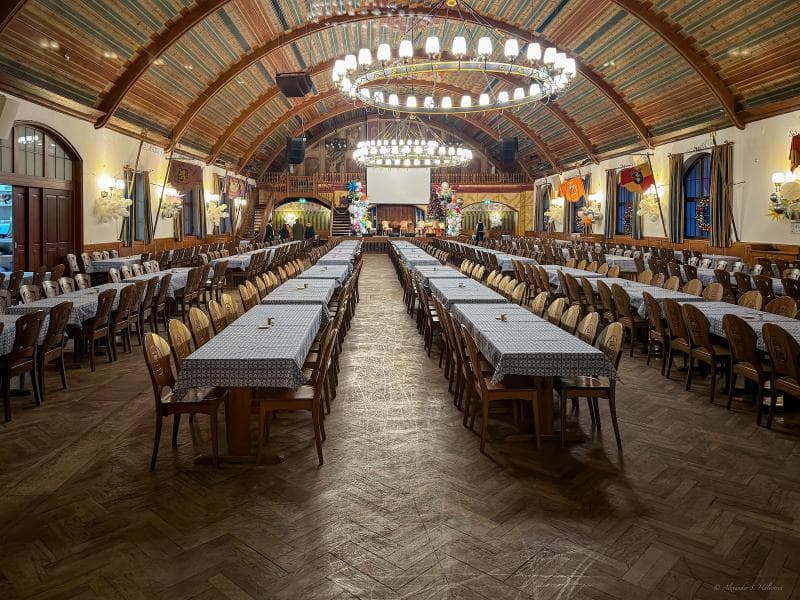
Explore the Historic Rooms of Hofbräuhaus München in Munich, Germany. Discover centuries of Bavarian tradition, vibrant culture, and storied past.
Overview
Stepping into the Historic Rooms of Hofbräuhaus München is akin to entering a living museum, where centuries of Bavarian tradition and vibrant beer culture are palpable. More than just a beer hall, Hofbräuhaus is an iconic Munich landmark, and its various historic spaces each tell a unique story. From the bustling ground-floor beer hall to the more intimate upper-level rooms, these interiors offer a deep dive into Germany's rich history and communal spirit. Visitors can explore a collection of distinct environments, each with its own character, contributing to the Hofbräuhaus's reputation as one of the world's most famous taverns.
The Hofbräuhaus complex is a multi-story establishment, inviting guests to discover its many facets. While the main Schwemme on the ground floor is perhaps the most famous, the 'Historic Rooms' encompass a broader array of spaces like the elegant Festsaal, the cozy Bräustüberl, the charming Münchner Zimmer, the distinctive Erkerzimmer, and the grand Wappensaal. Each room is meticulously preserved or faithfully reconstructed, providing a genuine sense of the past and the enduring spirit of Bavarian hospitality. These rooms are not merely decorative; they are active spaces where daily life, tradition, and celebration intertwine.
History & Cultural Background
The Hofbräuhaus traces its origins to 1589, when Duke Wilhelm V of Bavaria founded it as a brewery to supply beer to the royal court, as he found the local Munich beer to be unsatisfactory. Initially, it produced dark 'brown beer' and later gained renown for its Weißbier. The brewery moved to its current location, the Platzl, in 1607-1608. For centuries, its brewing prowess and the quality of its beer were central to Bavarian life, even playing a role in financing the state and its wars in the 17th century.
A pivotal moment occurred in 1828 when King Ludwig I opened the Hofbräuhaus to the public, transforming it from a royal brewery into a popular gathering place for all. This act cemented its role as a social and cultural hub in Munich. The building underwent significant remodeling in 1897 by Max Littmann. However, much of the Hofbräuhaus, including most of its historic rooms, suffered extensive damage during the Allied bombings of World War II. A decade-long restoration project concluded in 1958, carefully rebuilding and reopening the damaged sections to their former glory, ensuring its legacy continued.
What Makes It Special
The uniqueness of the Historic Rooms lies in their ability to transport visitors through time, blending architectural grandeur with a convivial atmosphere. The Schwemme, the ground-floor beer hall, is the vibrant heart, characterized by its impressive vaulted ceilings where brewing equipment once stood. Today, it hosts up to 1,300 guests at communal wooden tables, many bearing carved initials from patrons dating back to 1897. The constant presence of traditional Bavarian bands, playing 'Wirtshausmusik', fills the air with lively folk tunes, ensuring an authentic Munich experience.
Beyond the bustling main hall, spaces like the Bräustüberl offer a more tranquil, yet equally historic, setting with a charming turn-of-the-century ambiance that is particularly cherished by locals. The Festsaal, or Festival Hall, with its nine-meter-high barrel-vaulted ceiling, provides an imposing backdrop for various events, from traditional folk dance lessons to concerts, accommodating up to 750 guests. Other rooms like the Münchner Zimmer boast colorful old murals and views of the beer garden, while the Erkerzimmer impresses with its cherry wood paneling and panoramic views from its distinctive bay window. The Wappensaal, once a dining hall for court servants, features evocative wood paneling and painted coats of arms, preserving a piece of aristocratic history.
Stories, Fun Facts & Local Details
The Hofbräuhaus has been a magnet for famous personalities throughout history. Wolfgang Amadeus Mozart, who lived nearby in the late eighteenth century, reportedly found inspiration for his opera 'Idomeneo' after visits to the Hofbräuhaus. Empress Elisabeth of Austria, known as Sisi, and even Vladimir Lenin and his wife were among its notable patrons. These stories highlight the Hofbräuhaus's long-standing role as a melting pot for diverse individuals.
However, its history also carries darker chapters. In 1919, the Munich Communist government briefly established its headquarters here, and infamously, in February 1920, Adolf Hitler delivered a speech in the Festsaal, presenting the Nazi Party's '25-Point Program,' which led to violent clashes. This event indelibly linked the venue to a critical, tragic period in German history. Today, the Hofbräuhaus embraces its role as a symbol of Bavarian culture, drawing in approximately 35,000 visitors daily. A well-known local detail is the tradition of 'Stammtisch' – tables reserved for regulars, some dating back decades, where personalized beer mugs are kept in dedicated safes.
Visitor Perspective
A visit to the Historic Rooms of Hofbräuhaus München offers more than just a meal or a drink; it's an immersive cultural experience. While the ground-floor Schwemme is often bustling and lively, with communal seating and constant music, it provides an authentic taste of Bavarian conviviality. It is customary to share tables, and joining strangers is part of the experience. Those seeking a slightly calmer environment can explore the upper floors, where rooms like the Bräustüberl offer a more relaxed ambiance, perfect for savoring traditional Bavarian cuisine and Hofbräu beer.
Observing the intricate details, from the carved initials on tables to the historical murals and coats of arms, enhances the visit. The Hofbräuhaus provides a unique opportunity to connect with centuries of tradition, from the strict Bavarian Beer Purity Law, which dictates the quality of its brews, to the lively folk music. Whether you are drawn by the history, the architecture, the beer, or the festive atmosphere, exploring these historic rooms offers a memorable glimpse into the heart of Munich's heritage and a truly special German experience.
Coordinates: 11.580244, 48.137806
View on Google Maps💬 How Travelers Describe This Place
Based on community votes
Unique
996Photogenic
673Beautiful
585Interesting
143Must See
69
Traveler Stories
Discover memorable experiences shared by travelers who have visited this place.
No traveler stories yet.
Be the first traveler to share what made this place memorable.

Tour
By
Spot
Discover amazing places around the world. Your journey starts here.
Explore
© 2026 TourBySpot. All rights reserved.