Events
Munich, Germany
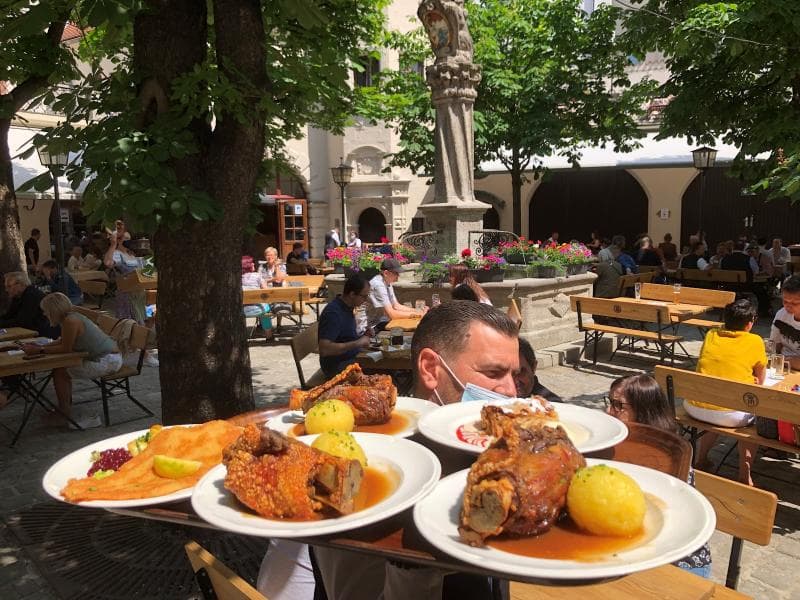
Discover the vibrant events and rich history of Hofbräuhaus München, Germany's legendary beer hall. Experience Bavarian culture, music, and tradition.
Overview
The Hofbräuhaus München, nestled in the heart of Munich, Germany, is far more than just a beer hall; it is a living institution, a vibrant cultural hub, and a cornerstone of Bavarian identity. While there isn't a single 'Events' sub-spot, the entire Hofbräuhaus experience is a continuous tapestry of happenings, from daily traditional Bavarian music to special seasonal celebrations. It's a place where history resonates with every clink of a beer mug, and visitors are invited to immerse themselves in authentic German conviviality. Each day, thousands of people gather here, drawn by its legendary past and its enduring spirit of 'Gemütlichkeit'—a German word encompassing coziness, cheerfulness, and belonging. It is a symbol of Munich's rich heritage and a focal point for both locals and travelers seeking a genuine taste of Bavarian life.
History & Cultural Background
The story of the Hofbräuhaus begins in 1589 when Duke Wilhelm V of Bavaria founded it as a court brewery, primarily to supply beer to the royal household and avoid expensive imports. Its beer quickly gained renown, with a new wheat beer brewery established on the current Platzl site in 1607. For over two centuries, it remained an exclusive royal domain, but in 1828, King Ludwig I, a monarch who loved popular celebrations, opened the Hofbräuhaus to the public. This decision transformed it into a civic and political center, a role it would famously play throughout history. During the Thirty Years' War in 1632, Hofbräuhaus beer even helped save Munich from Swedish invasion, as part of a tribute that included 23,168 liters of the brew. Tragically, the Hofbräuhaus also witnessed darker historical moments; in 1920, it was the venue where Adolf Hitler presented the Nazi Party's 25-point program, and it later served as a headquarters for the communist government in 1919. The building was largely destroyed during World War II bombings but was faithfully reconstructed, with the Festival Hall reopening in 1958, symbolizing Munich's resilience.
What Makes It Special
The Hofbräuhaus is special due to its unique blend of living tradition and historical depth. It's not a museum piece but a bustling, dynamic space. A defining characteristic is the continuous live traditional Bavarian music performed by resident bands like the Bräuhaus Musikanten and Obermüller Musikanten, filling its grand halls with cheerful brass and folk tunes daily. This vibrant atmosphere, coupled with servers often dressed in traditional Tracht (Lederhosen for men and Dirndl for women), creates an immersive cultural experience. The massive Schwemme, the main beer hall on the ground floor, can seat around 1,000 people at long wooden tables, fostering communal dining and drinking. Beyond the main hall, various rooms like the Festsaal (Festival Hall), Bräustüberl, and Wirtsgarten (beer garden) offer different ambiances for gatherings and events. The Hofbräuhaus also plays a significant role in Oktoberfest, hosting one of the largest tents at the world-famous festival.
Stories, Fun Facts & Local Details
Many stories and local traditions add to the Hofbräuhaus's charm. It's said that Wolfgang Amadeus Mozart, who lived nearby, was a regular patron, finding inspiration for his opera 'Idomeneo' after enjoying the beer. Even Vladimir Lenin, the Russian revolutionary, reportedly visited regularly before World War I. A fascinating local detail is the tradition of 'Stammtische,' regular's tables reserved for loyal patrons, some of whom have kept their personalized beer mugs stored in safes within the Hofbräuhaus for decades. Many regulars even use special Hofbräuhaus beer tokens as a form of currency within the establishment, viewing them as a reliable investment for future enjoyment. The popular song 'In München steht ein Hofbräuhaus' ('In Munich stands a Hofbräuhaus'), composed in 1935 by Berlin native Wilhelm Gabriel, became synonymous with the venue, further cementing its global fame.
Visitor Perspective
For visitors, the Hofbräuhaus offers an unforgettable journey into Bavarian culture. Stepping inside, one is immediately enveloped by the lively sounds of traditional music, the aroma of hearty Bavarian food, and the sight of people from all walks of life sharing tables and laughter. While often bustling and tourist-friendly, it retains an authentic local feel, especially with the 'Stammtisch' culture. The experience is about more than just tasting a liter of traditional Bavarian beer; it's about participating in a centuries-old tradition of communal celebration. Whether joining the daily musical performances, attending special dances like the Münchner Kathreintanz, or simply soaking in the atmosphere, guests become part of the ongoing story of this historic institution. It's a place where strangers become friends over shared 'Maß' (liter mugs) of beer and traditional dishes, embodying the welcoming spirit of Munich.
Coordinates: 11.579925, 48.137574
View on Google Maps💬 How Travelers Describe This Place
Based on community votes
Interesting
996Must See
658Unique
585Photogenic
143Beautiful
69
Traveler Stories
Discover memorable experiences shared by travelers who have visited this place.
No traveler stories yet.
Be the first traveler to share what made this place memorable.

Tour
By
Spot
Discover amazing places around the world. Your journey starts here.
Explore
© 2026 TourBySpot. All rights reserved.