Hamburger Kunsthalle
Hamburg, Germany
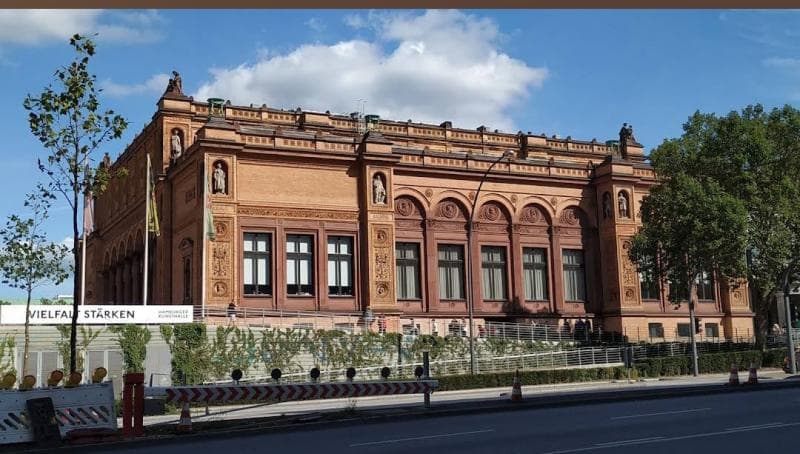
Explore the Hamburger Kunsthalle in Hamburg, Germany, a premier art museum spanning eight centuries of European art.
Overview
Nestled in the vibrant city of Hamburg, Germany, the Hamburger Kunsthalle stands as one of the country's largest and most significant art museums. Conveniently situated between the bustling Hauptbahnhof (main train station) and the serene Alster lakes, it offers an enriching journey through European art history. The museum's extensive collection spans an impressive seven to eight centuries, showcasing art from the Middle Ages right up to the contemporary era. Architecturally, the Hamburger Kunsthalle is a fascinating complex comprising three distinct yet interconnected buildings: the original structure dating from 1869, the Kuppelsaal from 1921, and the striking Galerie der Gegenwart, added in 1997. This harmonious blend of architectural styles reflects a dynamic evolution, moving from 19th-century historicism to modernist minimalism.
History & Cultural Background
The origins of the Hamburger Kunsthalle can be traced back to 1849, when its collection was first established by the Hamburg Kunstverein, an art association founded in 1817. The collection was made accessible to the public in 1850, initially known as the Städtische Gallerie (municipal painting gallery). The iconic red-brick main building, constructed between 1863 and 1869, was a testament to Hamburg's strong civic spirit, largely financed through private donations. A pivotal figure in the museum's early development was Alfred Lichtwark, its first director from 1886 to 1914. He meticulously built the collection of German Romantic painting, effectively 'rediscovering' and championing artists like Caspar David Friedrich and Philipp Otto Runge, whose works are now cornerstones of the 19th-century galleries. Further expansion occurred between 1914 and 1921 with the addition of the Kuppelsaal (domed-hall), designed by Fritz Schumacher. The museum's architectural narrative continued in 1997 with the opening of the Galerie der Gegenwart (Gallery of Contemporary Art), a distinctive cubic structure by architect Oswald Mathias Ungers. The very name 'Kunsthalle' signals its historical role as a public 'art hall' or exhibition space, a tradition that flourished in northern Germany during the 19th century.
What Makes It Special
What truly sets the Hamburger Kunsthalle apart is its extraordinary chronological breadth, making it one of Germany's few museums to offer a deeply layered exploration of European art from the Middle Ages to the present day. Its permanent collection is thoughtfully organized into sections dedicated to Old Masters, 19th-Century Art, Modern Art, and Contemporary Art. A particular strength lies in its extensive holdings of German Romantic art, featuring world-renowned masterpieces by Caspar David Friedrich, such as the evocative 'Wanderer above the Sea of Fog' and 'The Sea of Ice'. Visitors can also admire significant medieval altarpieces by Master Bertram and Master Francke. Beyond German masters, the collection encompasses important 17th-century Dutch paintings by artists like Rembrandt and Ruisdael, alongside French and German 19th-century drawings and paintings, and a diverse array of international modern and contemporary art, including Pop Art, Conceptual Art, and video installations. The Kupferstichkabinett, the museum's department of prints and drawings, is another jewel, boasting over 140,000 works. This includes drawings by legendary figures such as Leonardo da Vinci, Raphael, Michelangelo, Rembrandt, and Dürer, as well as an exceptional collection of Spanish Old Master drawings by Goya and Murillo, rivaling those found in the Louvre and Uffizi.
Stories, Fun Facts & Local Details
The Hamburger Kunsthalle is more than just a museum; it's a testament to the enduring civic engagement and cultural passion of Hamburg's citizens, who initiated and largely funded its creation. The vision of early director Alfred Lichtwark not only shaped the museum's remarkable collection of German Romanticism but also reintroduced many artists to public acclaim. The museum embraces a thought-provoking leitmotif: 'All Art Has Been Contemporary', inviting visitors to connect with the past by considering how art from any period reflects the societal values and perspectives of its time. A dramatic moment in its history includes the 1994 theft and subsequent recovery of Caspar David Friedrich's painting 'Nebelschwaden' (Fog Banks). The Kunsthalle also plays an active role in the community, fostering social inclusion through initiatives that make art accessible to a wider audience, including interactive experiences for children and families. Its picturesque setting between the Inner and Outer Alster lakes is enhanced by the bistro in the Galerie der Gegenwart, offering visitors delightful views of the city as they reflect on their artistic journey.
Visitor Perspective
For travelers planning a visit, the Hamburger Kunsthalle offers a welcoming and accessible experience. Its prime location near Hamburg's main train station makes it incredibly convenient to reach. Most visitors find that 3 to 5 hours are ideal for exploring its extensive collections. The museum is committed to accessibility, being fully wheelchair-friendly with wheelchairs available free of charge upon request. Lockers are provided for luggage and bags larger than DIN A4, requiring a 1-euro coin deposit. To deepen your appreciation of the artworks, audio guides are available in both German and English, with special versions tailored for children and in simpler language. The Kunsthalle also offers public and private guided tours for those seeking expert insights. Demonstrating its dedication to broad accessibility, the museum provides free admission on the first Thursday of every month from 6 PM to 9 PM, and children and young people under 18 always enjoy free entry. Additionally, the café located in the Galerie der Gegenwart offers a pleasant spot for refreshments without requiring an admission ticket, all while enjoying scenic city views.
Coordinates: 10.00306, 53.555
View on Google Maps💬 How Travelers Describe This Place
Based on community votes
Beautiful
1.0kPhotogenic
563Must See
309Unique
100Interesting
63
Traveler Stories
Discover memorable experiences shared by travelers who have visited this place.
No traveler stories yet.
Be the first traveler to share what made this place memorable.
Things to see at Hamburger Kunsthalle



Tour
By
Spot
Discover amazing places around the world. Your journey starts here.
Explore
© 2026 TourBySpot. All rights reserved.