Hamburg Rathaus
Hamburg, Germany
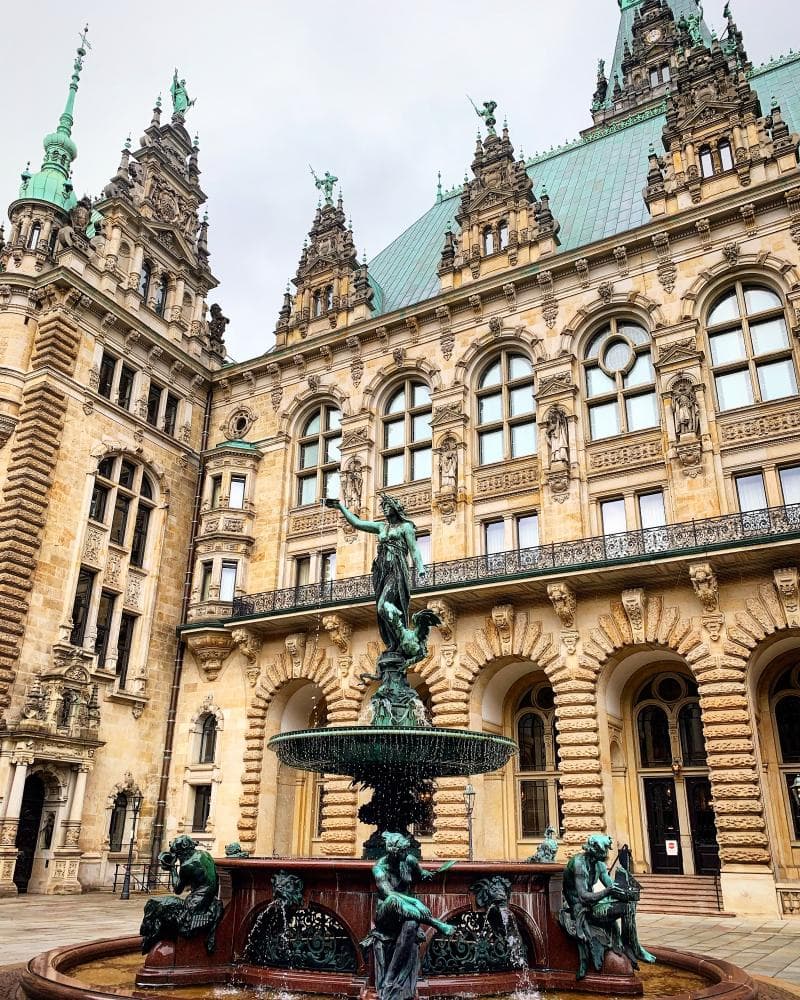
Discover Hamburg Rathaus, the stunning seat of government in Hamburg, Germany. Explore its Neo-Renaissance architecture, rich history, and intricate interiors.
Overview
The Hamburg Rathaus, or City Hall, stands as a magnificent centerpiece in the heart of Hamburg, Germany, proudly serving as the seat of the city-state's government. This stunning edifice houses both the Hamburg Parliament (Bürgerschaft) and the Senate, making it a living symbol of civic administration. Located in the historic Altstadt quarter, it presides over the bustling Rathausmarkt square, just a stone's throw from the serene Binnenalster lake. Constructed between 1886 and 1897, its opulent Neo-Renaissance architecture commands attention, distinguishing it amidst the city's more typically restrained Hanseatic style. Far more than just an administrative building, the Rathaus is an architectural marvel, boasting an impressive 647 rooms and supported by over 4,000 oak piles driven deep into the soft ground—a testament to Hamburg's engineering prowess and enduring spirit.
History & Cultural Background
The current Hamburg Rathaus emerged from the ashes of a devastating past. Its predecessor was tragically destroyed during the Great Fire of 1842, leaving the city without a central government building for over half a century. It wasn't until 1886 that construction began on the new City Hall, culminating in its grand inauguration in 1897. The project was an ambitious undertaking, costing approximately 11 million Gold marks, equivalent to about €80 million today. Designed by a collective of seven architects known as the 'Rathausbaumeisterbund,' with Martin Haller as the lead, the building's intricate design was deliberately chosen to reflect the wealth, power, and independent spirit of the Free and Hanseatic City of Hamburg during a period of prosperity following the formation of the German Empire. It stands today as one of the few completely preserved examples of historicist architecture in Hamburg. Within its beautiful courtyard, the Hygieia fountain serves as a poignant reminder of the city's resilience, erected in remembrance of the severe cholera epidemic that swept through Hamburg in 1892.
What Makes It Special
The Hamburg Rathaus is a celebration of artistry and civic pride, making it truly special. Its elaborately decorated Neo-Renaissance façade features a collection of 20 statues, each representing an emperor of the Holy Roman Empire. Above the main entrance, a Latin inscription boldly proclaims: 'The descendants shall seek worthily to maintain the freedom achieved by their forebears,' a powerful message reflecting Hamburg's historical commitment to self-governance. The sheer scale of the building is remarkable; its central tower soars to a height of 112 meters. Inside, the opulent Great Ballroom impresses with its dimensions—46 meters long, 18 meters wide, and 15 meters high. This grand space is adorned with five monumental paintings that chronicle Hamburg's rich history from 800 to 1900, alongside 62 coats of arms from the old Hanseatic League. Another unique feature is the Senate chamber, which cleverly incorporates a large glass roof, an architectural nod to an ancient Germanic custom where councils would convene in the open air.
Stories, Fun Facts & Local Details
Beyond its official functions, the Hamburg Rathaus is a treasure trove of fascinating stories and local traditions. One popular anecdote recounts the accidental discovery of a 647th room in 1971, found only when a document fell behind a filing cabinet, suggesting the building might hold even more secrets. A charming local tradition dictates that unmarried men in Hamburg must sweep the Rathaus steps on their 30th birthday, a playful ritual that often draws onlookers. The Phoenix Hall, one of the many exquisite rooms, takes its name from a phoenix emblem above its fireplace, symbolizing Hamburg's rebirth and recovery after the devastating 1842 fire. The main entrance boasts an ornate wrought-iron gate that leads into an impressive entrance hall, where 16 sandstone pillars are decorated with 68 portraits of notable Hamburg citizens. Visitors might also notice the copper roof, which has acquired a distinctive green patina over the years, a natural process that adds to the building's historic charm and visibly showcases its age. Inside, a tradition invites visitors to toss a coin under the grand staircase for good luck.
Visitor Perspective
The Hamburg Rathaus extends a warm welcome to curious travelers, offering an engaging glimpse into its history and daily workings. The building is generally open to the public, and guided tours are regularly available in both German and English, providing an in-depth look at its ceremonial rooms and civic architecture. These tours offer a unique opportunity to explore parts of its impressive 647 rooms, although tour schedules can be subject to change due to official events or state visits. The Rathausmarkt, the expansive square directly in front of the City Hall, is a vibrant hub of activity throughout the year, hosting various fairs, markets—including Hamburg's renowned Christmas market—and concerts, adding to the lively atmosphere. For a moment of tranquility amidst the grandeur, the picturesque inner courtyard, featuring the Hygieia fountain, offers a peaceful retreat and an excellent vantage point for admiring the building's architecture. While general entry is often free, guided tours typically have a modest fee, with discounts available for holders of the HamburgCARD. The Rathaus is committed to accessibility, offering provisions for wheelchair users to ensure a comfortable visit for all.
Coordinates: 9.99222, 53.55028
View on Google Maps💬 How Travelers Describe This Place
Based on community votes
Must See
998Unique
903Beautiful
481Interesting
458Photogenic
197
Traveler Stories
Discover memorable experiences shared by travelers who have visited this place.
No traveler stories yet.
Be the first traveler to share what made this place memorable.
Things to see at Hamburg Rathaus



Tour
By
Spot
Discover amazing places around the world. Your journey starts here.
Explore
© 2026 TourBySpot. All rights reserved.