Guided Tours
Hamburg, Germany
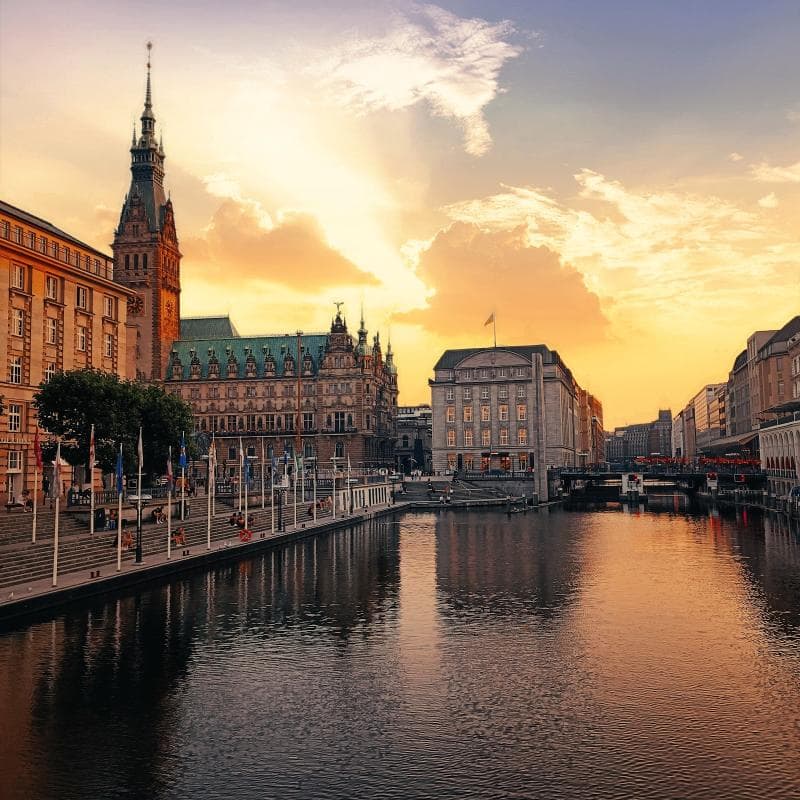
Explore Hamburg Rathaus with a guided tour, discovering its Neo-Renaissance architecture, rich history, and the vibrant civic life of Hamburg, Germany.
Overview
Stepping into the Hamburg Rathaus, or City Hall, is to encounter the vibrant heart of Hamburg, Germany. This magnificent Neo-Renaissance edifice, which serves as the seat of the city-state's government, stands proudly on the Rathausmarkt square. Far from being merely an administrative building, the Rathaus is a living monument to Hamburg's rich history, enduring spirit, and proud independence. Guided tours offer a unique opportunity to delve beyond its grand façade and explore the opulent interiors where key political decisions are made and historical events have unfolded. These tours typically last around 45 minutes to an hour, providing insightful commentary on the architecture, history, and current functions of this iconic landmark.
As you approach, its intricate details and towering spire, reaching 112 meters high, immediately capture attention, embodying the wealth and self-confidence of Hamburg at the time of its construction. The Rathaus is not just a structure; it is a narrative in stone, offering a glimpse into the Hanseatic city's past and present.
History & Cultural Background
The current Hamburg Rathaus is the sixth city hall in Hamburg's history, a testament to the city's resilience. Its construction began in 1886 and concluded in 1897, taking 11 years to complete after the previous city hall was destroyed in the Great Fire of 1842. The new building was erected on over 4,000 oak piles driven into the soft ground near the Alster Lake, a remarkable feat of engineering for its time. Designed by a collective of seven architects led by Martin Haller, the Rathaus was intended to express the city's wealth, its republican traditions, and its independence following the formation of the German Empire. It cost 11 million German gold marks, approximately €80 million in modern value.
Unlike the often-restrained Hanseatic architectural style, the Rathaus showcases an elaborate and unusually pompous Renaissance Revival style, blending elements of Renaissance, Gothic, and Baroque influences. This choice reflected a conscious decision to project Hamburg's importance and prosperity on the global stage. The building houses both the city's Senate (executive branch) and Parliament, symbolizing the city's enduring governmental functions since its inauguration.
What Makes It Special
What truly sets the Hamburg Rathaus apart is its scale and internal grandeur. The building boasts an astonishing 647 rooms, a number that is often compared to Buckingham Palace, though it has slightly fewer rooms than the royal residence. Inside, visitors are met with magnificent halls filled with allegorical representations of democracy and seafaring, decorated with busts of important personalities, and furnished with heavy, ornate pieces. The second floor, accessible only with a guided tour, features impressive state rooms that defy the expectation of a typical civic building.
Highlights include the Grand Ballroom, measuring 46 meters long, 18 meters wide, and 15 meters high, adorned with paintings depicting Hamburg's history from 800-1900 and 62 coats of arms of the old Hanseatic League. The Kaisersaal, or Imperial Hall, commemorates Kaiser Wilhelm II's visit for the opening of the North Sea-Baltic Canal. The Senate Chamber features a large glass roof, an architectural detail symbolizing an ancient Germanic custom of open-air council meetings. Outside, the inner courtyard surprises with the Hygieia Fountain, a beautiful monument dedicated to the goddess of health, built in remembrance of the 1892 cholera epidemic and the city's commitment to clean drinking water.
Stories, Fun Facts & Local Details
The Rathaus is brimming with fascinating stories and unique traditions. A charming local custom involves tossing a coin under the grand staircase inside the Rathausdiele for good luck; a 19th-century coin is reportedly still lodged there. The Golden Book of the city, where esteemed guests sign, is not actually a bound book but a collection of loose-leaf pages, a detail often shared during tours. Another intriguing tale involves the accidental discovery of a previously unknown room in 1971 by officials searching for a misplaced document, suggesting the vast building might hold even more secrets.
One of the most enduring traditions associated with the Rathaus is the Matthiae-Mahl, the world's oldest banquet still celebrated, dating back to 1356. Held in the Grand Ballroom, this prestigious event sees the Mayor inviting chancellors, monarchs, and other dignitaries, with past entries in the Golden Book including figures like Queen Elizabeth II and Angela Merkel. The exterior facade itself tells a story, featuring 20 statues of emperors between the windows of the representation floor, with Charlemagne and Frederick Barbarossa prominently displayed, reflecting their historical significance to Hamburg.
Visitor Perspective
For a curious traveler, a guided tour of the Hamburg Rathaus is an enriching experience, offering a deeper understanding of this architectural and political marvel. Tours are generally available in both German and English, with English tours typically offered several times a day on published tour days. It's important to note that since the Rathaus is a working seat of government, tour availability can change due to official events or state visits, so checking the schedule in advance is highly recommended.
Individual visitors usually purchase tickets on-site, and arriving a little early is advisable to ensure a calmer start and allow time to admire the impressive entrance hall, known as the Rathausdiele. Beyond the ceremonial rooms, the tours often provide access to areas that would otherwise remain unseen, offering insights into the daily workings of the city's parliament and senate. Accessibility is also considered, with the city hall and its tours being accessible to wheelchair users. Exploring the Rathaus is not just about observing history; it's about connecting with the living legacy of Hamburg, a city proud of its past and vibrant in its present.
Coordinates: 9.99222, 53.55028
View on Google Maps💬 How Travelers Describe This Place
Based on community votes
Beautiful
685Interesting
472Must See
446Unique
399Photogenic
92
Traveler Stories
Discover memorable experiences shared by travelers who have visited this place.
No traveler stories yet.
Be the first traveler to share what made this place memorable.

Tour
By
Spot
Discover amazing places around the world. Your journey starts here.
Explore
© 2026 TourBySpot. All rights reserved.