Rathausmarkt Square
Hamburg, Germany
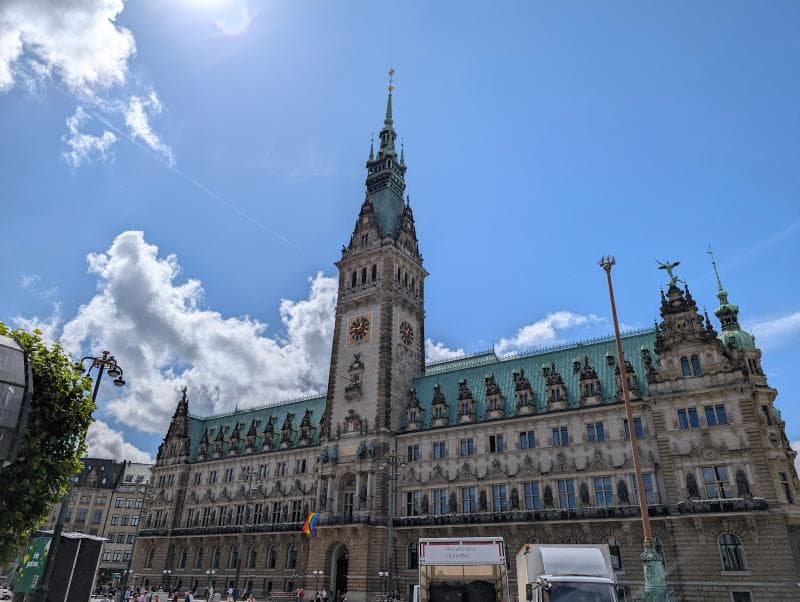
Explore Rathausmarkt Square, Hamburg's central civic heart. Discover its rich history, stunning architecture, and vibrant events in Germany.
Overview
Nestled in the heart of Hamburg's Altstadt (old town) district, Rathausmarkt Square is the vibrant civic epicenter of this historic German city. Stretching gracefully before the magnificent Hamburg Rathaus, or City Hall, it stands as a testament to Hamburg's rich past and dynamic present. Paved with distinctive red granite, the square is framed by the elegant shopping arcades of the Alsterarkaden along the picturesque Alsterfleet, offering enchanting views and a welcoming atmosphere. It functions not merely as an open space but as a central stage for many of Hamburg's most significant cultural events and gatherings, drawing both locals and curious travelers year-round.
History & Cultural Background
The very existence of Rathausmarkt Square is deeply rooted in a pivotal moment of Hamburg's history: the Great Fire of 1842. This catastrophic event devastated much of the old city, including the former city hall, paving the way for a grand urban reconstruction. Conceived as a symbol of Hamburg's resilience and its identity as a proud, self-governing city-state, the square's redesign drew inspiration from Venice's iconic Piazza San Marco, featuring an open layout that leads toward the waterfront. The new, elaborate Hamburg City Hall, which now majestically overlooks the square, was completed in 1897, becoming the centerpiece of this revitalized civic space. For decades, Rathausmarkt was a bustling hub, even serving as a major intersection for Hamburg's tram network. However, with the cessation of tram services in the 1970s, the area underwent a significant transformation in the late 1970s and early 1980s, becoming largely pedestrianized and resurfaced with its characteristic red granite. This renovation truly cemented its role as a ceremonial and social gathering place. Notably, like many German public spaces, it was renamed Adolf Hitler Platz in 1933 during a dark period, only to have its historical name, Rathausmarkt, rightfully restored in 1945.
What Makes It Special
Rathausmarkt Square's unique allure stems from its commanding architectural presence and its ever-evolving role in city life. The grandeur of the Hamburg Rathaus, with its richly ornamented Neo-Renaissance facade, towering spire, and numerous statues of emperors, provides a breathtaking backdrop that defines the square's character. The spacious layout of the square itself, bordered by trees, creates an inviting urban oasis. Beyond the City Hall, the surrounding architectural ensemble, including the historic Hamburg Stock Exchange building, contributes to an impressive and harmonious cityscape. A poignant feature is the Heinrich Heine Sculpture, a modern rendition erected in 1982, replacing the original monument that was tragically removed and melted down by the National Socialists in 1933 due to Heine being a Jewish poet and democrat. Visitors can also find the Hygieia fountain in the Rathaus' inner courtyard, a powerful memorial to the cholera epidemic of 1892, symbolizing health and remembrance. Its seamless connection to the Binnenalster lake and the elegant Alsterarkaden further enhances its charm, offering scenic walks and picturesque views.
Stories, Fun Facts & Local Details
Rathausmarkt is a stage for countless stories and vibrant local traditions. Throughout the year, the square transforms to host a myriad of events: in warmer months, it might feature an open-air cinema or a delightful seasonal wine village, while the winter brings one of Hamburg's most cherished Christmas markets, complete with festive lights, traditional stalls, and the aroma of mulled wine. A heartwarming annual event is the 'Longest Table of Democracy,' which stretches 400 meters across the square, bringing together organizations and citizens to celebrate civic life, diversity, and solidarity. For those interested in local customs, there's a charming tradition: unmarried men in Hamburg are said to sweep the steps outside the City Hall on their 30th birthday, a lighthearted ritual often accompanied by friends. Travelers can also participate in a quaint local activity by feeding the beloved 'Alsterschwäne' (swans of the Alster) near the City Hall. The sheer scale of the Rathaus is impressive, boasting 647 rooms, often leading to comparisons with grander palaces. Following its red granite renovation in the 1980s, locals playfully nicknamed the square the 'Red Square,' a nod to its distinctive new surface.
Visitor Perspective
For any traveler exploring Hamburg, Rathausmarkt Square is an essential starting point. Its central location makes it exceptionally accessible, with the Rathaus metro station just steps away and numerous bus stops nearby. It's also an easy and pleasant walk from many key areas of the city. The square serves as an ideal launchpad for discovering Hamburg's city center, offering immediate access to an array of cafes, restaurants, and the bustling shopping street, Mönckebergstrasse. Visitors can simply relax, soak in the vibrant atmosphere, and enjoy excellent opportunities for people-watching, admiring the splendid architecture that surrounds them. While the square can become quite lively and crowded during peak times, visiting earlier in the day or later in the evening can offer a more tranquil and intimate experience. The constant calendar of events throughout the year ensures that Rathausmarkt Square always offers something engaging and memorable, making it a dynamic and indispensable stop on any Hamburg itinerary.
Coordinates: 9.99306, 53.55083
View on Google Maps💬 How Travelers Describe This Place
Based on community votes
Photogenic
847Must See
831Interesting
685Unique
433Beautiful
211
Traveler Stories
Discover memorable experiences shared by travelers who have visited this place.
No traveler stories yet.
Be the first traveler to share what made this place memorable.

Tour
By
Spot
Discover amazing places around the world. Your journey starts here.
Explore
© 2026 TourBySpot. All rights reserved.