Main Hall
Hamburg, Germany
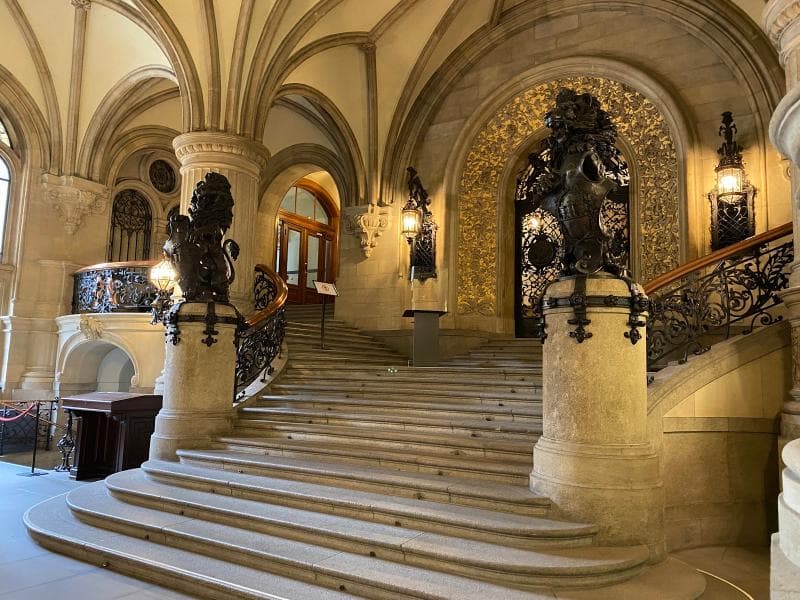
Explore the Main Hall (Großer Festsaal) inside Hamburg Rathaus, Germany. Discover its stunning Neo-Renaissance architecture, rich history, and cultural significance.
Overview
Stepping into the Main Hall, also known as the Grand Ballroom (Großer Festsaal), within the opulent Hamburg Rathaus (City Hall) transports visitors to a realm of civic grandeur and historical significance. This magnificent space, central to Hamburg's political and social life, is not merely an assembly room but a vibrant testament to the city's enduring prosperity and Hanseatic pride. Measuring an impressive 46 meters long, 18 meters wide, and 15 meters high, it encompasses an area of 720 square meters, making it one of the most distinguished rooms in the Rathaus. Adorned with rich artistry and steeped in tradition, the Main Hall serves as a stage for significant receptions, banquets, and cultural events, embodying the spirit of Hamburg itself.
History & Cultural Background
The current Hamburg Rathaus, a masterpiece of Neo-Renaissance architecture, rose from the ashes of the devastating Great Fire of 1842, which destroyed the city's previous city hall. Construction spanned from 1886 to 1897, a period of immense wealth and burgeoning self-confidence for Hamburg as a Free and Hanseatic City within the newly formed German Empire. The elaborate design, a departure from the city's typically restrained Hanseatic style, was intended to project this prosperity and independence. The Main Hall, as a primary representational space, reflects this ambition directly through its scale and decoration. It symbolically connects Hamburg's past with its present, highlighting its enduring role as a major European port and a beacon of republican ideals. The hall also hosts the Matthiae meal, the world's oldest banquet, a tradition dating back to 1356, underscoring its deep roots in Hamburg's cultural heritage.
What Makes It Special
The Main Hall's allure lies in its meticulous details and symbolic artistry. Five colossal paintings dominate its walls, vividly depicting Hamburg's history from 800 to 1900, offering a visual narrative of the city's evolution and triumphs. Complementing these historical panoramas are 62 coats of arms, representing the various cities of the ancient Hanseatic League, an alliance that was pivotal to Hamburg's commercial power and identity. Above, three immense chandeliers, each weighing 1,500 kilograms and boasting 278 lights, cast a warm glow, enhancing the room's majestic atmosphere. These features are not merely decorative; they serve as a powerful reminder of Hamburg's rich maritime past, its mercantile prowess, and its deep-seated civic pride. The artistry within the Main Hall transforms it into a living museum, where every element tells a part of Hamburg's grand story.
Stories, Fun Facts & Local Details
Beyond its formal beauty, the Main Hall holds fascinating stories and local traditions. Its continuous role as the venue for the Matthiae meal since 1356 means it has witnessed centuries of diplomatic gatherings and celebrations, making it a tangible link to medieval traditions in a modern city. It's a testament to Hamburg's enduring commitment to its historical customs. While a popular anecdote suggests the Hamburg Rathaus has more rooms than Buckingham Palace, it actually features 647 rooms, an impressive number that speaks to its vastness and functionality as a working government building. This architectural marvel stands on over 4,000 oak piles, driven into the soft ground near the Alster river, a remarkable feat of 19th-century engineering to support such a monumental structure. The Rathaus's very existence, rising from the ashes of disaster, embodies the city's resilience and capacity for renewal.
Visitor Perspective
For the curious traveler, experiencing the Main Hall and the Hamburg Rathaus is a journey into the heart of Hamburg's civic life. As a functioning seat of government, access to the interior, including the Main Hall, is primarily facilitated through guided tours. These tours offer an invaluable opportunity to appreciate the intricate architecture, learn about the city's governance, and delve into the stories behind its most significant rooms. Tours are frequently available in English, ensuring that international visitors can fully engage with the history and cultural narratives presented. Walking through the Main Hall allows one to imagine the historical figures who have graced its space and to feel the weight of centuries of Hamburg's political and social life. It is an immersive experience that provides a deeper understanding of this proud Hanseatic city.
Coordinates: 9.99222, 53.55028
View on Google Maps💬 How Travelers Describe This Place
Based on community votes
Must See
839Interesting
445Photogenic
416Beautiful
289Unique
141
Traveler Stories
Discover memorable experiences shared by travelers who have visited this place.
No traveler stories yet.
Be the first traveler to share what made this place memorable.

Tour
By
Spot
Discover amazing places around the world. Your journey starts here.
Explore
© 2026 TourBySpot. All rights reserved.