Griffith Observatory
Los Angeles, United States
Explore Griffith Observatory in Los Angeles, United States, a world-renowned landmark offering stunning views, astronomy exhibits, and live planetarium shows.
Overview
Perched majestically on the southern slope of Mount Hollywood, within the sprawling expanse of Griffith Park, the Griffith Observatory stands as an iconic landmark of Los Angeles, United States. It offers breathtaking panoramic views that sweep across the vast Los Angeles Basin, encompassing the glittering Downtown skyline, the famous Hollywood Sign, and the distant shimmer of the Pacific Ocean. More than just a vantage point, the observatory serves as southern California's gateway to the cosmos, dedicated to making astronomy and science accessible to all. Since its opening, it has consistently offered free admission to its grounds, exhibits, and public telescopes, welcoming millions of visitors from around the globe to explore the wonders of the universe.
History & Cultural Background
The story of Griffith Observatory begins with the visionary philanthropist, Colonel Griffith J. Griffith. In 1896, he generously donated 3,015 acres of land, which would become Griffith Park, to the City of Los Angeles. Driven by a profound belief in public education, Griffith stipulated in his will that funds be used to construct an observatory, exhibit hall, and planetarium on the donated land, with the explicit condition that admission always remain free. Construction commenced on June 20, 1933, and the observatory officially opened its doors to the public on May 14, 1935. Designed by architects John C. Austin and Frederic M. Ashley, the building masterfully blends Greek and Beaux-Arts styles with 1930s modern design elements, featuring a distinctive Greek key pattern on its exterior. It quickly became the third planetarium in the United States and, in its first five days, welcomed over 13,000 visitors. During World War II, the planetarium played a unique role, training pilots in celestial navigation.
From 2002 to 2006, the observatory underwent a significant, $93 million renovation and expansion. This project revitalized the historic building while nearly tripling its exhibit space, largely through underground expansion, ensuring its continued role as a leading center for public astronomy.
What Makes It Special
The Griffith Observatory's unique appeal lies in its multifaceted approach to public science engagement. It is a rare hybrid of a public observatory, a cutting-edge planetarium, and an extensive exhibition space, all operating with a commitment to free access. At its heart is the iconic 12-inch Zeiss refracting telescope, through which more people (over nine million since its opening) have looked than through any other telescope on Earth, making it truly one-of-a-kind. The Samuel Oschin Planetarium offers immersive, live shows that transport audiences to the farthest reaches of the universe, distinguishing itself as one of the few major facilities globally that produces exclusively live planetarium presentations. Its 60 exhibits make astronomy concepts tangible and engaging, encouraging visitors to become active observers and sparking curiosity about the cosmos. This combination of historical significance, architectural beauty, and a steadfast dedication to public education in astronomy solidifies its status as a world leader in its field.
Stories, Fun Facts & Local Details
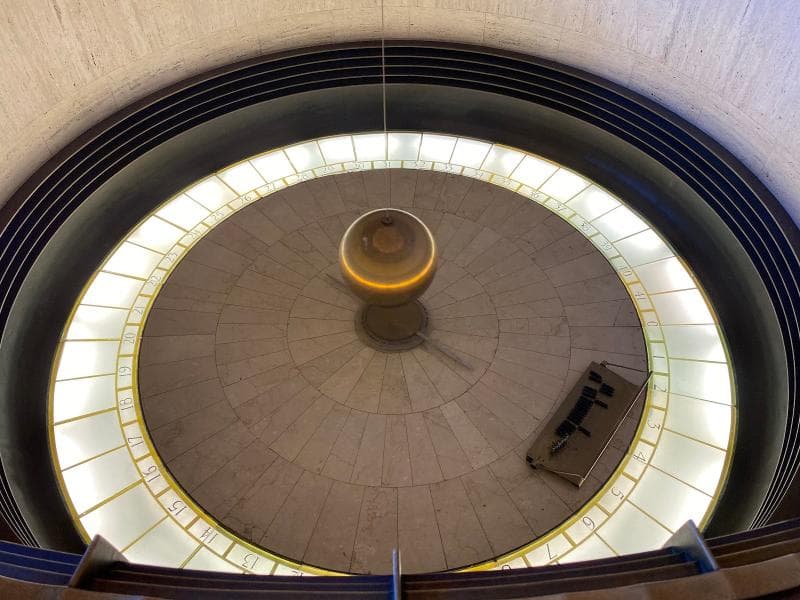
Beyond its scientific endeavors, Griffith Observatory holds a special place in popular culture. Its distinctive architecture and dramatic setting have made it a beloved film location, famously appearing in movies such as 'Rebel Without a Cause,' starring James Dean, which cemented its iconic status in Hollywood lore. Inside the Gunther Depths of Space Hall, visitors can marvel at 'The Big Picture,' an immense 152-foot-long mural depicting the Virgo Cluster of galaxies, offering a stunning visual representation of the universe's scale. Another fascinating exhibit is the Tesla Coil, an electrifying demonstration of high-voltage electricity, which provides a captivating spectacle that, while not celestial, perfectly embodies the spirit of scientific wonder fostered by the observatory. The Foucault pendulum in the W. M. Keck Foundation Central Rotunda visibly demonstrates the Earth's rotation, a simple yet profound testament to astronomical principles. It is a point of pride that the observatory has hosted over 100,000 planetarium shows since 1935, a testament to its enduring commitment to live, engaging education.
Visitor Perspective
Visiting Griffith Observatory offers an experience that caters to all senses and interests. Many visitors prioritize the stunning views, which are particularly spectacular at dusk when the city lights begin to twinkle, offering an unforgettable panorama from the Pacific Ocean to Downtown LA. Evenings provide the best opportunity for public telescope viewing, where staff guides assist guests in looking at celestial objects, a truly inspiring activity. The grounds and the building are fully accessible, and while admission to the observatory itself is free, there is paid parking available. It is advisable to visit during weekdays or earlier in the day to avoid the larger crowds that gather on weekends, during summer, or at sunset. Many combine their observatory trip with a hike through Griffith Park, utilizing the various trails that lead to and from the site, creating a holistic outdoor and educational adventure. The 'Café at the End of the Universe,' run by celebrity chef Wolfgang Puck, offers dining options with a cosmic theme. Whether you're an avid stargazer, a film buff, or simply seeking an iconic Los Angeles experience, the Griffith Observatory offers a meaningful and inspiring journey into science, culture, and breathtaking scenery.
Coordinates: -118.3004, 34.1186
View on Google Maps💬 How Travelers Describe This Place
Based on community votes
Beautiful
934Must See
741Unique
276Interesting
30Photogenic
16
Traveler Stories
Discover memorable experiences shared by travelers who have visited this place.
No traveler stories yet.
Be the first traveler to share what made this place memorable.
Things to see at Griffith Observatory



Tour
By
Spot
Discover amazing places around the world. Your journey starts here.
Explore
© 2026 TourBySpot. All rights reserved.