Hall Of The Eye
Los Angeles, United States
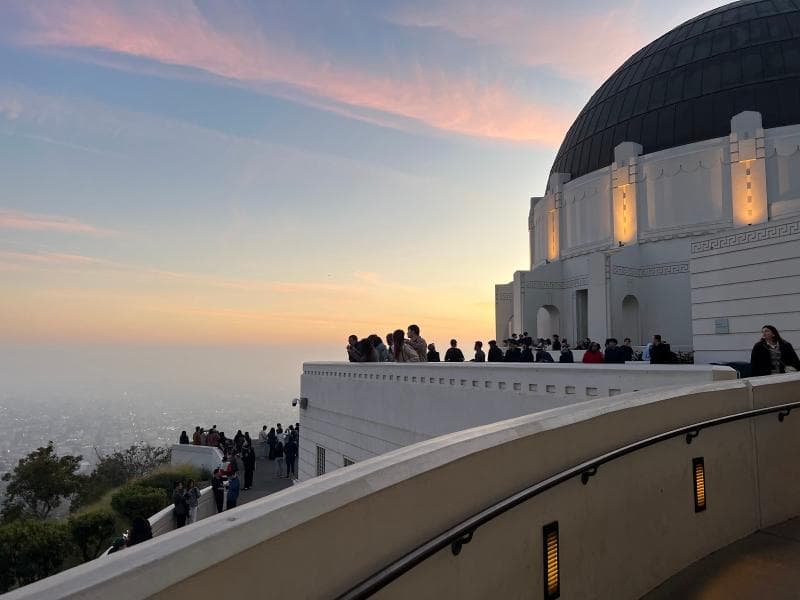
Explore the Wilder Hall of the Eye at Griffith Observatory in Los Angeles, United States, tracing humanity's journey of cosmic observation.
Overview
Nestled within the iconic Griffith Observatory in Los Angeles, United States, the Wilder Hall of the Eye offers a captivating journey through the history of human observation of the cosmos. This engaging exhibit gallery focuses on how our understanding of the sky has evolved, alongside the innovative tools developed to extend our vision beyond what the naked eye can perceive. It’s an essential stop for anyone curious about the profound impact astronomical discoveries have had on human civilization and our place in the universe.
The Hall of the Eye is designed to cast every visitor in the role of an observer, providing interactive opportunities to engage with the principles of astronomy. It illustrates the progression of observational techniques, from ancient visual methods to the sophisticated instruments of modern science, making complex concepts accessible to all.
History & Cultural Background
The vision for Griffith Observatory, and subsequently its exhibits like the Wilder Hall of the Eye, originated with its benefactor, Griffith J. Griffith. His enduring legacy was to make astronomy accessible to the public, a revolutionary idea at a time when observatories were typically remote and exclusive to scientists. He bequeathed funds in his will, leading to the observatory's dedication on May 14, 1935.
The modern incarnation of the Wilder Hall of the Eye emerged from a significant $93 million renovation and expansion of the Griffith Observatory, which spanned from 2002 to 2006. This extensive project doubled the building's internal space, creating new exhibit areas like the Hall of the Eye, which was designed to promote observation as the core mission and illuminate the rich astronomical heritage. The exhibits aim to showcase how the universe was viewed and interpreted across different cultures and eras, underscoring the universal human urge to look skyward.
What Makes It Special
What truly sets the Wilder Hall of the Eye apart is its dedication to 'The Evolution of Human Observing.' The gallery is structured into four distinct areas, each charting key developments that have dramatically enhanced our ability to see farther, fainter, and beyond the visible spectrum. It showcases how simple tools, and later advanced telescopes, transformed our understanding of the cosmos.
One of the most thrilling highlights is a fully operational Tesla coil, originally built in 1910 by Earle Ovington. This historical apparatus, repaired with the expertise of Kenneth Strickfaden (known for his electrical effects in classic films like 'Frankenstein'), provides a dazzling demonstration of electrical phenomena. Another unique feature is the 'Camera Obscura,' an ingenious optical device that projects live images of the outside world into a darkened room, demonstrating fundamental principles of light and vision in a magical way. These interactive elements bring scientific history to life, allowing visitors to grasp how early scientific instruments laid the groundwork for modern astronomy.
Stories, Fun Facts & Local Details
The Tesla coil within the Wilder Hall of the Eye is more than just a scientific exhibit; it carries a fascinating Hollywood connection. Kenneth Strickfaden's involvement in its repair after 1936 ties this scientific marvel to the golden age of cinema, making it a unique piece of both scientific and cultural history in Los Angeles. The exhibit thoughtfully connects the dots between early scientific exploration and its broader cultural impact.
Beyond the impressive displays, the Hall of the Eye embodies Griffith's original philosophy: that seeing through a telescope could change the world. By experiencing the evolution of observation, visitors are encouraged to ponder their own relationship with the universe, bridging the gap between ancient sky-watchers and contemporary astronomers. It's a testament to the idea that everyone is a skywatcher, and Earth is our original observing platform.
Visitor Perspective
For the curious traveler, the Wilder Hall of the Eye offers an immersive and educational experience. It is not merely a collection of artifacts, but a narrative arc that explains 'what we observe, how we observe it, and why it is important.' The exhibits are designed to be engaging, providing clear explanations and opportunities for real observing in authentic environments.
Visitors leave with a heightened appreciation for the ingenuity of humanity in unraveling the mysteries of the universe. From Galileo's groundbreaking use of the telescope to the intricate workings of modern instruments, the Hall of the Eye makes the complex history of astronomy accessible and inspiring for visitors of all ages, truly embodying the observatory's mission to spark imagination and inquiry.
Coordinates: -118.3004, 34.1186
View on Google Maps💬 How Travelers Describe This Place
Based on community votes
Unique
934Must See
879Beautiful
741Interesting
276Photogenic
30
Traveler Stories
Discover memorable experiences shared by travelers who have visited this place.
No traveler stories yet.
Be the first traveler to share what made this place memorable.

Tour
By
Spot
Discover amazing places around the world. Your journey starts here.
Explore
© 2026 TourBySpot. All rights reserved.