Goethe House
Frankfurt, Germany
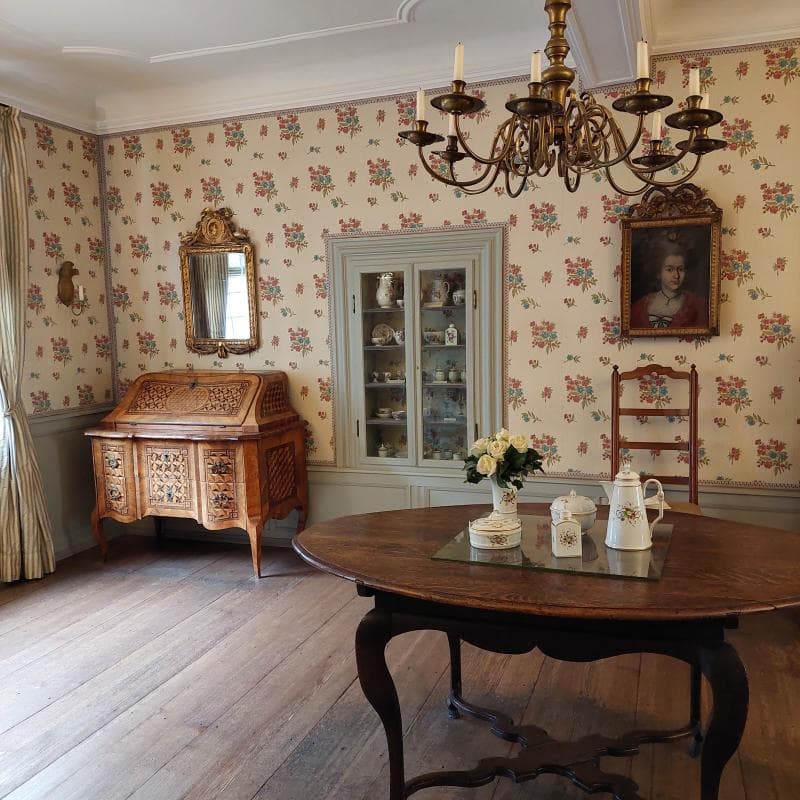
Explore the Goethe House in Frankfurt, Germany, the birthplace of Johann Wolfgang von Goethe. Discover his childhood home and literary beginnings.
Overview
The Goethe House, or Goethe-Haus, in Frankfurt, Germany, stands as a profound testament to the life and enduring legacy of Johann Wolfgang von Goethe, one of Germany's most celebrated literary figures. This meticulously reconstructed Baroque building is not merely a house; it is the birthplace and childhood home of the visionary poet and playwright, where he spent his formative years and penned some of his earliest, most influential works. Located in the Innenstadt district, the Goethe House offers visitors an intimate glimpse into the world of an 18th-century affluent family and the environment that shaped a literary genius.
Today, the Goethe House operates as a museum, preserving the authentic ambiance of Goethe's era with period furniture, art, and personal artifacts. It is directly connected to the Deutsches Romantik-Museum, offering a broader cultural context to Goethe's work and the German Romantic movement.
History & Cultural Background
The history of the Goethe House dates back to the 17th century, originating as two adjoining timber-framed buildings. In 1733, Goethe's grandmother, Cornelia Goethe, acquired the property. Later, Goethe's father, Johann Caspar Goethe, undertook extensive renovations, merging and expanding the structures into the elegant Baroque style residence seen today. The Goethe family resided here from Johann Wolfgang's birth in 1749 until 1795.
During his time in this house, Goethe immersed himself in studies and creativity, laying the groundwork for his illustrious career. It was within these walls that he wrote significant early works such as 'Götz von Berlichingen' and 'The Sorrows of Young Werther', the novel that brought him international fame. He also began crafting the first drafts of his monumental work, 'Faust'. The house was purchased by the Freies Deutsches Hochstift (Free German Foundation) in 1863, transforming it into a public memorial and museum, a pioneering effort as it became the first public site dedicated to Goethe, predating the Goethe House in Weimar.
Tragically, the original Goethe House was completely destroyed during the Allied bombing of Frankfurt on March 22, 1944, amidst World War II. However, recognizing its immense cultural and historical importance, debates soon arose about its future. Between 1947 and 1951, the house was meticulously reconstructed based on historical documents, architectural plans, and the recollections of former residents, ensuring a faithful restoration of its 18th-century appearance.
What Makes It Special
What truly distinguishes the Goethe House is its remarkable ability to transport visitors back to the 18th century, offering a vivid portrait of domestic life during Goethe's formative years. The restoration efforts were so thorough that the house authentically reflects the distinctive Baroque style and middle-class comforts of the era. Each of the four levels, comprising 18 rooms, is furnished with period pieces, some of which are original to the Goethe family, creating an immersive experience.
Highlights include the kitchen with an original water pump, the music room housing a rare vertically-set pianoforte from 1745, and the Yellow Room, which served as Goethe's mother's reception area. Visitors can also explore the Birth Room where Goethe was born, the family's art collection in the Picture Gallery, and the Writing Room on the top floor where he penned his initial literary masterpieces. The adjacent German Romanticism Museum further enriches the visit, providing comprehensive context to the literary and artistic movements of Goethe's time.
Stories, Fun Facts & Local Details
The Goethe House is rich with personal narratives and intriguing details that bring its history to life. For instance, Goethe himself famously claimed he was born 'on the stroke of twelve' on August 28, 1749, a detail he included in his autobiography, 'Poetry and Truth'. A particularly endearing detail is the puppet theatre, a gift from his grandmother, with which young Johann Wolfgang played. This very puppet theatre, crucial to Goethe's early imaginative development and later referenced in 'Wilhelm Meister's Theatrical Mission', is now a prized exhibit in the house.
The family's comfortable surroundings reflect their social standing and intellectual pursuits. The house's spacious rooms, exquisite furniture, and inviting staircase hint at the well-to-do environment in which Goethe thrived under the guidance of his parents and eight successive home tutors. This environment nurtured his prodigious talent and allowed him the freedom to explore diverse interests, contributing to his development as a polymath.
Visitor Perspective
Stepping into the Goethe House is like stepping directly into the 18th century. Travelers often describe a profound sense of connection to history, imagining young Goethe playing in the rooms or contemplating his great works at his writing desk. The attention to historical accuracy in the reconstruction, down to the wallpaper replicated from surviving scraps, allows for a truly authentic experience.
The combination ticket with the Deutsches Romantik-Museum offers a seamless transition from the personal world of Goethe to the broader cultural landscape of German Romanticism. It provides an invaluable educational journey for literature enthusiasts, historians, and anyone curious about the roots of German culture. The Goethe House is not just a building; it is a gateway to understanding the profound impact of one man's childhood on world literature and the spirit of an entire era.
Coordinates: 8.67761, 50.1115
View on Google Maps💬 How Travelers Describe This Place
Based on community votes
Photogenic
934Unique
879Interesting
741Must See
482Beautiful
396
Traveler Stories
Discover memorable experiences shared by travelers who have visited this place.
No traveler stories yet.
Be the first traveler to share what made this place memorable.
Things to see at Goethe House



Tour
By
Spot
Discover amazing places around the world. Your journey starts here.
Explore
© 2026 TourBySpot. All rights reserved.