Writing Room
Frankfurt, Germany
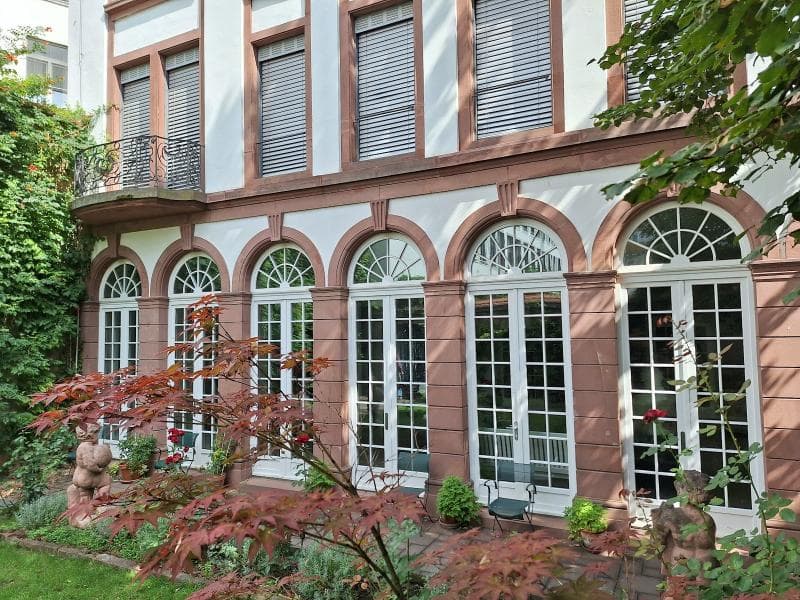
Explore the Writing Room at Goethe House in Frankfurt, Germany, where young Johann Wolfgang von Goethe penned his early literary masterpieces.
Overview
Nestled within the historic Goethe House in Frankfurt, Germany, the 'Writing Room'—also affectionately known as the 'Poet's Room'—offers a profound glimpse into the formative years of Johann Wolfgang von Goethe, one of Germany's most celebrated literary figures. Located on the house's upper floor, this modest yet immensely significant chamber served as the creative sanctuary where young Goethe penned some of his earliest and most influential works. It's a key highlight for visitors wishing to connect with the very space that nurtured a literary genius. The Goethe House itself, located in the Innenstadt district, is a meticulously reconstructed 18th-century home, having been faithfully rebuilt after its destruction during World War II. Today, the Writing Room stands as a testament to Goethe's early ambition and the intellectual environment of his bourgeois family home in the heart of Frankfurt.
History & Cultural Background
Johann Wolfgang von Goethe was born in this very house on August 28, 1749, and spent his childhood and youth here until 1775, when he moved to Weimar at the age of 26. The house itself has a rich history, having been purchased by Goethe's grandmother, Cornelia Goethe, in 1733. Goethe's father later undertook extensive renovations, transforming two existing half-timbered buildings into a cohesive, high Baroque-style residence. This elegant family home provided a stimulating environment, fostering Goethe's early education and his burgeoning literary talents. It was within these walls, particularly in his Writing Room, that he delved into literature and art studies, laying the groundwork for his legendary career. The original house was tragically destroyed during an Allied bombing raid on March 22, 1944. However, thanks to a dedicated effort by the Freies Deutsches Hochstift, which had owned the house since 1863, it was meticulously reconstructed between 1947 and 1951, aiming to recreate its 18th-century appearance and atmosphere.
What Makes It Special
The Writing Room is particularly special because it is widely recognized as the very space where Goethe's early literary masterpieces took shape. It was here that he wrote pivotal works such as 'Götz von Berlichingen,' 'The Sorrows of Young Werther,' and the initial drafts of 'Urfaust,' works that would establish his reputation and earn him worldwide fame. A key feature of the room is the presence of a desk, believed by many to be the original, at which Goethe spent countless hours immersed in his creative process. Visitors can often see a standing desk, reflecting Goethe's preferred method of writing. Beyond the furniture, the room houses various artifacts, including plaster casts of antique sculptures, which reveal Goethe's profound interest in classical art and his dedication to art studies alongside his literary pursuits. This intimate space captures the essence of his 'Sturm und Drang' period, a time of intense emotional and creative output. The careful reconstruction ensures that the room, though not entirely original in its physical fabric, authentically conveys the ambiance and intellectual spirit of Goethe's time.
Stories, Fun Facts & Local Details
Imagine young Goethe, full of ambition, working tirelessly at his desk in this very room, surrounded by his thoughts and literary inspirations. It is said that 'The Sorrows of Young Werther,' a novel that made him famous overnight in 1774, was penned here. The room, situated on the top floor, provided a quiet retreat from the bustling household, ideal for deep concentration. A fascinating detail is the mention of a 'standing desk' in the room, suggesting Goethe's active approach to writing and perhaps his boundless energy even in his literary endeavors. The Goethe family was known for their refined tastes and intellectual pursuits, which are vividly reflected throughout the house, from the music room with its rare pyramid piano to the father's art collection. The entire house, including the Writing Room, offers a captivating snapshot of 18th-century bourgeois life in Frankfurt, illustrating how a wealthy family lived and cultivated their interests. The museum goes to great lengths to bring this era to life, allowing visitors to feel the unique atmosphere that shaped Germany's greatest poet.
Visitor Perspective
Stepping into the Writing Room at the Goethe House is like stepping back in time, offering a unique opportunity to connect with the personal world of Johann Wolfgang von Goethe. For many visitors, it's a moment of quiet reverence, imagining the young poet lost in thought, composing lines that would become cornerstones of German literature. The faithful reconstruction of the house, with its period furnishings, provides an authentic sense of the environment in which Goethe grew up and created. Tourists often express a sense of wonder at being in the very place where such profound works originated. As part of the larger Goethe House experience, which often includes access to the adjacent Deutsches Romantik-Museum, the Writing Room culminates a journey through Goethe's childhood and early adult life. It allows one to appreciate not just the finished works, but the intimate setting and daily life that fostered their creation, making the literary giant feel more accessible and human. The quiet atmosphere encourages contemplation, allowing visitors to truly absorb the historical and cultural significance of this remarkable space.
Coordinates: 8.677609598244064, 50.111503068050155
View on Google Maps💬 How Travelers Describe This Place
Based on community votes
Interesting
897Must See
641Unique
481Photogenic
463Beautiful
196
Traveler Stories
Discover memorable experiences shared by travelers who have visited this place.
No traveler stories yet.
Be the first traveler to share what made this place memorable.

Tour
By
Spot
Discover amazing places around the world. Your journey starts here.
Explore
© 2026 TourBySpot. All rights reserved.