Period Interiors
Frankfurt, Germany
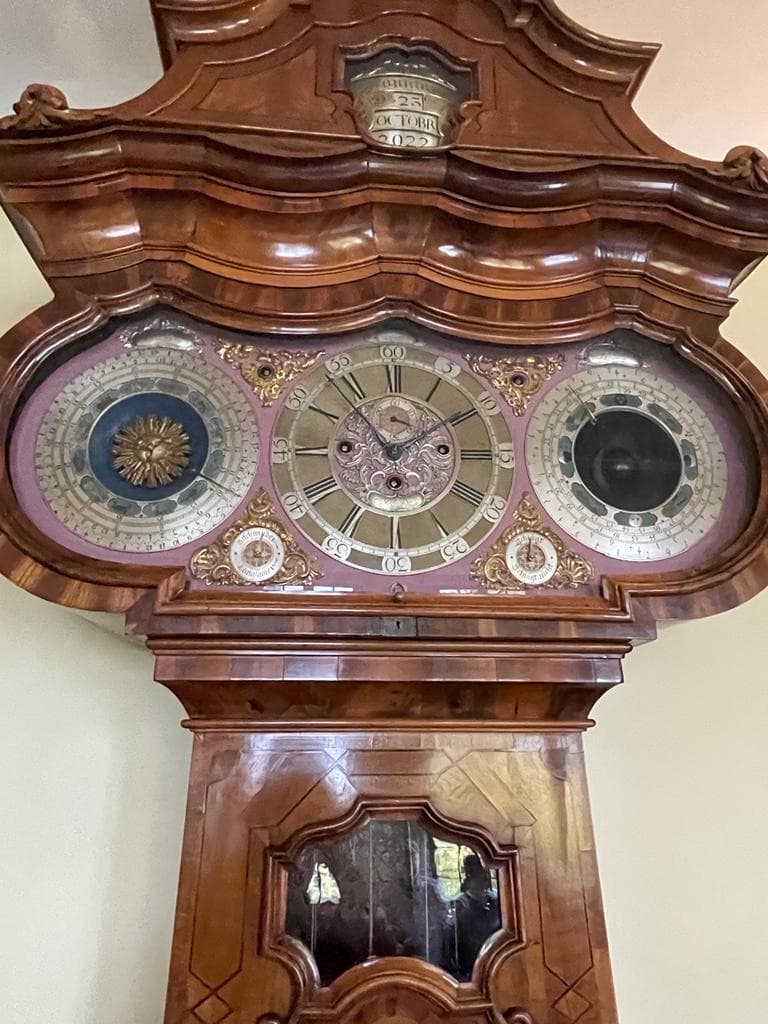
Discover the Period Interiors of Goethe House in Frankfurt, Germany. Step into the 18th-century world of Johann Wolfgang von Goethe, exploring his childhood home.
Overview
The Goethe House in Frankfurt, Germany, invites visitors on a captivating journey into the 18th century through its meticulously re-created Period Interiors. As the birthplace and childhood home of Johann Wolfgang von Goethe, one of Germany's most celebrated literary figures, this writer's house museum offers a unique glimpse into his formative years. Faithfully reconstructed after its destruction in World War II, the house now showcases an exquisite collection of period furniture, art, and personal artifacts. These interiors are thoughtfully arranged to authentically evoke the domestic environment that shaped Goethe's genius and inspired his earliest works, allowing travelers to connect directly with the historical and personal surroundings of a literary giant.
History & Cultural Background
The Goethe House's story is deeply intertwined with Johann Wolfgang's life. Originally older timber-framed structures, the property joined the Goethe family when his grandmother purchased it in 1733. His father, Johann Caspar Goethe, then undertook significant renovations between 1755 and 1756, merging two houses into the grand Baroque-style residence seen today. Johann Wolfgang Goethe was born here on August 28, 1749, and spent his early life within these walls, returning periodically from his studies until his permanent move to Weimar in 1775. After the family sold the house, the Freies Deutsches Hochstift acquired it in 1863, meticulously restoring it to its 18th-century appearance and opening it as a public museum. Tragically, the Goethe House was destroyed during the Allied bombing of Frankfurt on March 22, 1944. However, thanks to detailed plans and the prior evacuation of many original furnishings, a faithful reconstruction took place between 1947 and 1951, leading to its reopening in 1951.
What Makes It Special
The Period Interiors are the core attraction of the Goethe House, providing an authentic immersion into 18th-century domestic life. Each room is appointed with era-appropriate furnishings, many being original pieces preserved from the destruction. On the ground floor, visitors explore the historically rich kitchen, featuring a rare original water pump, a significant luxury for its time. The 'Yellow Room' served as Goethe's mother's reception area, and the 'Blue Room' was the family dining space. The grand staircase leads to the first floor's more formal areas. The 'Music Room' is notable for its unique vertically-set pianoforte from 1745, reflecting the family's musical passion. Other spaces, like the 'Anteroom' and 'Peking Room,' illuminate the family's social life. The second floor houses the revered 'Birth Room' and a 'Picture Gallery' with the family's collection of local Frankfurt artists. On the third floor, Goethe's intimate 'Writing Room' is found, complete with his original standing desk – the very spot where masterpieces like 'The Sorrows of Young Werther' and early drafts of 'Faust' were conceived. His famous childhood puppet theatre is also displayed here. These interiors collectively present a vivid tableau of a prosperous and cultured 18th-century German household.
Stories, Fun Facts & Local Details
The Period Interiors of the Goethe House resonate with stories that bring Johann Wolfgang's early world to life. It's often recounted that Goethe was born 'on the stroke of twelve' on August 28, 1749. A charming artifact is his childhood puppet theatre, a gift from his grandmother at age four, which later influenced his literary works. The house was a vibrant intellectual hub, reflecting the refined tastes of Goethe's father, Johann Caspar, a lawyer with an extensive collection of art and books. The Goethe family was also deeply musical: his sister Cornelia played piano, his father the lute, Goethe the cello, and his mother sang. Beyond these personal anecdotes, the house reveals intriguing glimpses into 18th-century living. The kitchen's original water pump, drawing from a private well, symbolized considerable status. 'Fire chests' in the entryways, sturdy containers for valuables during emergencies, illustrate practical concerns of the era. Even subtle details, like protective wooden strips along the base of walls, hint at the careful upkeep of such a prestigious home.
Visitor Perspective
Stepping into the Period Interiors of the Goethe House offers a profoundly intimate and contemplative experience. It's an opportunity to connect directly with the tangible past, immersing oneself in the very spaces that nurtured one of history's greatest literary minds. As you move through the faithfully re-created rooms, a quiet reverence often prevails, fostering an atmosphere where one can almost sense the echoes of family life and creative endeavor. The meticulous attention to historical detail, from authentic furnishings to preserved artifacts, effectively bridges the centuries. One can easily imagine young Johann Wolfgang at play, or later, deep in thought at his standing desk, crafting the words that would resonate across generations. This immersive experience provides invaluable context for understanding Goethe's literary works and appreciating the cultural milieu of 18th-century Frankfurt. For anyone seeking to understand the wellspring of Goethe's genius or to explore a preserved slice of German history, the Period Interiors of the Goethe House offer a deeply personal and enriching encounter.
Coordinates: 8.6776, 50.1115
View on Google Maps💬 How Travelers Describe This Place
Based on community votes
Interesting
879Photogenic
741Beautiful
482Unique
396Must See
274
Traveler Stories
Discover memorable experiences shared by travelers who have visited this place.
No traveler stories yet.
Be the first traveler to share what made this place memorable.

Tour
By
Spot
Discover amazing places around the world. Your journey starts here.
Explore
© 2026 TourBySpot. All rights reserved.