Gate Of Dawn
Vilnius, Lithuania
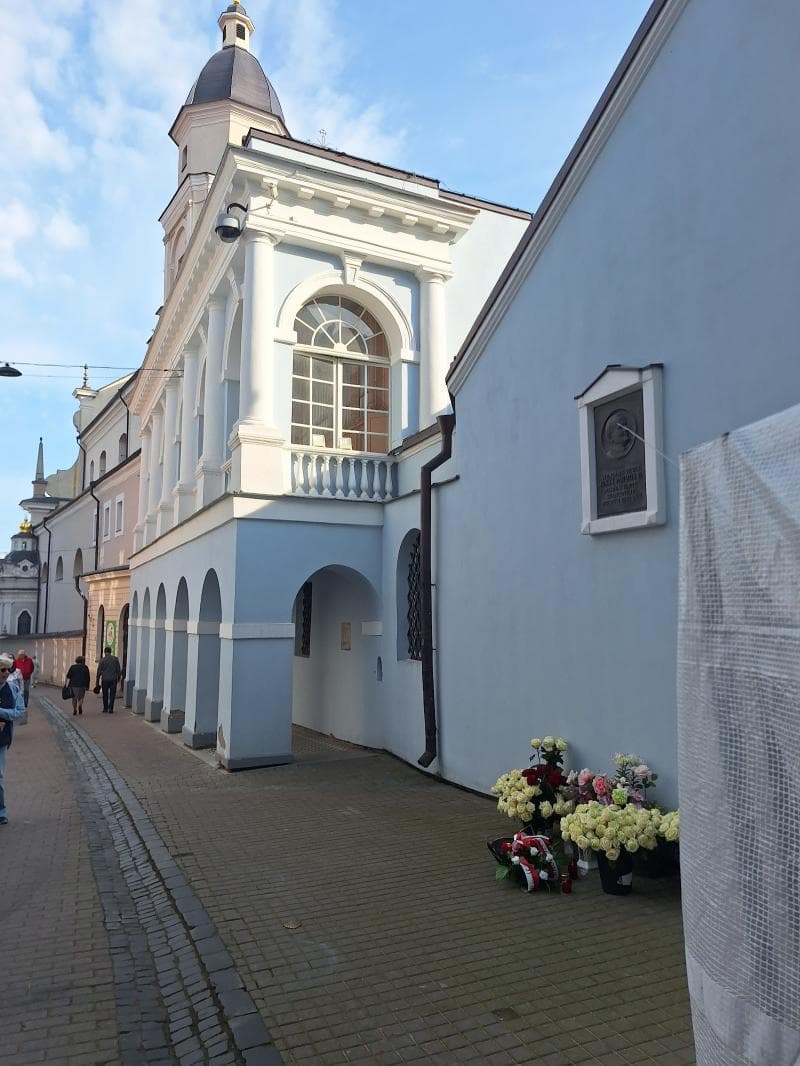
Discover the Gate of Dawn in Vilnius, Lithuania, a sacred city gate housing the miraculous Our Lady of Mercy icon, a powerful pilgrimage site.
Overview
The Gate of Dawn, known locally as Aušros Vartai, stands as a profound symbol of Vilnius, Lithuania. More than just a historical city gate, it is a revered site of pilgrimage and a testament to centuries of faith and resilience. This iconic landmark is often the starting point for visitors exploring Vilnius' Old Town, inviting them into a world where history and spirituality intertwine. At its heart lies the miraculous painting of the Blessed Virgin Mary, Mother of Mercy, which has drawn pilgrims from across the globe for generations, making it one of Lithuania's most significant religious, historical, and cultural monuments.
History & Cultural Background
Constructed between 1503 and 1522, the Gate of Dawn was an integral part of Vilnius' defensive city wall, initially featuring nine gates designed to protect the capital of the Grand Duchy of Lithuania. It originally served as the southern entrance to the city and was known as the Medininkai Gate, named for the village it led to. Its defensive purpose is still evident through the firing openings visible on its exterior.
The tradition of placing religious images in city gates for protection and blessings led to a painting of the Blessed Virgin Mary being hung on the inside of the gate, facing the city, while an image of Salvator Mundi adorned the outer side. In the early 17th century, a more permanent, miraculous image of the Virgin Mary was placed here, eventually leading to the construction of a wooden chapel above the gate in 1671, later replaced by a brick chapel. Remarkably, when much of Vilnius' city wall and other gates were destroyed by Russian forces in 1799, the Gate of Dawn was spared, a survival often attributed by locals to the sacred painting it housed.
The painting itself, dating from the 17th century, is a Renaissance masterpiece known as Our Lady of the Gate of Dawn, or the Madonna of Vilnius. Its spiritual significance deepened over centuries, culminating in its canonical coronation as the Mother of Mercy in 1927. This holy site has also welcomed two pontiffs: Pope John Paul II prayed the rosary here in 1993, and Pope Francis followed suit during his visit in 2018.
What Makes It Special
The Gate of Dawn holds a unique place in Vilnius, being the only one of the original city gates to have survived. Its distinctiveness primarily stems from the venerated icon of the Blessed Virgin Mary, Mother of Mercy, housed in the chapel above the archway. This painting is not only celebrated for its artistic merit as one of Lithuania's most renowned Renaissance works but is also widely believed to possess miraculous powers. The walls of the chapel are adorned with countless votive offerings, testaments to answered prayers and gratitude from pilgrims.
What makes this shrine particularly compelling is its veneration by both Roman Catholics and Orthodox Christians, uniting diverse faithful under its spiritual aura. Architecturally, it presents a fascinating blend of a defensive city structure with a sacred Baroque shrine. Uniquely among the crowned images of the Blessed Virgin in Lithuania, this icon depicts Mary without the infant Jesus, focusing solely on her serene and merciful countenance. The Gate of Dawn Chapel is also recognized as part of the esteemed European Network of Marian Shrines.
Stories, Fun Facts & Local Details
The name 'Gate of Dawn' itself carries several intriguing origin stories. One popular theory suggests it comes from its eastward orientation, where the first rays of dawn can be seen. Another connects it to the Virgin Mary, often referred to as the 'Star of Dawn'. Historically, it was also known as the 'Sharp Gate' in Polish (Ostra Brama), perhaps due to its location on the city's outskirts.
One enduring legend recounts an event during the Great Northern War in 1702. As Swedish forces attempted to capture Vilnius, tradition holds that the heavy iron city gates miraculously fell at dawn, crushing several Swedish soldiers and allowing the Polish-Lithuanian Commonwealth Army to successfully counter-attack and liberate the city. Throughout its history, numerous stories of miraculous healings and divine interventions have been attributed to the icon, with some tales even speaking of foreign warriors who met unfortunate fates after showing disrespect to the painting or the city.
The Feast of Our Lady of Mercy is a significant annual event, celebrated with great solemnity in the week surrounding November 16, drawing many devotees. Such is the devotion to this icon that a Lithuanian Chapel of Our Lady Mater Misericordiae exists in St. Peter's Basilica in Vatican City, consecrated in 1970.
Visitor Perspective
Visiting the Gate of Dawn offers a deeply moving experience. Located at the southern end of Aušros Vartų Street in Vilnius' historic Old Town, it is easily accessible on foot, inviting a leisurely approach through charming cobblestone streets. To reach the chapel housing the miraculous icon, visitors ascend a staircase directly above the gate. From the street below, one can often catch a glimpse of the venerated painting, especially during prayer times, which adds to the pervasive spiritual atmosphere.
The area around the gate is frequently bustling with both devout pilgrims, often kneeling in prayer on the street, and curious travelers. Visitors are encouraged to dress modestly, maintain a respectful quiet, and be mindful of ongoing religious ceremonies, particularly when inside the chapel. Early mornings or late afternoons can offer a more serene experience, allowing for quiet contemplation of this profound site where centuries of faith continue to resonate.
Coordinates: 25.2894, 54.6744
View on Google Maps💬 How Travelers Describe This Place
Based on community votes
Must See
684Beautiful
363Photogenic
302Unique
250Interesting
88
Traveler Stories
Discover memorable experiences shared by travelers who have visited this place.
No traveler stories yet.
Be the first traveler to share what made this place memorable.
Things to see at Gate Of Dawn



Tour
By
Spot
Discover amazing places around the world. Your journey starts here.
Explore
© 2026 TourBySpot. All rights reserved.