Chapel Of The Blessed Virgin Mary
Vilnius, Lithuania
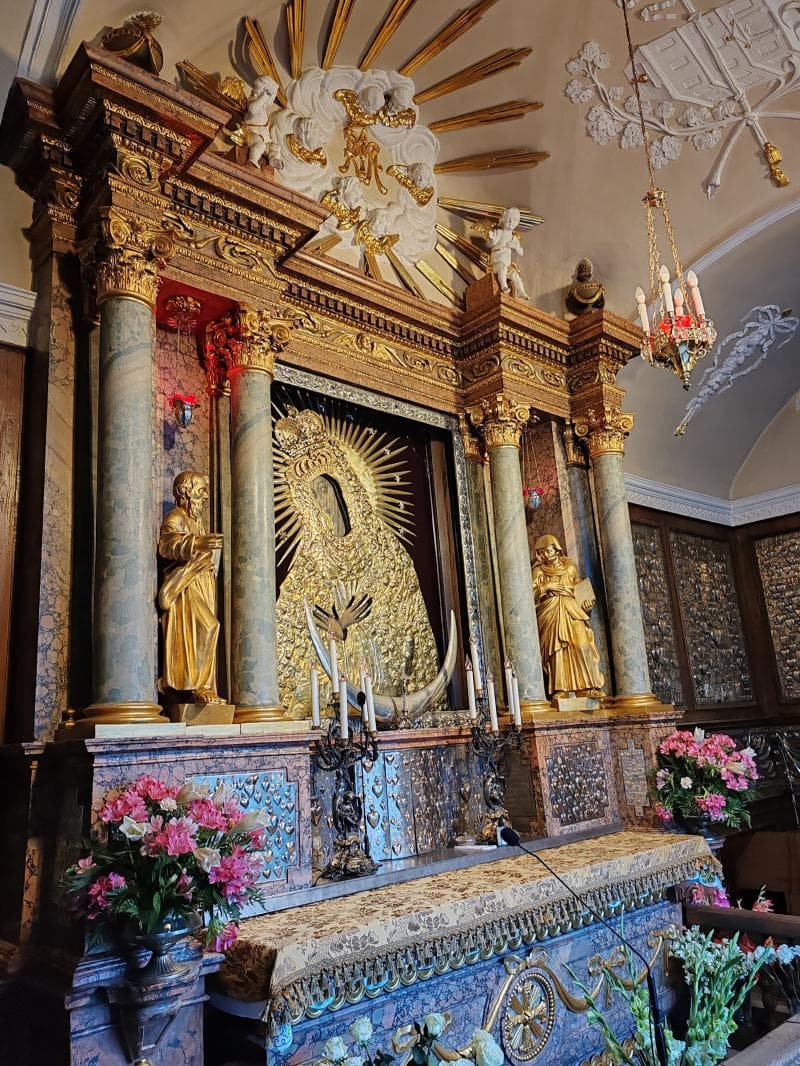
Discover the Chapel of the Blessed Virgin Mary inside Vilnius' Gate of Dawn, home to the miraculous Mother of Mercy icon. Explore its history and significance in Lithuania.
Overview
Nestled within the historic Gate of Dawn, one of Vilnius, Lithuania's last remaining city gates, lies the revered Chapel of the Blessed Virgin Mary. This sacred space is home to the miraculous icon of Our Lady of the Gate of Dawn, also known as the Mother of Mercy. A profound symbol of faith and national identity, the chapel draws pilgrims and visitors from across the globe, uniting Catholic and Orthodox faithful in shared veneration. The chapel's unique location, perched above the ancient city gate, offers a distinctive spiritual experience, blending centuries of defensive history with deep religious devotion.
More than just an architectural marvel, the Chapel of the Blessed Virgin Mary is a living testament to enduring faith and hope. Its walls echo with countless prayers and its presence has shaped the spiritual landscape of Vilnius for centuries. Visitors often find themselves enveloped in an atmosphere of quiet contemplation and reverence, a stark contrast to the bustling city outside.
History & Cultural Background
The Gate of Dawn, or Aušros Vartai in Lithuanian, was originally constructed between 1503 and 1514 as one of nine defensive gates in Vilnius' city wall. Its initial purpose was purely defensive, guarding the city's southern entrance. As was customary, religious images were often placed in niches on city gates to protect the city and bless travelers. An image of the Blessed Virgin Mary was displayed on the inner side of the gate, while an image of the Salvator Mundi faced outward.
In the early 17th century, a new, more elaborate image of the Virgin Mary, the one venerated today, was placed on the gate. The Discalced Carmelites, who arrived in Vilnius, took responsibility for the icon, building a wooden chapel over the gate in 1671. This was later replaced by a brick chapel. The icon's growing popularity meant that when other city gates were demolished between 1799 and 1805, the Gate of Dawn and its chapel were spared due to the profound veneration for the painting.
Over the centuries, the chapel underwent several reconstructions, including a significant one between 1828 and 1830, which gave it its present Late Classicism appearance. The shrine became a powerful symbol of national identity and resistance for Lithuanians and Poles, particularly during periods of occupation.
What Makes It Special
The core of the chapel's allure is undoubtedly the icon of Our Lady of the Gate of Dawn. This 17th-century Renaissance painting is unique for depicting the Blessed Virgin Mary without the infant Jesus, a rare feature in Marian art. The Virgin Mary is shown in prayer, with her eyes cast downwards, a pose that conveys humility and grace.
Adding to its distinctiveness is the exquisite silver and gold riza that covers the painting, a tradition possibly borrowed from Eastern Orthodox iconography. Only the face and hands of Mary are visible, framed by the elaborate metalwork, creating a striking and ethereal presence. This icon is not only revered by Catholics but also by Orthodox Christians, making it a significant ecumenical site.
The chapel's elevated position within the Gate of Dawn is also noteworthy. Historically, pilgrims would gather in the street below, looking up at the icon, while services were conducted in the chapel above. A gallery was later added to allow easier access for the faithful, bridging the spiritual space with the everyday life of the city.
Stories, Fun Facts & Local Details
Legend has it that in 1702, during the Great Northern War when the Swedish army occupied Vilnius, the Gate of Dawn played a miraculous role. At dawn, the heavy iron city gates supposedly fell, crushing Swedish soldiers, which led to a successful counter-attack by the Polish-Lithuanian Commonwealth Army. Many believed this event was an intervention attributed to the icon.
The icon is deeply associated with the Divine Mercy devotion. In 1935, the first public exposition of the Divine Mercy image, painted under the direction of Saint Faustina Kowalska, took place in this very chapel. Saint Faustina herself recorded a mystical experience involving the icon in her diary.
The Feast of Our Lady of the Gate of Dawn is celebrated on November 16th, drawing countless pilgrims. The chapel is adorned with numerous votive offerings—small silver plaques, hearts, and other symbols—left by those who believe their prayers were answered through the intercession of the Mother of Mercy. These offerings are a powerful visual representation of the icon's enduring spiritual impact.
Visitor Perspective
Visiting the Chapel of the Blessed Virgin Mary offers a unique and moving experience. The Gate of Dawn is conveniently located at the southern end of Vilnius' Old Town, easily accessible on foot. As you approach, you'll see the Gate standing prominently, the only one remaining of the original city fortifications.
To reach the chapel, visitors ascend a staircase from the street level. Inside, the atmosphere is hushed and reverent, often filled with individuals praying silently. The icon itself, illuminated and surrounded by offerings, is captivating. While photography is generally restricted during services, the sheer presence of the icon and the tangible devotion around it leaves a lasting impression.
The chapel is open daily, though hours may vary seasonally. It is often bustling, especially on weekends and during religious holidays, as services are regularly held. For those seeking a moment of peace and spiritual connection in Vilnius, a visit to this historical and deeply cherished site is highly recommended.
Coordinates: 25.2894944, 54.6743222
View on Google Maps💬 How Travelers Describe This Place
Based on community votes
Beautiful
623Interesting
545Unique
343Must See
302Photogenic
20
Traveler Stories
Discover memorable experiences shared by travelers who have visited this place.
No traveler stories yet.
Be the first traveler to share what made this place memorable.

Tour
By
Spot
Discover amazing places around the world. Your journey starts here.
Explore
© 2026 TourBySpot. All rights reserved.