Pilgrimage Area
Vilnius, Lithuania
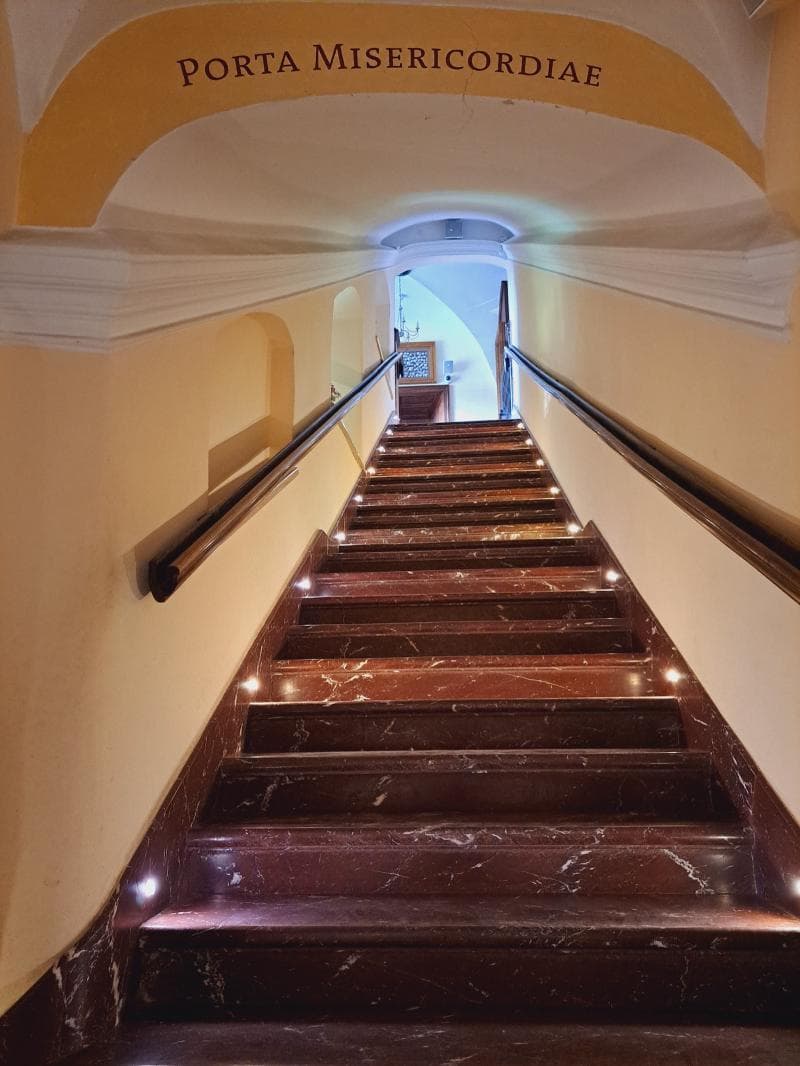
Discover the Gate of Dawn Pilgrimage Area in Vilnius, Lithuania, home to the miraculous icon of Our Lady of Mercy, a profound site of faith and history.
Overview
The Pilgrimage Area within the Gate of Dawn, known locally as Aušros Vartai, stands as a profound symbol of faith, history, and cultural heritage in Vilnius, Lithuania. It is the sole surviving gate of the original defensive wall erected around the city in the 16th century. Beyond its architectural significance, the Gate of Dawn is renowned for housing the sacred Chapel of Our Lady of Mercy, which enshrines a miraculous icon of the Blessed Virgin Mary. This revered site attracts over half a million pilgrims and visitors annually, making it one of Lithuania's most important religious and cultural monuments and a significant part of the European Marian Network.
Devotion at this hallowed place transcends denominations, drawing adherents from Catholic, Russian Orthodox, and Greek Orthodox faiths who come to seek solace, offer prayers, and witness the enduring power attributed to the icon. The atmosphere here is one of profound reverence, where centuries of devotion are palpable in the hushed prayers and the countless votive offerings that adorn the chapel walls.
History & Cultural Background
The Gate of Dawn's story begins between 1503 and 1522, when it was constructed as one of nine fortified gates to protect Vilnius from invasions. Originally known as the Medininkai Gate, it marked a crucial entry point into the city.
The religious significance of the gate began to emerge with the placement of a painting of the Blessed Virgin Mary. Initially, this icon, alongside an image of the 'Redeemer of the World' on the exterior, was housed in a simple niche on the inner side of the gate. The care of the icon was later entrusted to the Discalced Carmelites, who arrived in Vilnius in 1626. They constructed a wooden chapel over the gate in 1671. After a fire in 1715, this was replaced by the current brick chapel.
A pivotal moment in the gate's history came in the late 18th century when Russian authorities, during their occupation, ordered the destruction of most of Vilnius' city walls. Remarkably, the Gate of Dawn was spared, a survival widely attributed by locals to the protective presence of the miraculous painting. The icon itself, a Renaissance masterpiece painted around 1620-1630, is unique in its depiction of Mary without the infant Jesus, a departure from typical Eastern European iconography. Its style is believed to have been influenced by Netherlandish painters, possibly based on an engraving by Thomas de Leu. By the mid-19th century, the chapel became fully accessible to all faithful, solidifying its role as a key pilgrimage destination and a symbol of national identity for Lithuanians and Poles.
What Makes It Special
The core of the Gate of Dawn's unique appeal lies in the 'Our Lady of the Gate of Dawn' icon, also known as the Mother of Mercy or Vilnius Madonna. This miraculous image is a focal point of veneration, drawing people from diverse Christian backgrounds who believe in its intercessory powers. The chapel's walls bear witness to countless answered prayers through thousands of votive offerings—small silver hearts, hands, or other symbols left by pilgrims in gratitude or hope.
The Gate's exceptional survival, as the only one remaining from Vilnius's medieval defenses, imbues it with a profound sense of continuity and resilience. It is a place where architectural history seamlessly merges with spiritual narrative. The site's significance is further underscored by papal visits, with Pope John Paul II praying here in 1993 and Pope Francis following suit in 2018, reaffirming its status on the global stage of Christian pilgrimage.
Stories, Fun Facts & Local Details
Legends abound around the Gate of Dawn icon. One popular story recounts a child who fell from a second-story window in 1671 and was miraculously saved after being brought to the icon. In gratitude, the parents hung a painted plank depicting the event in the chapel. Another tale from the 1702 Great Northern War tells of a bullet piercing the painting during a battle, yet the icon remained preserved, reinforcing beliefs in its divine protection. There are also stories of foreign soldiers facing mysterious misfortunes after disrespecting the sacred image.
The name 'Gate of Dawn' itself carries poetic resonance. It may stem from its location on the eastern side of the city where the dawn's first light appears, or it could refer to Mary being metaphorically called the 'Star of Dawn.' Historically, this site holds a special place in the Divine Mercy devotion. In 1935, the first public exposition of the Divine Mercy image, painted under Saint Faustina Kowalska's direction, took place here. Saint Faustina herself recorded a mystical experience involving the icon within the chapel. Interestingly, Vilnius holds a unique privilege: a Lithuanian Chapel dedicated to Our Lady of Mercy exists within St. Peter's Basilica in the Vatican City, a testament to the enduring veneration of this icon.
Visitor Perspective
For those contemplating a visit, the Pilgrimage Area within the Gate of Dawn offers a deeply moving experience. The chapel is generally open daily, usually from 7:00 a.m. to 7:00 p.m. Located conveniently in Vilnius's Old Town, it is easily accessible on foot from many central points, including the train and bus stations.
Pilgrims and tourists often ascend stairs to reach the chapel, where an atmosphere of quiet contemplation prevails. While visitors are welcome to observe, it is important to note that photography is generally not permitted inside the chapel to maintain its sacred ambiance. For those interested in deeper religious observance, masses are held in both Lithuanian and Polish. The period between November 10th and 16th is particularly significant, culminating in the Feast of Our Lady of Mercy, drawing many faithful for special religious celebrations and enhancing the spiritual energy of the site.
Coordinates: 25.289658, 54.675187
View on Google Maps💬 How Travelers Describe This Place
Based on community votes
Beautiful
545Must See
343Interesting
211Photogenic
74Unique
20
Traveler Stories
Discover memorable experiences shared by travelers who have visited this place.
No traveler stories yet.
Be the first traveler to share what made this place memorable.

Tour
By
Spot
Discover amazing places around the world. Your journey starts here.
Explore
© 2026 TourBySpot. All rights reserved.