Historic Gate
Vilnius, Lithuania
Discover the Historic Gate of Dawn in Vilnius, Lithuania. Explore its rich history, the miraculous icon of the Blessed Virgin Mary, and its significance as a pilgrimage site.
Overview
Stepping through the Historic Gate, more commonly known as the Gate of Dawn (Aušros Vartai), in Vilnius, Lithuania, is to traverse centuries of history and profound spirituality. It stands as the sole survivor of the original defensive city walls, making it a unique landmark in the city's Old Town. This majestic gate is not merely an architectural relic; it is one of Lithuania's most significant cultural and religious monuments, revered by countless pilgrims and curious travelers alike. At its heart lies the miraculous icon of the Blessed Virgin Mary, Mother of Mercy, transforming a former defensive structure into a beacon of faith and hope.
History & Cultural Background
The Gate of Dawn's origins trace back to the early 16th century, specifically between 1503 and 1522. It was constructed as an integral part of Vilnius' extensive defensive fortifications, designed to protect the Grand Duchy of Lithuania from persistent threats, particularly from the Crimean Khanate and Muscovite forces. Initially, Vilnius was encircled by a wall featuring nine, and later up to ten, gates. However, the Gate of Dawn uniquely withstood the widespread destruction of the city walls ordered by the Russian authorities between 1799 and 1805, making it the last remaining original gate.
Over its long history, the gate bore several names. It was first known as the Medininkai Gate, as it opened the path towards the village of Medininkai. Later, it was referred to as the Sharp Gate (Ostra Brama in Polish or Ašmens Vartai in Lithuanian), possibly due to its location on the edge of the city. The name 'Gate of Dawn' emerged over time, potentially reflecting its eastern orientation where the sun rises, or symbolically linking it to the Virgin Mary, who is sometimes referred to as the 'Star of Dawn'.
A long-standing tradition in Catholic European cities was to adorn city gates with religious images to invoke protection and blessings upon travelers and the city itself. The Gate of Dawn followed this custom, with an image of the Blessed Virgin Mary placed in a niche on its inner side, while an image of Salvator Mundi (Savior of the World) adorned the outer façade. The spiritual significance of the site deepened in 1626 when the Discalced Carmelite monks settled nearby and took on the responsibility of caring for the icon. They erected a wooden chapel in 1671, which, after a devastating fire in 1711, was replaced by the sturdy brick chapel that stands today. The chapel's appearance was further refined into its current Late Classicist style during reconstructions between 1828 and 1830.
What Makes It Special
The true essence of the Gate of Dawn lies in the revered painting of the Blessed Virgin Mary, Mother of Mercy. This iconic image, often called Our Lady of the Gate of Dawn or the Vilnius Madonna, is a magnificent 17th-century Renaissance artwork. What makes this particular depiction unique is the absence of the Christ Child, a rare motif in Marian iconography, where Mary is shown with her hands crossed over her chest, enveloped in a radiant golden halo. The painting's powerful spiritual allure is undeniable; it is venerated by both Roman Catholic and Orthodox Christians, making the Gate of Dawn a remarkable symbol of interfaith unity in Lithuania. The walls of the chapel are covered with thousands of votive offerings—small silver plaques left by pilgrims in gratitude for prayers answered and miracles attributed to the icon. These offerings are a testament to the painting's enduring power and the deep personal stories of hope and healing it represents for believers worldwide.
Stories, Fun Facts & Local Details
The Gate of Dawn is rich with compelling stories and intriguing facts that highlight its mystical aura. One prominent legend recounts how the gate was miraculously spared from destruction in 1799, when Russian forces dismantled most of Vilnius' city walls. Locals believed the presence of the sacred painting protected it from being touched. Another tale tells of a young boy in 1671 who was miraculously healed or even resurrected after his mother brought him near the revered image, underscoring the painting's perceived miraculous powers.
During the Great Northern War in 1702, when Swedish forces occupied Vilnius, legend has it that a portion of the heavy gate structure suddenly collapsed onto Swedish soldiers resting at its base, leading to their demise and allowing the Lithuanian Army to successfully counterattack. Stories also abound of those who showed disrespect towards the icon, meeting strange and often grim fates, further cementing its sacred status in local lore. Historically, the painting was initially protected by simple wooden shutters, a humble beginning for such a revered artifact. The icon was formally crowned on July 2, 1927, marking a significant moment in its veneration. The chapel has also drawn the attention of the highest Catholic authorities, with Popes John Paul II (in 1993) and Francis (in 2018) both visiting and praying before the icon. Interestingly, in earlier times, the chapel was often inaccessible to laypeople, particularly women, with entry restricted to the monastery garden. However, its layout was eventually modified to allow pilgrims to view the miraculous image directly from the street.
Visitor Perspective
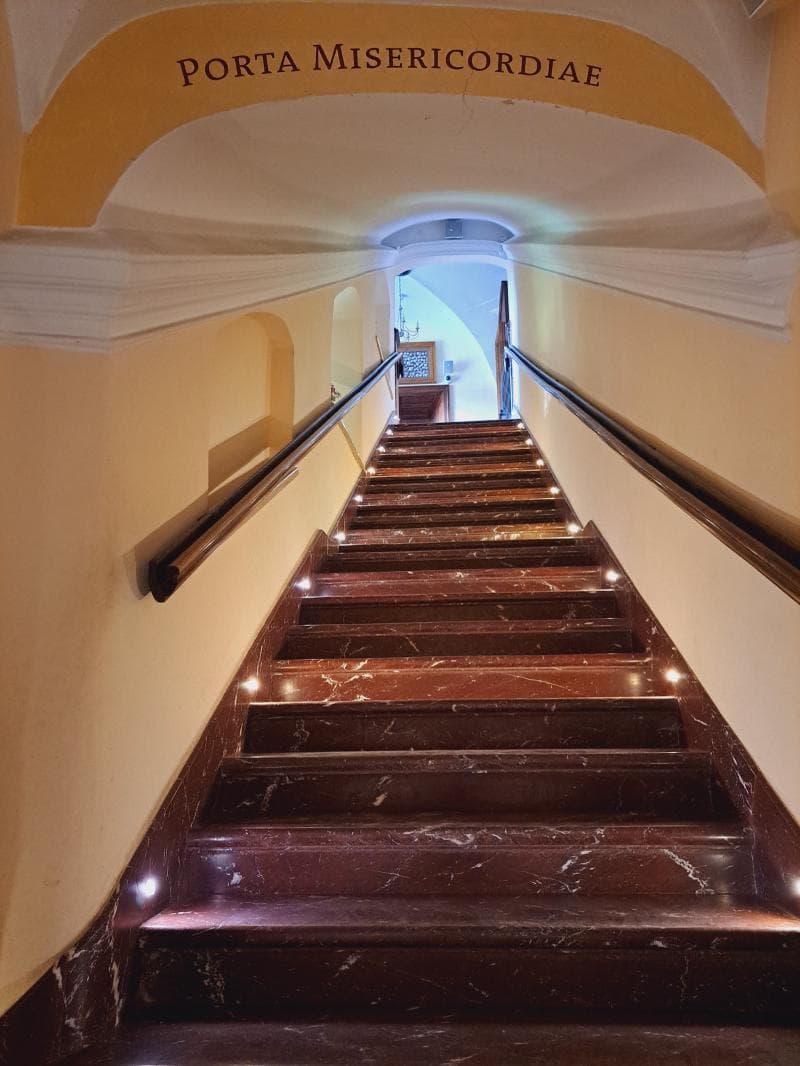
For visitors, the Gate of Dawn offers a profoundly moving experience. Located conveniently in the heart of Vilnius' Old Town, it is easily accessible on foot, allowing for a pleasant stroll through historic streets leading up to the gate. Travelers can ascend the staircase to reach the chapel, where they can observe pilgrims in prayer and witness the iconic painting up close. The atmosphere inside and around the gate is generally calm, respectful, and deeply spiritual, inviting quiet contemplation. It is important for visitors to dress modestly, maintain a quiet demeanor, and be respectful of ongoing religious services. Photography inside the chapel, especially during services, may be restricted, encouraging a moment of presence rather than just observation. The Gate of Dawn truly serves as a gateway, not just to the Old Town, but to a rich tapestry of history, faith, and enduring Lithuanian heritage.
Coordinates: 25.289658, 54.675187
View on Google Maps💬 How Travelers Describe This Place
Based on community votes
Beautiful
996Interesting
673Must See
585Unique
143Photogenic
80
Traveler Stories
Discover memorable experiences shared by travelers who have visited this place.
No traveler stories yet.
Be the first traveler to share what made this place memorable.

Tour
By
Spot
Discover amazing places around the world. Your journey starts here.
Explore
© 2026 TourBySpot. All rights reserved.