Freedom Monument
Riga, Latvia
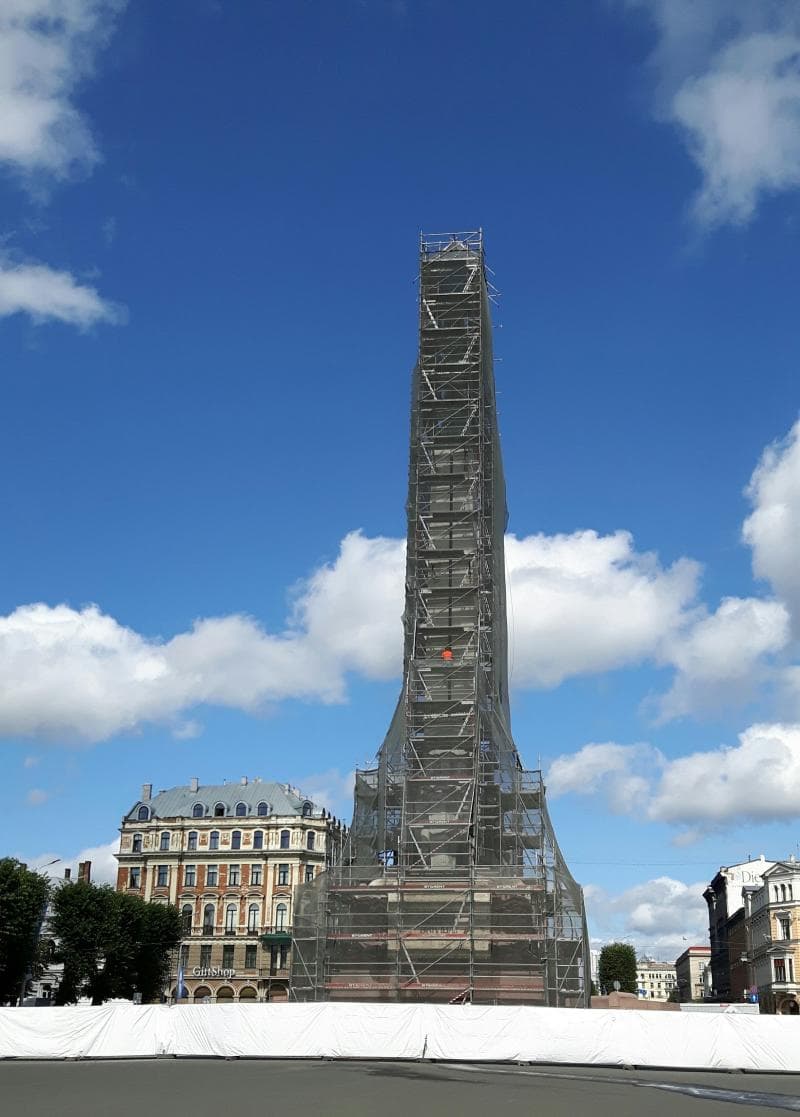
Explore Riga, Latvia's iconic Freedom Monument, a powerful symbol of independence and unity. Discover its history, symbolism, and cultural significance.
Overview
Standing proudly in the heart of Riga, Latvia, the Freedom Monument is a powerful and enduring symbol of the nation's independence and sovereignty. Unveiled on November 18, 1935, this impressive 42.7-meter (140-foot) tall structure is crafted from granite, travertine, and copper. It serves as a profound memorial, honoring the soldiers who sacrificed their lives during the Latvian War of Independence, fought between 1918 and 1920. At its apex, the elegant figure of Liberty, affectionately known as 'Milda' by locals, holds aloft three gilded stars. These stars symbolize Latvia's three historical regions: Kurzeme, Vidzeme, and Latgale, representing the country's unity. Inscribed on the monument's base is the poignant motto, 'For the Fatherland and Freedom' (Tēvzemei un Brīvībai), a sentiment that resonates deeply with the Latvian spirit.
History & Cultural Background
The genesis of the Freedom Monument dates back to the early 1920s, shortly after Latvia gained its first independence. The then Prime Minister, Zigfrīds Anna Meierovics, initiated a design competition for a memorial column to honor those who fought for the nation's freedom. The winning design, titled 'Shine like a Star!' (Mirdzi kā zvaigzne!), was conceived by the distinguished sculptor Kārlis Zāle, with architect Ernests Štālbergs overseeing its implementation. Remarkably, the monument's construction, which spanned four years, was entirely financed through public donations, a testament to the collective national will and desire for a symbol of their hard-won liberty. The monument was purposefully erected on the site where a statue of the Russian Tsar Peter the Great once stood, further emphasizing Latvia's new era of independence.
The monument's historical journey continued through tumultuous times. During the Soviet occupation of Latvia, beginning in 1940, the Freedom Monument faced the threat of demolition. However, it survived, partly due to the reported intervention of Soviet sculptor Vera Mukhina, who recognized its artistic merit, and likely because authorities feared inciting widespread public indignation. Despite Soviet attempts to reinterpret its symbolism—suggesting the figure represented Mother Russia holding the Baltic Soviet Republics—Latvians steadfastly maintained its original meaning as a beacon of their national independence. During this period, gathering at the monument was strictly forbidden, yet it became an unofficial site of quiet resistance. Laying flowers on significant dates transformed into a powerful, defiant act. It was here, during the National Awakening movement from 1987 to 1991, that large-scale demonstrations gathered, ultimately playing a crucial role in Latvia regaining its independence.
What Makes It Special
The Freedom Monument is far more than a mere landmark; it is the emotional heart of Latvian national identity. Its design is an intricate architectural representation of freedom, featuring 56 sculptures arranged in 13 groups across four levels, each depicting facets of Latvian history and culture. These sculptures portray fundamental themes and values, including the nation's work ethic, spiritual strength, and historical narratives. Visitors can observe reliefs depicting 'Latvian Riflemen' and 'Latvian People: the Singers,' alongside groups symbolizing 'Work,' 'Guards of the Fatherland,' 'Mother—Family Guard,' and 'Scholars.' Travertine panels on the monument's sides offer visual references to pivotal moments in Latvian history, such as the 1905 Russian Revolution and the Latvian War of Independence. The 'Milda' figure, holding the three stars, powerfully embodies the unification and enduring spirit of Latvia's diverse historical regions. Today, it remains a central focal point for public gatherings, official state ceremonies, and national celebrations, continuing its role as a living symbol of Latvian pride.
Stories, Fun Facts & Local Details
One of the most endearing local details about the monument is the affectionate nickname 'Milda' given to the Liberty figure at its summit. This popular Latvian first name personifies the national ideal of freedom and unity. A poignant tradition at the monument is the hourly changing of the guard ceremony, performed daily from 9:00 AM to 6:00 PM by soldiers from the Latvian National Armed Forces, a solemn display of respect and national pride. You might often see fresh flowers laid at the monument's base; this practice is particularly significant on national holidays and remembrance days, such as June 14 (Deportation Day) and November 18 (Independence Day), reflecting a deeply personal act for many Latvians.
An interesting story from the Soviet era, though perhaps embellished over time, recounts how Riga's mayor allegedly saved the monument from planned demolition. It's said that Soviet authorities intended to explode the monument, citing safety concerns for traffic. In response, the mayor declared the surrounding area a pedestrian zone, thus removing the 'safety hazard' and inadvertently preserving this vital national symbol. While the full veracity of this tale is debated, it speaks volumes about the monument's profound importance to the Latvian people and their ingenuity in protecting it.
Visitor Perspective
Visiting the Freedom Monument offers more than just sightseeing; it provides a tangible connection to Latvia's soul. Situated centrally on Brīvības bulvāris, it is conveniently accessible on foot from many of Riga's major attractions. The monument is surrounded by picturesque parks, including the Bastejkalns canal park, and is near cultural institutions like the National Opera House. It serves as an excellent starting point for those wishing to explore Riga's charming Old Town or its renowned Art Nouveau district. Taking the time to watch the precise and dignified changing of the guard ceremony is highly recommended for any visitor, offering a glimpse into Latvia's ceremonial traditions. There is no admission fee to visit the monument, and a typical visit is estimated to take between 20 to 40 minutes, allowing ample time for reflection and appreciation of its profound historical and cultural significance. Understanding its deep political and cultural symbolism truly enriches the experience.
Coordinates: 24.11306, 56.95139
View on Google Maps💬 How Travelers Describe This Place
Based on community votes
Beautiful
836Unique
797Photogenic
396Interesting
286Must See
255
Traveler Stories
Discover memorable experiences shared by travelers who have visited this place.
No traveler stories yet.
Be the first traveler to share what made this place memorable.
Things to see at Freedom Monument



Tour
By
Spot
Discover amazing places around the world. Your journey starts here.
Explore
© 2026 TourBySpot. All rights reserved.