Bastejkalns Surroundings
Riga, Latvia
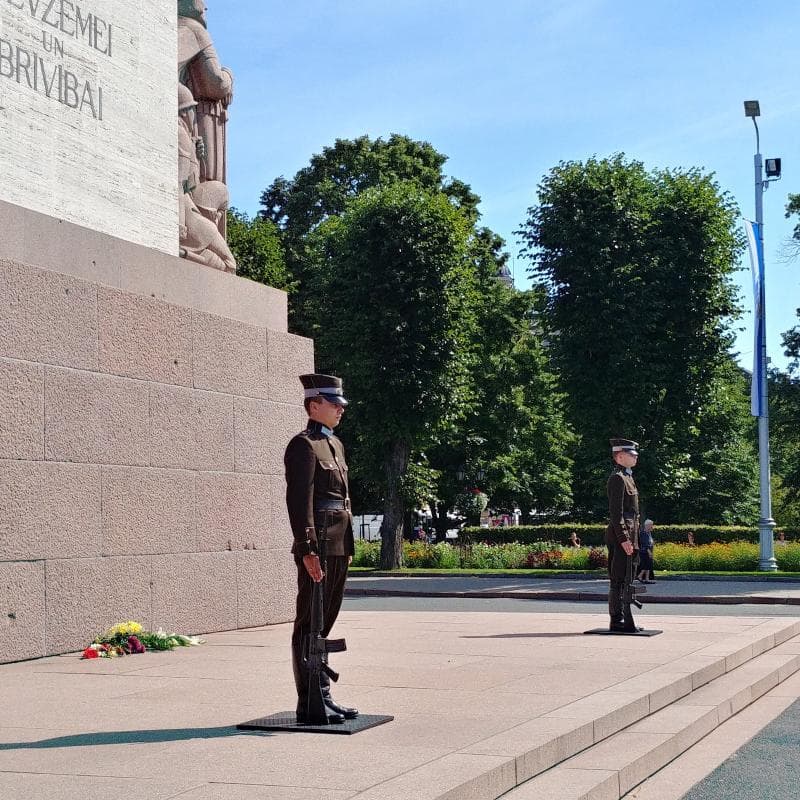
Explore Bastejkalns Surroundings, a picturesque park adjacent to the Freedom Monument in Riga, Latvia, rich in history and natural beauty.
Overview
Nestled in the vibrant heart of Riga, Latvia, Bastejkalns Park, often referred to as Bastion Hill, offers a tranquil escape that beautifully complements the grandeur of the nearby Freedom Monument. This spacious green oasis, situated on the northern edge of Riga's Old Town, is far more than just a park; it is a historical landmark, a natural retreat, and a central gathering place for locals and visitors alike. With its winding paths, picturesque bridges, and the serene City Canal, Bastejkalns provides a peaceful counterpoint to the bustling city life.
As you explore its terraced lawns and stone cascades, you'll discover a landscape rich with history, a place where Riga's past fortifications have been lovingly transformed into a verdant public space. The park's design thoughtfully integrates natural beauty with historical significance, making it an ideal spot for leisurely strolls, quiet contemplation, or simply enjoying the outdoors. It serves as a crucial green corridor, linking the historic Old Town with the central district and providing easy access to many of Riga's key attractions, including the iconic Freedom Monument itself.
History & Cultural Background
The story of Bastejkalns Park begins in the mid-19th century, a transformative period for Riga. Prior to its green transformation, this area was part of the city's formidable defensive fortifications, characterized by earthwork ramparts, moats, and the strategic 'Sand Bastion'. However, after the Crimean War, as military technology evolved and the city's fortifications lost their strategic importance, the Riga City Council made the decision to dismantle them.
Starting around 1856-1859, these defensive structures were systematically demolished, paving the way for a revolutionary urban planning initiative: the creation of a green belt around the Old Town. A significant figure in this transformation was landscape architect Georg Kuphaldt, who between 1859 and 1887, meticulously oversaw the redesign and planting of Bastejkalns. He envisioned and brought to life the park's characteristic features, including its winding paths, diverse flora, and the artificial waterfall cascade, which was completed in 1898. This conversion from a military stronghold to a public park symbolizes Riga's progression and its commitment to creating accessible, beautiful urban spaces.
What Makes It Special
Bastejkalns Park stands out for its unique blend of cultivated nature and profound historical layers. One of its most enchanting features is the Riga City Canal, which meanders gracefully through the park, crossed by several charming footbridges. These bridges, particularly one known for its 'love locks', add a romantic touch, symbolizing enduring affection for many couples.
The park is also home to a beloved community of waterfowl, with ducks and swans gliding serenely on the canal, often watched over by a distinctive pseudo-swan-style swan cottage designed by architect Heinrich Scheel in 1893. The presence of various sculptures and memorials further enriches the experience, notably those commemorating the victims of Latvia's struggle for freedom in 1991. These poignant reminders of recent history imbue the park with a deeper significance, connecting visitors to the nation's journey towards independence.
Stories, Fun Facts & Local Details
Beneath the gentle rustle of leaves and the murmur of the waterfall lies a park brimming with stories. Imagine Riga in the 19th century, a fortified city shedding its military skin to embrace a green future. The very hill you walk upon, Bastejkalns, is an artificial mound, a direct legacy of the demolished city bastions. It's a testament to human ingenuity transforming defense into delight.
A fun fact for visitors: the artificial waterfall, built in 1898 from Saulkalne dolomite, once featured sophisticated underwater lighting, a marvel for its time. While the lighting has changed, the cascade remains a beautiful focal point. The park's trees, including exotic species planted by Georg Kuphaldt, speak to a long tradition of horticultural care. Moreover, the proximity to the Freedom Monument means that Bastejkalns has often served as a natural extension of national commemorations and celebrations, bearing silent witness to pivotal moments in Latvian history.
Visitor Perspective
For a curious traveler, Bastejkalns Surroundings offers a multifaceted experience. It's a place to slow down and absorb the atmosphere of Riga. You can begin your exploration right after visiting the Freedom Monument, as the park seamlessly extends from its base. Take a leisurely walk along the canal, perhaps spotting the resident swans, or ascend the gentle slopes of the 'bastion hill' for pleasant views over the Old Town and the surrounding green spaces.
During warmer months, consider a peaceful canal boat tour, which often departs near the Freedom Monument and offers a unique perspective of the park's bridges and lush greenery from the water. Even in winter, the park maintains its charm, offering serene, snow-dusted vistas. It's an accessible haven, open 24 hours a day, year-round, and entirely free, inviting everyone to enjoy its beauty and historical resonance. Whether you're seeking a moment of peace, a romantic stroll, or a deeper connection to Riga's past, Bastejkalns Park provides a captivating setting.
Coordinates: 24.11111, 56.95167
View on Google Maps💬 How Travelers Describe This Place
Based on community votes
Unique
995Photogenic
839Beautiful
603Must See
581Interesting
388
Traveler Stories
Discover memorable experiences shared by travelers who have visited this place.
No traveler stories yet.
Be the first traveler to share what made this place memorable.

Tour
By
Spot
Discover amazing places around the world. Your journey starts here.
Explore
© 2026 TourBySpot. All rights reserved.