Monument Plaza
Riga, Latvia
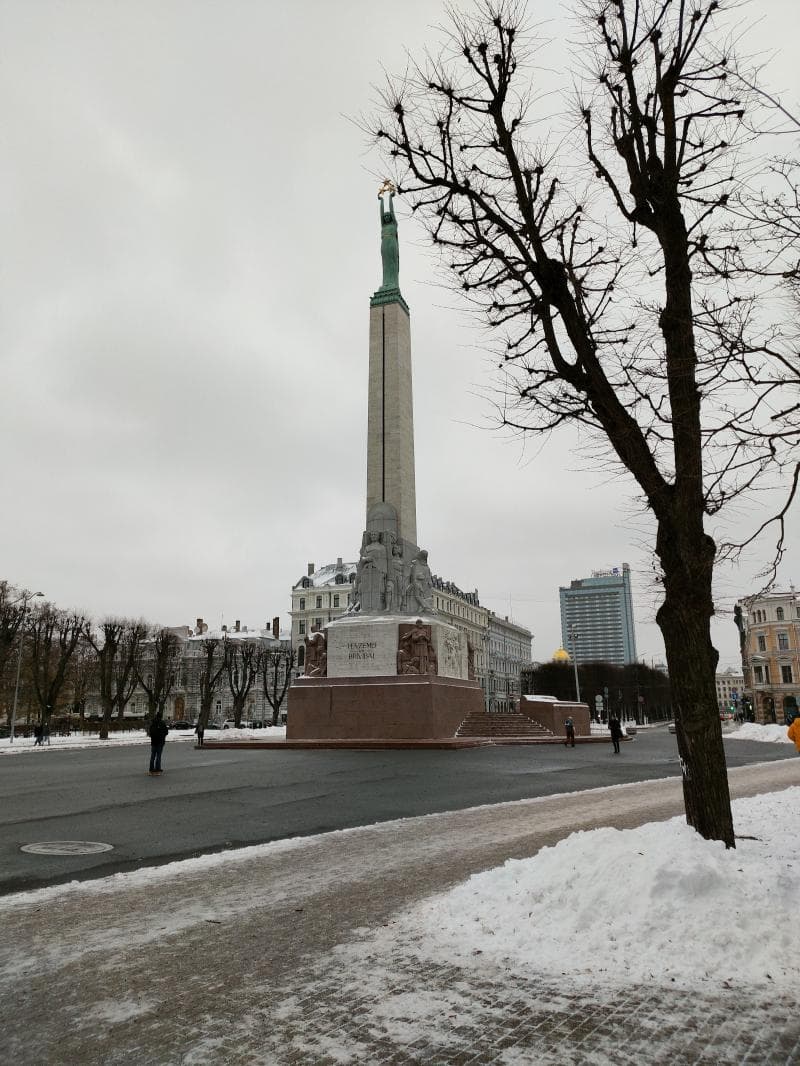
Explore Monument Plaza at the Freedom Monument in Riga, Latvia. Discover its history, cultural significance, and symbolic details of Latvian independence.
Overview
The space surrounding the Freedom Monument in Riga, Latvia, often referred to as Monument Plaza or the monument square, serves as a profound national symbol and a central gathering point in the heart of the city. This expansive public area is where the iconic Freedom Monument, or Brīvības piemineklis, stands tall, commemorating the soldiers who sacrificed their lives during the Latvian War of Independence (1918–1920). Positioned at the intersection of Brīvības bulvāris (Freedom Boulevard) and Raiņa bulvāris, it marks the symbolic boundary where Riga's historic Old Town meets its more modern boulevards. The monument itself is a striking 42.7-meter high structure of granite, travertine, and copper, topped by the revered figure of Liberty holding three stars. The plaza around it, pedestrianized since 1990, provides a tranquil yet significant space for reflection, national ceremonies, and daily life in Riga, inviting travelers to pause and absorb Latvia's enduring spirit of independence.
History & Cultural Background
The concept for the Freedom Monument emerged in the early 1920s, soon after Latvia secured its independence. It was designed to honor the heroes of the Latvian War of Independence and foster national unity. Latvian sculptor Kārlis Zāle designed the sculptural program, while Ernests Stalbergs designed the architectural setting, with construction being entirely financed by public donations from ordinary Latvians. Unveiled on November 18, 1935, the 17th anniversary of Latvia's declaration of independence, the monument quickly became a powerful emblem of national identity.
Its significance deepened dramatically during the Soviet occupation that began in 1940. Despite Soviet attempts to suppress Latvian national sentiment, the Freedom Monument remained standing, largely due to arguments for its artistic value. During this period, gathering at the monument was often forbidden, but placing flowers there, particularly on dates like June 14 (deportation anniversary) and November 18 (independence day), became a potent act of defiance and resistance. The monument square transformed into a central rallying point during the National Awakening of 1987–1991, witnessing massive demonstrations that ultimately led to Latvia's renewed independence.
What Makes It Special
The Freedom Monument and its plaza are special not just for their aesthetic grandeur but for the profound layers of meaning they hold for Latvians. The monument's centerpiece is the copper figure of Liberty, affectionately known as 'Milda,' who stands atop a 19-meter high travertine column, holding three gilded stars aloft. These stars symbolize Latvia's three historical regions: Kurzeme, Vidzeme, and Latgale, united in freedom. The base of the monument features thirteen groups of sculptures and bas-reliefs carved from granite, depicting scenes from Latvian history, culture, and values, such as 'Latvian Riflemen,' 'Latvian People: the Singers,' 'Work,' and 'Guards of the Fatherland'.
The plaza itself is a living space where history is continuously observed. It is the site of official ceremonies where the President lays wreaths on national holidays, and where the changing of the guard ceremony takes place hourly from 9 AM to 6 PM each day, drawing onlookers with its precise, solemn drill. This ritual, performed by the Latvian National Armed Forces, underscores the monument's ongoing role as a national memorial and a symbol of statehood.
Stories, Fun Facts & Local Details
One of the most endearing local details is the affectionate nickname 'Milda' for the statue of Liberty. During the Soviet era, the monument's powerful symbolism was reinterpreted by the authorities; the three stars were said to represent the Soviet Baltic republics held aloft by 'Mother Russia'. Despite this, Latvians privately maintained its true meaning, turning subtle acts of remembrance into powerful statements. For instance, people would quietly leave flowers at its base, a small but defiant gesture of national pride. Even today, it is common to see locals placing flowers at the monument, especially on significant dates, continuing a tradition that dates back decades. A touching story suggests that the renowned Soviet sculptor Vera Mukhina, who was born in Riga, played a role in saving the monument from demolition when it was considered by Soviet authorities. The monument also stands on the very spot where a statue of Peter the Great once stood, further emphasizing its symbolic shift towards Latvian independence.
Visitor Perspective
For visitors, Monument Plaza offers more than just a glimpse of an iconic landmark; it provides a tangible connection to Latvia's soul and history. Standing in the plaza, one can feel the palpable sense of national pride and resilience. It is a place for quiet contemplation, observing the intricate details of the sculptures that tell Latvia's story, or simply enjoying the peaceful surroundings of the adjacent Bastejkalns canal park. The monument's central location makes it an ideal starting point for exploring Riga, with the Old Town just across the canal bridge and the National Opera House a short walk away. Whether you're timing your visit to witness the changing of the guard, participating in a national celebration, or simply passing by, the Freedom Monument and its plaza leave a lasting impression of a nation's enduring quest for liberty and identity.
Coordinates: 24.11323992, 56.95146415
View on Google Maps💬 How Travelers Describe This Place
Based on community votes
Interesting
953Beautiful
695Photogenic
658Must See
396Unique
22
Traveler Stories
Discover memorable experiences shared by travelers who have visited this place.
No traveler stories yet.
Be the first traveler to share what made this place memorable.

Tour
By
Spot
Discover amazing places around the world. Your journey starts here.
Explore
© 2026 TourBySpot. All rights reserved.