Florence Cathedral
Florence, Italy
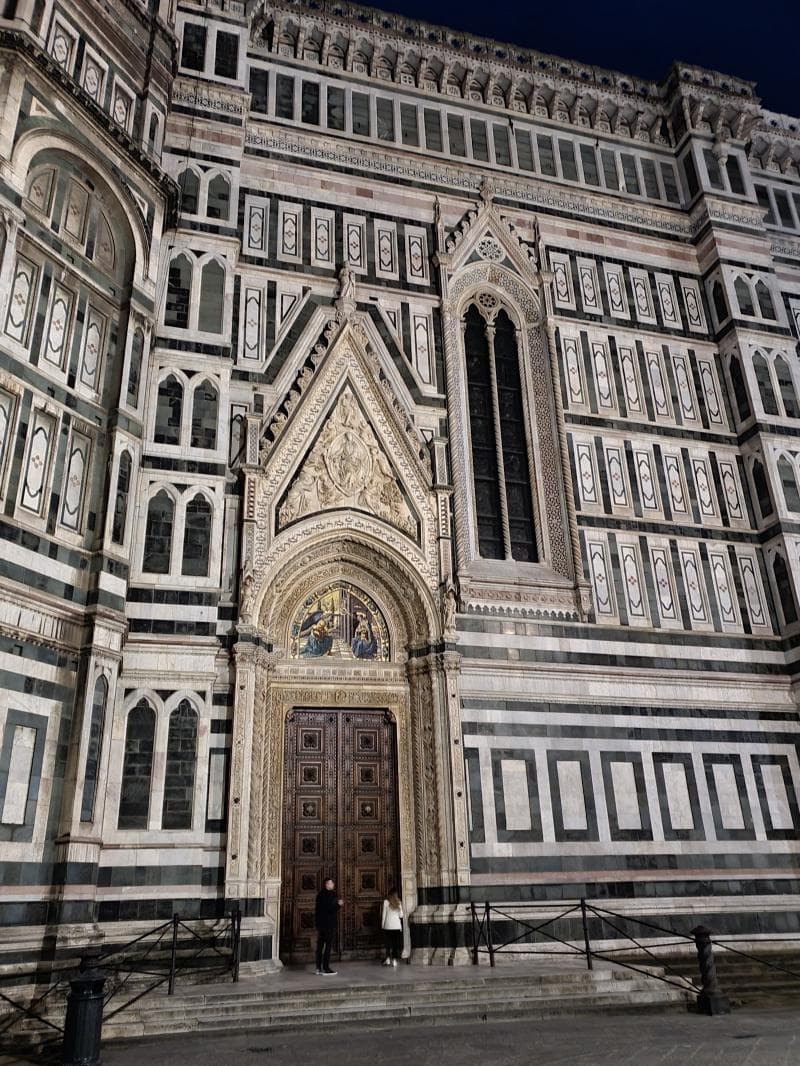
Explore Florence Cathedral, also known as Duomo di Firenze, a masterpiece in Florence, Italy, with Brunelleschi's Dome and rich Renaissance history.
Overview
The Florence Cathedral, officially known as the Cattedrale di Santa Maria del Fiore, stands as an unmistakable icon on the skyline of Florence, Italy. This magnificent Roman Catholic basilica is the episcopal seat of the archdiocese of Florence and a breathtaking testament to Gothic and Renaissance architecture. Its colossal size, intricate marble facade, and, most notably, Filippo Brunelleschi's monumental dome, define it as a masterpiece of human ingenuity and artistic ambition.
Construction of the Cathedral began in 1296, and it was eventually consecrated in 1436. It is one of the largest churches in Christianity, boasting dimensions of approximately 153 meters in length, 90 meters in width at the transept, and a dome rising to an interior height of 100 meters, with an overall height of 114.5 meters. The distinct polychrome marble exterior, featuring shades of green from Prato, white from Carrara, and red from Siena, adds to its unique visual grandeur.
History & Cultural Background
The story of Florence Cathedral is deeply intertwined with the history of Florence itself, reflecting the city's aspirations during the prosperous 13th and 14th centuries. The decision to build such a grand cathedral was driven by Florence's growing wealth, power, and desire to outshine its Tuscan rivals. The site chosen was that of an older, smaller church, Santa Reparata, whose remains now house a museum within the complex.
Arnolfo di Cambio laid the initial designs in 1296, envisioning a Gothic structure of unparalleled scale. However, a significant challenge emerged: the sheer size of the planned dome exceeded the technological capabilities of the era. For decades, the massive octagonal opening remained uncovered, a symbol of Florence's ambition yet also its architectural dilemma. Construction progressed under various masters, including Giotto, who designed the elegant campanile, or bell tower, in 1334. It was Filippo Brunelleschi, a goldsmith by trade, who famously solved the dome's engineering puzzle in the early 15th century, ultimately completing it in 1436. The Cathedral's facade, though part of the original design, remained unfinished for centuries, only to be completed in the elaborate Gothic Revival style by Emilio De Fabris in the 19th century.
What Makes It Special
The Florence Cathedral's most distinguishing feature is undoubtedly Brunelleschi's Dome, an architectural marvel that heralded the dawn of the Renaissance. Its innovative double-shell design, constructed without traditional wooden scaffolding, employed a unique herringbone brick pattern and horizontal stone chains to distribute weight and ensure stability. At 45 meters in diameter and weighing over 40,000 tons with four million bricks, it remains the largest masonry dome ever built. Climbing its 463 steps allows visitors an intimate view of Giorgio Vasari and Federico Zuccari's stunning frescoes depicting 'The Last Judgment' on the dome's interior, culminating in panoramic views of Florence.
Beyond the dome, the entire complex is a repository of art and architectural brilliance. Giotto's Campanile, rising 85 meters high, provides another magnificent vantage point. The Cathedral's interior hosts significant artworks, including a clock frescoed by Paolo Uccello and exquisite stained-glass windows designed by masters like Donatello and Uccello. The rich polychromy of the exterior marble, combined with its intricate detailing, makes the Duomo a visual spectacle, recognized globally as a UNESCO World Heritage site.
Stories, Fun Facts & Local Details
The construction of Florence Cathedral is rich with fascinating anecdotes. Legend has it that Filippo Brunelleschi secured the commission for the dome through a clever 'egg trick.' Challenged to make an egg stand upright, he simply smashed its base, demonstrating that a solution is obvious once revealed, even if others couldn't conceive it. This inventive spirit was characteristic of Brunelleschi, who was so highly regarded that he was buried within the Cathedral's crypt, an extraordinary honor for an architect of his time.
Another curious detail relates to the high demand for bricks during the dome's construction. Brunelleschi established a furnace in Impruneta and, while overseeing the work, developed a fondness for the local beef stew, 'Peposo.' He introduced this hearty dish to his workers, and it has since become an iconic part of Florentine cuisine. The Cathedral was built over the original Santa Reparata church, with Florentines attending mass in the old church while the new one was under construction, literally walking through the new facade to enter the old. The entire construction process spanned over 140 years, a testament to the scale of the undertaking and the dedication of generations of Florentines.
Visitor Perspective
Visiting the Florence Cathedral complex offers an immersive journey through Renaissance history and art. The complex encompasses not only the Cathedral itself but also Brunelleschi's Dome, Giotto's Bell Tower, the Baptistery of St. John, the Crypt of Santa Reparata, and the Opera del Duomo Museum.
Entrance to the Cathedral building is free, though it is often accompanied by long queues, especially during peak seasons. To explore the dome, bell tower, or other parts of the complex, specific tickets or passes are required, and booking well in advance, particularly for the dome climb, is highly recommended to avoid disappointment. Be prepared for a physical challenge if climbing the dome or bell tower, as neither has an elevator, featuring hundreds of narrow steps. Visitors should also adhere to a dress code, ensuring shoulders and knees are covered when entering the Cathedral and Baptistery, out of respect for its sacred nature. The best times to visit are typically early morning or late afternoon, and during the spring or fall, to avoid large crowds and enjoy more comfortable temperatures.
Coordinates: 11.25694, 43.77306
View on Google Maps💬 How Travelers Describe This Place
Based on community votes
Must See
913Photogenic
748Interesting
499Beautiful
337Unique
94
Traveler Stories
Discover memorable experiences shared by travelers who have visited this place.
No traveler stories yet.
Be the first traveler to share what made this place memorable.
Things to see at Florence Cathedral



Tour
By
Spot
Discover amazing places around the world. Your journey starts here.
Explore
© 2026 TourBySpot. All rights reserved.