East Side Gallery
Berlin, Germany
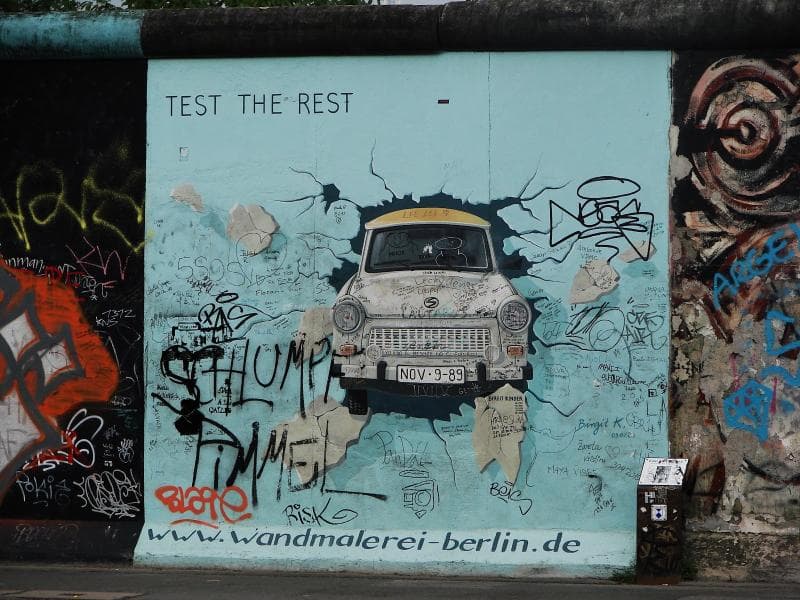
Explore Berlin's iconic East Side Gallery, the longest open-air gallery on a section of the Berlin Wall, featuring over 100 historic murals and symbols of freedom.
Overview
The East Side Gallery, located in Berlin, Germany, stands as the world's longest open-air art gallery and a powerful testament to freedom and hope. Stretching for 1,316 meters (approximately 0.8 miles) along the Spree River, it is the longest continuous section of the Berlin Wall still in existence. This monumental outdoor exhibition showcases over 100 murals painted directly onto the remnants of the Wall, transforming a symbol of division into a vibrant canvas of artistic expression. Annually, more than three million visitors come to reflect upon its history and admire the diverse artworks.
History & Cultural Background
The story of the East Side Gallery is inextricably linked to the dramatic events of late 20th-century German history. The Berlin Wall, constructed in 1961, physically and ideologically divided East and West Berlin for 28 years, becoming a stark emblem of the Cold War and the Iron Curtain. On November 9, 1989, the Wall finally fell, marking a pivotal moment in history that led to German reunification. In the spring of 1990, just months after this momentous event, 118 artists from 21 countries converged upon this section of the Wall. Their collective aim was to document the profound political changes of 1989/90 and express the newfound sense of joy, freedom, and hope for a better future through art. Officially opened on September 28, 1990, the East Side Gallery was granted protected memorial status in 1991, recognizing its immense historical and cultural value.
What Makes It Special
What sets the East Side Gallery apart is its unique blend of art, history, and raw emotion. It's not merely an art display; it's a monumental historical artifact imbued with profound human narratives. The murals, painted on the eastern side of the Wall—the side that faced East Berlin and was previously inaccessible to art—offer a direct commentary on the political climate, the joy of reunification, and the desire for peace and democracy. The sheer scale of the gallery, combining over a hundred individual works along such a significant length of the Wall, creates an unparalleled open-air experience. Each piece, often characterized by bright colors and bold designs, serves as a poignant reminder of past oppression and a vibrant celebration of overcoming division.
Stories, Fun Facts & Local Details
Among the gallery's many compelling artworks, two stand out as particularly iconic and frequently photographed. Dmitri Vrubel's 'My God, Help Me to Survive This Deadly Love,' often referred to as the 'Fraternal Kiss,' depicts the controversial embrace between Soviet leader Leonid Brezhnev and East German President Erich Honecker. Another beloved piece is Birgit Kinder's depiction of a Trabant car, the quintessential East German vehicle, appearing to break through the Wall, symbolizing escape and newfound freedom. The creation of the gallery itself was sparked by artists like David Monty and Heike Stephan, who envisioned transforming the Wall into the 'world's largest gallery' and successfully obtained permission from the GDR Ministry of National Defense.
Maintaining an outdoor art installation of this magnitude presents ongoing challenges. Exposed to the elements and occasional vandalism, the murals have required multiple restoration efforts to preserve their integrity. Significant restoration projects took place in 2000 and a major one in 2009, with many original artists returning to repaint their works. In November 2018, the responsibility for the preservation of the East Side Gallery was officially transferred to the Stiftung Berliner Mauer (Berlin Wall Foundation), ensuring its future as a global monument.
Visitor Perspective
Visiting the East Side Gallery is an experience that combines historical immersion with artistic appreciation. As you walk along Mühlenstrasse, tracing the path where the Wall once stood, you are invited to reflect on the immense human impact of division and the powerful message of unity. The gallery is open around the clock, allowing for flexible visits. For a more contemplative experience, consider visiting during off-peak hours, such as earlier mornings or later afternoons, when the crowds are thinner. The gallery is easily accessible, situated between the Ostbahnhof and Warschauer Straße railway stations, making it a convenient stop on any Berlin itinerary. Public guided tours are also available, offering deeper insights into the art and history.
Coordinates: 13.4396953, 52.5050224
View on Google Maps💬 How Travelers Describe This Place
Based on community votes
Interesting
914Must See
752Unique
516Photogenic
245Beautiful
232
Traveler Stories
Discover memorable experiences shared by travelers who have visited this place.
No traveler stories yet.
Be the first traveler to share what made this place memorable.
Things to see at East Side Gallery



Tour
By
Spot
Discover amazing places around the world. Your journey starts here.
Explore
© 2026 TourBySpot. All rights reserved.