Spree River Walk
Berlin, Germany
Explore Berlin's Spree River Walk at the East Side Gallery, a 1.3 km stretch of the former Berlin Wall adorned with powerful murals. Discover history and art along the Spree in Germany.
Overview
The Spree River Walk, adjacent to Berlin's iconic East Side Gallery, offers a unique journey through art, history, and urban regeneration. This 1.3-kilometer stretch of pathway runs alongside the longest surviving section of the Berlin Wall, transformed into an open-air art gallery. Situated in the Friedrichshain-Kreuzberg district, between Ostbahnhof and Oberbaumbrücke, the walk provides an unparalleled perspective on one of the twentieth century's most significant historical landmarks. It is a place where the tranquil flow of the River Spree contrasts sharply with the vibrant, poignant messages painted on the former border barrier, inviting visitors to reflect on freedom and division.
Open to the public twenty-four hours a day and free to access, the Spree River Walk and East Side Gallery serve as a powerful memorial and a testament to artistic expression. The path along the Spree was, historically, a crucial vantage point for border guards, as the river itself constituted the actual border between East and West Berlin in this area. Today, it offers a scenic and thought-provoking stroll, combining natural beauty with a deep dive into Berlin's complex past.
History & Cultural Background
The story of the Spree River Walk is inextricably linked to the Berlin Wall and the division of Germany. Erected in 1961, the Berlin Wall physically separated East and West Berlin for nearly three decades, becoming the most potent symbol of the Iron Curtain. At this particular location, the River Spree formed the actual border, with the East Side Gallery segment functioning as the 'hinterland mauer' or inner wall on the East Berlin side. Patrol boats navigated these waters, making the river a closely monitored and dangerous zone.
When the Berlin Wall finally fell on November 9, 1989, a wave of euphoria swept across Germany and the world. In the spring of 1990, just months after reunification, 118 artists from 21 countries converged on this desolate strip of concrete. They painted over 100 murals directly onto the eastern side of the wall, transforming it into a vibrant canvas of hope, political commentary, and calls for peace. This spontaneous act of artistic remembrance officially opened as the East Side Gallery on September 28, 1990, and was granted protected memorial status just over a year later, solidifying its place in history.
What Makes It Special
What makes the Spree River Walk and East Side Gallery truly special is its potent blend of historical gravitas, artistic freedom, and natural setting. It is the longest continuous section of the Berlin Wall still standing, making it an irreplaceable relic of a divided city. Simultaneously, it holds the distinction of being the world's largest permanent open-air art gallery.
The location along the Spree River adds another layer of significance. The juxtaposition of the flowing water, symbolizing continuity and life, with the unyielding concrete of the Wall, representing stagnation and division, creates a profound emotional experience. The gallery stands as a powerful symbol of joy at the end of German division, while also serving as a stark historical testimony to the oppressive regime that once stood here. The art itself, born from the immediate aftermath of freedom, captures a unique moment in human history, making every step along the river walk a journey through collective memory and artistic protest.
Stories, Fun Facts & Local Details
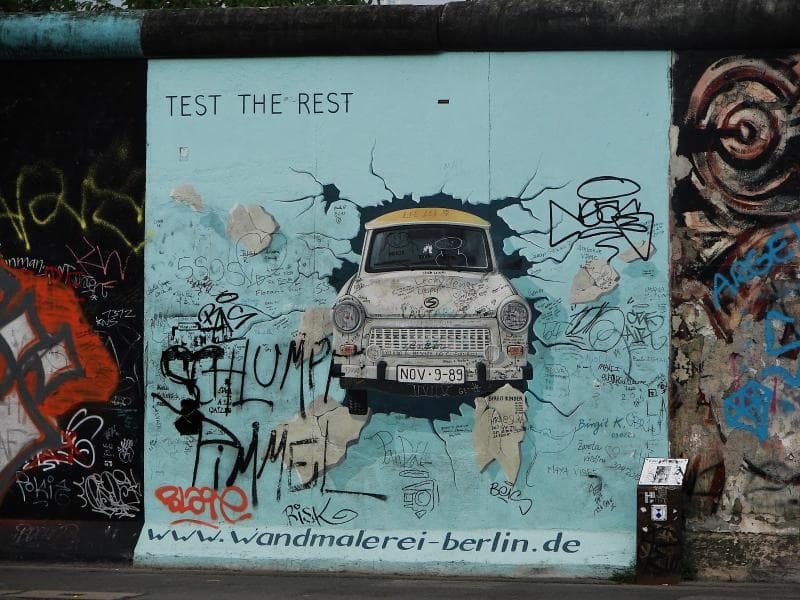
The East Side Gallery is home to some of the world's most recognizable pieces of street art, each telling a story of defiance, hope, or satire. Among the most famous murals are Dmitri Vrubel's 'Fraternal Kiss', depicting Soviet leader Leonid Brezhnev and East German President Erich Honecker in a passionate embrace, and Birgit Kinder's 'Test the Best', which shows a Trabant car breaking through the wall. These artworks have become iconic representations of the period and are often sought out by visitors.
Over the years, the outdoor nature of the gallery meant the murals faced the ravages of weather and vandalism. To preserve this crucial memorial, extensive restoration efforts have been undertaken. In 2009, many of the original artists returned to repaint their works, bringing renewed vibrancy to the gallery. The East Side Gallery has been under the stewardship of the Stiftung Berliner Mauer (Berlin Wall Foundation) since 2018, ensuring its ongoing preservation as a cultural monument. Beyond the gallery, the Spree River itself has a rich history, serving as a vital trade route since the Middle Ages and playing a pivotal role in Berlin's development and identity.
Visitor Perspective
Walking the Spree River Walk and exploring the East Side Gallery is an immersive experience. The path is easily accessible, extending along Mühlenstraße, and is well-served by public transportation with nearby stations like Ostbahnhof and Warschauer Straße. Visitors can embark on a self-guided journey, taking their time to absorb each mural and reflect on its message and context.
While generally open and inviting, the gallery can become quite busy during peak hours. A tip for a more tranquil experience is to visit earlier in the morning or later in the afternoon. The wide sidewalk along the gallery provides ample space for strolling and photography, allowing visitors to capture images of the art against the backdrop of the Spree. For those seeking deeper insights, guided tours are available, with meeting points often near the Infomobile on the Spree side. This journey offers not just a visual feast, but a profound historical and emotional connection to Berlin's past and its enduring spirit of freedom.
Coordinates: 13.444722, 52.503056
View on Google Maps💬 How Travelers Describe This Place
Based on community votes
Interesting
696Photogenic
466Must See
225Unique
200Beautiful
159
Traveler Stories
Discover memorable experiences shared by travelers who have visited this place.
No traveler stories yet.
Be the first traveler to share what made this place memorable.

Tour
By
Spot
Discover amazing places around the world. Your journey starts here.
Explore
© 2026 TourBySpot. All rights reserved.