Murals Collection
Berlin, Germany
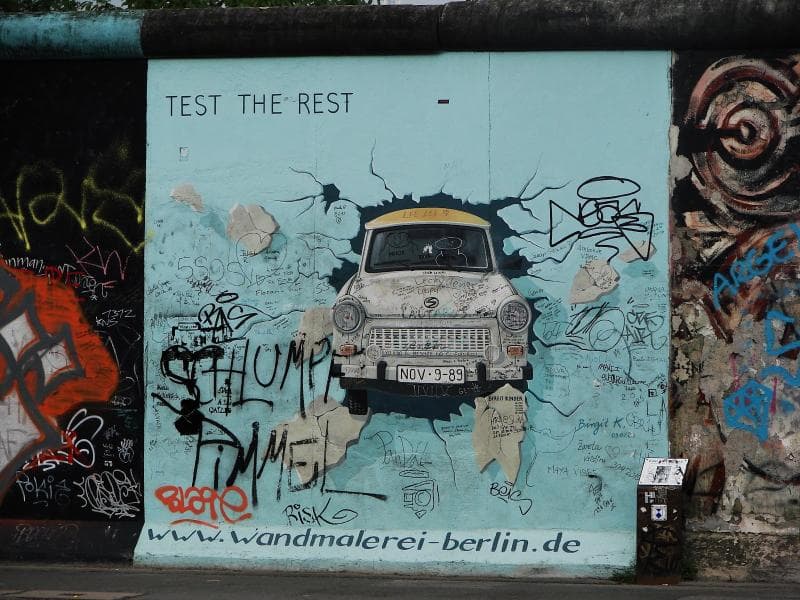
Explore the Murals Collection at Berlin's East Side Gallery, the world's longest open-air gallery, depicting powerful messages of freedom and unity.
Overview
The Murals Collection, famously known as the East Side Gallery, is a captivating open-air art gallery located on a preserved section of the former Berlin Wall in Berlin, Germany. Spanning 1.3 kilometers (0.8 miles) along the Spree River, it stands as the longest continuous section of the Berlin Wall still in existence and is recognized as the world's longest open-air gallery. More than a mere exhibition, this unique collection of over 100 murals serves as an international memorial for freedom, reflecting a pivotal moment in global history. Annually, millions of visitors from around the globe are drawn to this vibrant monument, making it one of Berlin's most popular attractions.
History & Cultural Background
The creation of the East Side Gallery was a spontaneous artistic response to the fall of the Berlin Wall on November 9, 1989, which marked the end of decades of division for the city and Germany. Shortly after this momentous event, in the spring of 1990, 118 artists from 21 countries converged on this section of the Wall, previously part of the heavily guarded border fortifications on the East Berlin side. Their collective effort transformed a stark symbol of oppression and separation into a powerful canvas of hope, reconciliation, and political commentary. The artists documented the dramatic political changes of 1989/90, expressing themes of peace, freedom, unity, and the anxieties of an uncertain future. In November 1991, recognizing its immense historical and cultural significance, this section of the Wall was officially granted protected monument status, ensuring its preservation for future generations.
What Makes It Special
What truly distinguishes the East Side Gallery is its profound dual identity: it is both a historical artifact and a living art installation. It allows visitors to engage directly with a physical remnant of the Iron Curtain, while simultaneously experiencing the artistic expressions born from the euphoria and challenges of German reunification. The murals, painted directly onto the concrete elements, offer diverse perspectives on a singular historical event, using styles ranging from Surrealism to graffiti art. Unlike traditional museums, this gallery is entirely open-air and accessible at all times, making art and history freely available to everyone. The constant exposure to weather, however, necessitates ongoing preservation efforts. The murals were notably restored in 2009, with many artists returning to repaint their original works, ensuring the vibrancy of their messages endures.
Stories, Fun Facts & Local Details
Among the more than one hundred artworks, several murals have achieved iconic status. Perhaps the most famous is Dmitri Vrubel's 'My God, Help Me to Survive This Deadly Love,' often referred to as 'The Fraternal Kiss,' depicting the famous socialist fraternal kiss between Soviet leader Leonid Brezhnev and East German President Erich Honecker. Another celebrated piece is Birgit Kinder's 'Test the Best,' which shows a Trabant car, a symbol of East Germany, dramatically breaking through the Wall. These and other murals like Kani Alavi's 'It Happened in November,' portraying a flood of East German faces moving west, capture the complex emotions of the period. An interesting aspect is that before the Wall fell, graffiti was primarily found on the Western side; the East Side Gallery marked the first time the Eastern face became a canvas for expression. The collection serves as a poignant reminder that art can transform a barrier of oppression into a monument of collective memory and future aspirations.
Visitor Perspective
Visiting the Murals Collection at the East Side Gallery is an immersive and contemplative experience. As you stroll along the 1.3-kilometer stretch, you'll encounter a visual narrative of a pivotal historical moment, rendered in powerful colors and diverse artistic styles. It's a place that invites reflection on themes of freedom, unity, and human resilience. The gallery is open around the clock and admission is free, offering flexibility for visitors. For a more relaxed experience, consider visiting in the early morning or late afternoon to avoid larger crowds. The East Side Gallery is easily accessible by public transport, situated between Ostbahnhof and Oberbaumbrücke, making it a convenient stop for any traveler exploring Berlin. While there are no restrooms directly on-site, the surrounding Friedrichshain and Kreuzberg areas offer plenty of amenities and further exploration opportunities.
Coordinates: 13.4396953, 52.5050224
View on Google Maps💬 How Travelers Describe This Place
Based on community votes
Unique
532Beautiful
401Interesting
333Must See
280Photogenic
231
Traveler Stories
Discover memorable experiences shared by travelers who have visited this place.
No traveler stories yet.
Be the first traveler to share what made this place memorable.

Tour
By
Spot
Discover amazing places around the world. Your journey starts here.
Explore
© 2026 TourBySpot. All rights reserved.