Oberbaum Bridge Area
Berlin, Germany
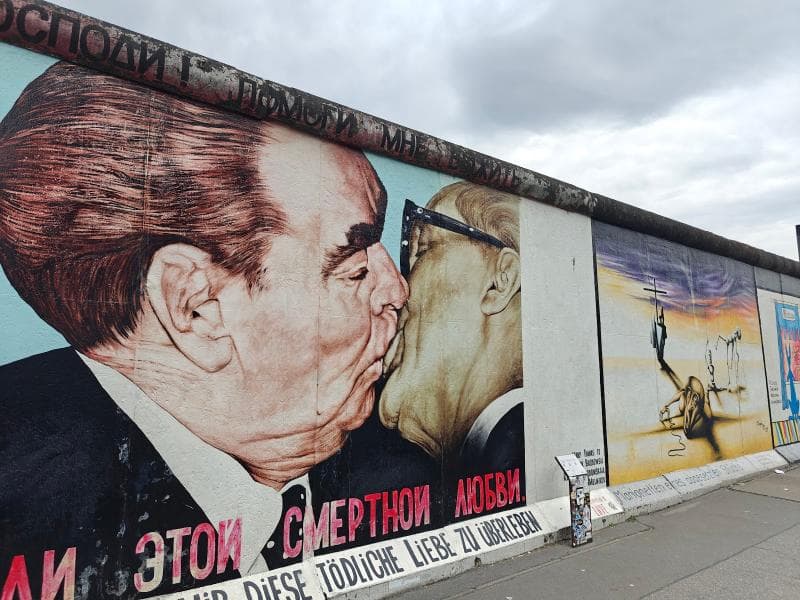
Explore Berlin's iconic Oberbaum Bridge Area, a historical landmark connecting Friedrichshain & Kreuzberg, adjacent to the East Side Gallery.
Overview
Nestled where Berlin's vibrant Friedrichshain and Kreuzberg districts meet, the Oberbaum Bridge Area offers a captivating blend of history, architectural beauty, and contemporary urban life. This iconic double-deck bridge, spanning the River Spree, is not merely a thoroughfare but a powerful symbol of Berlin's turbulent past and its eventual reunification. Adorned with its distinctive red-brick towers, the Oberbaum Bridge connects these two dynamic boroughs, serving as a vital link for road traffic, pedestrians, and the city's U-Bahn lines U1 and U3.
It stands as a testament to resilience, having witnessed centuries of change, from its origins as a customs gate to its poignant role as a border crossing during the Cold War. Today, it offers picturesque views of the cityscape, including glimpses of the nearby East Side Gallery, making it an unmissable destination for anyone seeking to understand the heart and soul of Berlin.
History & Cultural Background
The history of the Oberbaum Bridge stretches back to the early 18th century when the first wooden bridge was constructed as part of Berlin's excise wall. This early iteration served as a city gate, controlling trade and preventing smuggling. The bridge's unusual name, 'Oberbaumbrücke', derives from a heavy tree trunk, or 'Baum', that was lowered across the river at night to block passage – hence, 'Upper Boom Bridge'.
The magnificent neo-Gothic structure seen today was built between 1894 and 1896, designed by Otto Stahn, who incorporated decorative elements like pointed arches and two striking towers inspired by medieval city gates. In 1902, Berlin's first elevated railway began crossing the bridge, a service that continues to this day.
Perhaps its most profound historical chapter unfolded during the Cold War. From 1961, with the construction of the Berlin Wall, the Oberbaum Bridge became a strictly controlled border crossing between East and West Berlin, dividing the districts of Friedrichshain (East) and Kreuzberg (West). For many years, it was open only to pedestrians, and under restricted conditions, serving as a poignant symbol of separation. After the fall of the Wall in 1989 and German reunification, the bridge underwent extensive restoration and reopened fully in 1995, becoming a powerful emblem of the city's healing and unity.
What Makes It Special
The Oberbaum Bridge's unique appeal lies in its distinctive architecture and its profound historical resonance. Its red-brick, two-tiered construction, reminiscent of a medieval city gate, sets it apart from other bridges in Berlin. The lower deck accommodates road traffic and pedestrians, while the upper deck carries the U-Bahn, offering an unusual blend of transportation layers.
Its position immediately adjacent to the East Side Gallery – the longest surviving section of the Berlin Wall transformed into an open-air art gallery – creates a compelling narrative. As you stand on the bridge, you can look along the former border, now alive with powerful murals reflecting themes of freedom, hope, and unity. This direct connection visually and emotionally links two of Berlin's most significant historical landmarks, offering a unique opportunity to reflect on the city's past and its vibrant present.
Stories, Fun Facts & Local Details
- The Origin of the Name: The name 'Oberbaumbrücke' literally translates to 'Upper Boom Bridge'. This refers to a large, metal-spiked tree trunk, the 'Oberbaum', which was lowered into the Spree at night to block the river and collect customs duties.
- Distinctive Towers: Look closely at the two prominent towers on the bridge. They are not identical; one is round, and the other is octagonal, a deliberate design choice that harks back to its function as a historic city gate. One tower bears the Berlin Bear, while the other features the Brandenburg Eagle.
- Architectural Revival: After being partially destroyed in World War II and then neglected during the division of Berlin, the bridge's war-damaged parts were rebuilt in the 1990s. The new steel middle section was designed by Spanish architect Santiago Calatrava, seamlessly blending modern engineering with the bridge's historic aesthetic.
- Cinematic Appearances: The Oberbaum Bridge's striking appearance has made it a popular backdrop for films and television series, including 'Run Lola Run' and 'Unknown', cementing its status as a Berlin icon in popular culture.
Visitor Perspective
Visiting the Oberbaum Bridge Area is an immersive experience that allows you to walk through layers of Berlin's history. As you cross the bridge, whether by foot, car, or U-Bahn, you're traversing a path that once represented a stark division. The views from the bridge are spectacular, offering panoramic vistas of the Spree River, the modern skyline, and the colorful expanse of the East Side Gallery stretching along the riverbank.
It's a fantastic spot for photography, especially at sunset, when the red bricks glow in the golden light. Street musicians often add to the lively atmosphere, particularly in the evenings. Beyond the bridge itself, the surrounding neighborhoods of Friedrichshain and Kreuzberg offer a rich tapestry of cafes, restaurants, and vibrant nightlife, inviting further exploration. The Oberbaum Bridge isn't just a landmark; it's a place where you don't just observe Berlin's story, you feel it.
Coordinates: 13.4452, 52.5028
View on Google Maps💬 How Travelers Describe This Place
Based on community votes
Must See
794Interesting
605Beautiful
562Unique
492Photogenic
253
Traveler Stories
Discover memorable experiences shared by travelers who have visited this place.
No traveler stories yet.
Be the first traveler to share what made this place memorable.

Tour
By
Spot
Discover amazing places around the world. Your journey starts here.
Explore
© 2026 TourBySpot. All rights reserved.