Cu Chi Tunnels
Ho Chi Minh City, Vietnam
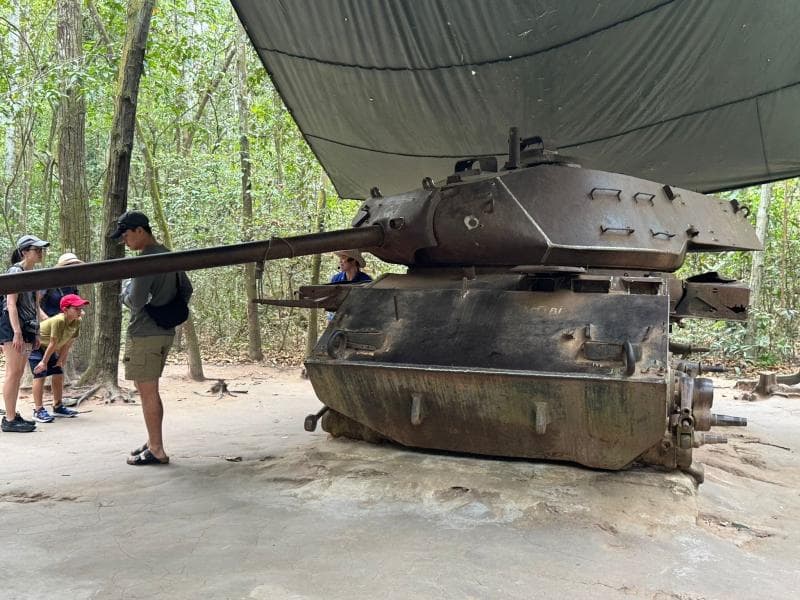
Explore the historic Cu Chi Tunnels in Ho Chi Minh City, Vietnam. Discover the ingenious underground network used during the Vietnam War and learn about its pivotal role.
Overview
Nestled just outside Ho Chi Minh City, Vietnam, the Cu Chi Tunnels represent an extraordinary testament to human resilience and ingenuity. This immense network of connecting underground tunnels played a pivotal role in Vietnam's history, particularly during the Vietnam War, known locally as the American War. Today, it stands as a powerful historical site, drawing millions of visitors annually who seek to understand the complexities and struggles of a bygone era.
The tunnels, stretching over 200 to 250 kilometers, are far more than mere passageways; they formed an intricate underground city, essential for communication, supply, and shelter. Exploring these subterranean corridors offers a unique and deeply moving glimpse into the lives of those who lived and fought beneath the surface.
History & Cultural Background
The origins of the Cu Chi Tunnels date back to the 1940s during Vietnam's resistance against French occupation. Initially, these were short, isolated tunnels used for hiding documents and providing shelter.
However, their most significant expansion occurred during the Vietnam War (1955–1975). The Viet Cong, communist guerrilla troops, meticulously enlarged and developed the network, transforming it into a strategic base. The tunnels became a crucial asset, enabling forces to move undetected, launch surprise attacks, and evade the superior firepower of American and South Vietnamese troops. This period saw the construction of multiple layers, with some tunnels reaching depths of 10 meters, designed to withstand bombs and tanks.
The creation of the tunnels with simple, rudimentary tools, often by hand, underscores the determination and resourcefulness of the Vietnamese people. They embodied a spirit of unwavering independence, becoming a symbol of resistance against foreign forces.
What Makes It Special
What truly distinguishes the Cu Chi Tunnels is their remarkable complexity and the sheer ingenuity behind their design. This vast underground system wasn't just for combat; it housed entire communities. Within its hidden depths were living quarters, meeting rooms, kitchens with disguised smoke vents, hospitals, storage areas for food and weapons, and even ordnance factories.
The tunnels featured cleverly concealed entrances, multiple levels, and strategically placed booby traps and ventilation shafts, making them incredibly difficult for enemy forces to penetrate. The upper soil layer was even engineered to support the weight of a 50-tonne tank. This ‘underground city’ allowed the Viet Cong to sustain prolonged resistance and became a significant factor in the war's outcome, particularly in key campaigns like the Tet Offensive.
Stories, Fun Facts & Local Details
Life within the tunnels was extraordinarily challenging. Soldiers and civilians endured scarcity of air, food, and water, alongside infestations of ants, centipedes, snakes, scorpions, and rodents. Sickness, especially malaria, was rampant and a major cause of death, second only to battle wounds. Often, inhabitants would spend days underground, emerging only at night to tend crops or engage the enemy.
To experience a taste of wartime life, visitors can try boiled cassava (tapioca) with crushed peanuts and sugar, a basic yet energy-rich meal that sustained soldiers. The tunnels also served as a secret haven where even famous Vietnamese entertainers would perform to boost morale.
Today, the site is managed as a historical park with two main sections accessible to the public: Ben Dinh and Ben Duoc. While some original tunnel sections are preserved, many have been enlarged for tourists, offering an optional, brief crawling experience. There's also an optional shooting range where visitors can fire old weapons, with the sounds contributing to an immersive atmosphere.
Visitor Perspective
A visit to the Cu Chi Tunnels is an immersive and educational journey, offering a profound understanding of Vietnam's past. Tours typically begin with a documentary film, setting the historical context before guides lead visitors through forested walkways.
You'll encounter camouflaged entrances, hidden trapdoors, and demonstrations of ingeniously designed booby traps. The opportunity to crawl through a restored section of the tunnels, though widened, provides a brief but powerful sense of the harsh conditions endured by soldiers. It's an emotional and often intense experience, leaving visitors with a deeper appreciation for the resilience and unwavering spirit of the Vietnamese people.
The site is open daily, usually from 7 AM to 5 PM, and is located approximately 55-70 kilometers northwest of central Ho Chi Minh City. Many find that a guided tour enhances the experience, providing invaluable historical insights.
Coordinates: 106.5223, 11.0566
View on Google Maps💬 How Travelers Describe This Place
Based on community votes
Beautiful
981Unique
617Interesting
357Photogenic
147Must See
28
Traveler Stories
Discover memorable experiences shared by travelers who have visited this place.
No traveler stories yet.
Be the first traveler to share what made this place memorable.
Things to see at Cu Chi Tunnels



Tour
By
Spot
Discover amazing places around the world. Your journey starts here.
Explore
© 2026 TourBySpot. All rights reserved.