Jungle Pathways
Ho Chi Minh City, Vietnam
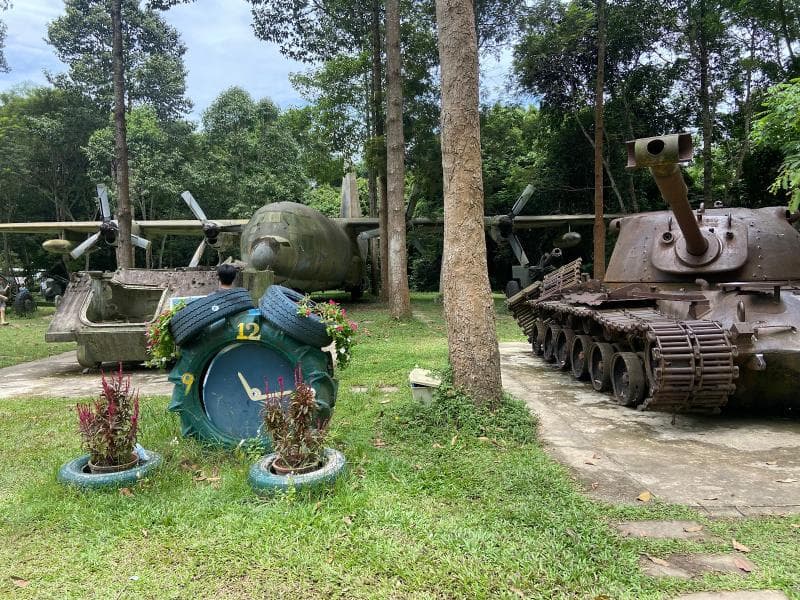
Explore the historic Jungle Pathways at Cu Chi Tunnels in Ho Chi Minh City, Vietnam. Discover hidden entrances, booby traps, and the ingenious jungle warfare strategies of the Vietnam War.
Overview
Stepping onto the 'Jungle Pathways' of the Cu Chi Tunnels in Ho Chi Minh City, Vietnam, is to walk through a living testament to human ingenuity and resilience. While the famed tunnels run deep underground, the pathways above ground, shrouded in dense tropical foliage, were equally crucial to the Viet Cong's survival during the Vietnam War. These seemingly ordinary jungle trails concealed intricate networks of camouflaged entrances, ventilation shafts, and booby traps, forming an integral part of the larger defensive system. Today, these pathways offer visitors a profound journey, allowing them to witness the strategic landscape that once defined a fierce struggle.
The Cu Chi Tunnels complex, located approximately 70 kilometers northwest of Ho Chi Minh City, spans over 250 kilometers of subterranean passages. The 'Jungle Pathways' provide the essential context for understanding how these tunnels functioned within their natural environment. Visitors follow guides through forested walkways, encountering hidden trapdoors and recreated living spaces, offering a glimpse into the harsh realities faced by those who lived and fought here.
History & Cultural Background
The origins of the Cu Chi Tunnels date back to the 1940s during Vietnam's resistance against French colonial authority. Initially, these were short, isolated tunnels used for shelter and storing documents. However, with the escalation of the Vietnam War in the 1960s, the network expanded dramatically, transforming into an underground city connecting villages, military bases, and supply routes.
The jungle environment was not merely a backdrop but an active participant in the war. The dense vegetation provided natural camouflage, allowing Viet Cong soldiers to move undetected, stage surprise attacks, and then disappear back underground. The 'Jungle Pathways' represent these vital surface routes, where soldiers tended crops at night, scavenged for supplies, and engaged enemy forces. The strategic importance of the jungle cannot be overstated; it was a shield, a supply line, and a battleground all in one.
What Makes It Special
What makes the 'Jungle Pathways' truly special is their role as the visible facade of an invisible war. They hide the genius of military engineering and the sheer tenacity of the human spirit. The pathways reveal how the jungle itself was weaponized and utilized for defense. Visitors can observe air ventilation shafts cleverly disguised as termite mounds, demonstrating the Viet Cong's profound understanding and manipulation of their environment.
Beyond the functional aspects, these pathways immerse you in the atmosphere of wartime Cu Chi. The sounds, the humidity, and the thick canopy overhead transport you to a time when every step in this jungle held immense significance. The experience is not just about observing history but feeling its weight, making the connection between the verdant landscape and the hidden world beneath it.
Stories, Fun Facts & Local Details
The 'Jungle Pathways' are rich with untold stories. Imagine Viet Cong soldiers spending their days underground, emerging only under the cover of darkness to tend their crops in these very jungle clearings or to engage in daring missions. Life in the tunnels was arduous, with scarce air, food, and water, and infestations of ants, snakes, and scorpions. Soldiers were often forced to remain underground for days during heavy bombing, sustained by simple meals like boiled cassava with crushed peanuts and sugar.
A fascinating detail is the intricate system of booby traps camouflaged along these jungle paths. These ranged from punji stick pits, sometimes placed in sequence to ensnare multiple soldiers, to tripwires that triggered grenades. These traps, along with the hidden tunnel entrances, made navigating the jungle treacherous for American and South Vietnamese forces, forcing them to train 'tunnel rats' to confront the unseen dangers.
Visitor Perspective
Walking the 'Jungle Pathways' today is an immersive and often reflective experience. As you follow your guide through the forested terrain, you will stop at various points to learn about the different components of the tunnel system, including the hidden trapdoors and booby trap displays. While the tunnels themselves can be narrow and challenging, even for expanded sections, the above-ground pathways provide a crucial understanding of the complete system.
The paths offer a poignant reminder of the resourcefulness and determination of the Vietnamese people. Many visitors describe the experience as educational and deeply moving, far beyond a conventional museum visit. It's an opportunity to connect with history on a physical and emotional level, appreciating the harsh conditions and strategic brilliance that unfolded amidst the quiet beauty of the jungle.
Coordinates: 106.5223, 11.0566
View on Google Maps💬 How Travelers Describe This Place
Based on community votes
Unique
685Photogenic
472Beautiful
446Interesting
399Must See
33
Traveler Stories
Discover memorable experiences shared by travelers who have visited this place.
No traveler stories yet.
Be the first traveler to share what made this place memorable.

Tour
By
Spot
Discover amazing places around the world. Your journey starts here.
Explore
© 2026 TourBySpot. All rights reserved.