Chinatown
Singapore, Singapore
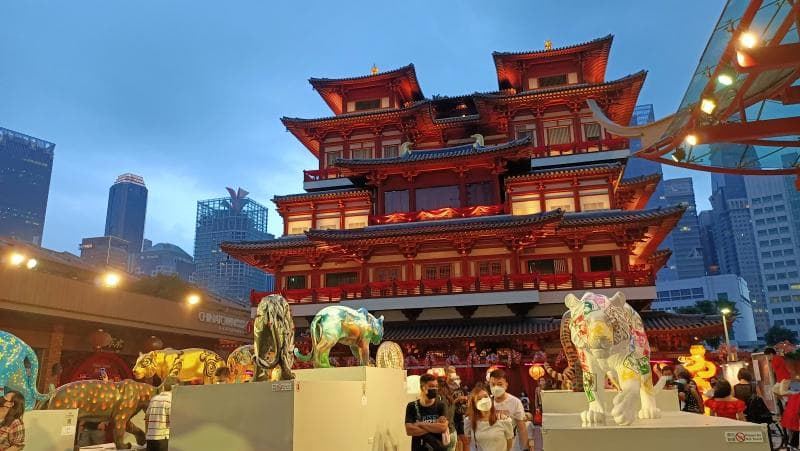
Explore Singapore's vibrant Chinatown, a historic district blending rich Chinese heritage with diverse culture, food, and stunning architecture. Discover its unique charm.
Overview
Singapore's Chinatown is a vibrant and historically rich district, serving as a significant cultural heartland within the city-state. It is an ethnic enclave located in the Outram district, showcasing a fascinating blend of tradition and modernity. Often referred to in Chinese as 'Niu Che Shui' (牛车水), meaning 'ox-cart water', and in Malay as 'Kreta Ayer', also meaning 'water cart', this area's name reflects its early days when water was transported by bullock carts to supply its residents. Today, Chinatown remains a bustling hub, renowned for its beautifully restored shophouses, diverse religious sites, bustling street markets, and an array of culinary delights, all while preserving the rich heritage of Singapore's Chinese diaspora.
History & Cultural Background
The origins of Singapore's Chinatown date back to the early 19th century, specifically to Sir Stamford Raffles' 1822 Town Plan. Under this plan, the area southwest of the Singapore River was designated as a settlement for Chinese immigrants. This allocation led to an influx of Chinese migrants from various provinces, each bringing their distinct dialects, customs, and trades. These early settlers played a crucial role in laying the groundwork for the district's rich history and cultural identity.
Chinatown evolved into a self-contained community where clan associations provided vital social support, employment, and housing for newcomers. Shophouses, iconic to the area, served as both commercial establishments on the ground floor and residences above. Despite challenges like overcrowding and poor sanitation in its early days, the community thrived, fostering strong cultural ties. Over time, the area also became home to other communities, notably Indian immigrants, leading to a unique multicultural tapestry. This is notably exemplified by the presence of the Sri Mariamman Temple, Singapore's oldest Hindu temple, located within Chinatown since 1827.
What Makes It Special
What sets Chinatown apart is its remarkable ability to weave together diverse cultural elements into a cohesive and captivating experience. The district is a living testament to Singapore's multicultural society, where the traditional Chinese shophouses stand alongside impressive religious edifices like the Buddha Tooth Relic Temple, the Sri Mariamman Temple, and the Masjid Jamae mosque. This harmonious co-existence of different faiths and cultures is a truly unique aspect.
Architecturally, Chinatown is a visual feast, featuring a unique blend of traditional Chinese and British colonial styles in its shophouses. The streets are alive with color and activity, particularly Pagoda Street, which is renowned for its restored shophouses, souvenir stalls, and vibrant atmosphere. Food is another cornerstone of Chinatown's appeal. Its hawker centers, such as the Chinatown Complex Food Centre and Maxwell Food Centre, offer an authentic and economical taste of Singaporean cuisine, with countless stalls serving up local delicacies. Traditional businesses, some operating for over a century, like Chop Wah On (medicated oils), Pek Sin Choon (tea house), and Tong Heng (pastries), continue to thrive, preserving traditional trades and culinary practices.
Stories, Fun Facts & Local Details
Beyond its grand temples and bustling markets, Chinatown is rich in stories and local details that paint a vivid picture of its past. The Chinatown Heritage Centre, housed in beautifully restored shophouses on Pagoda Street, offers an immersive journey into the lives of early Chinese immigrants. It recreates authentic 1950s interiors, allowing visitors to glimpse the challenging living conditions and entrepreneurial spirit of its former residents. This center is the only place in Singapore to recreate such authentic shophouse interiors.
A fascinating fun fact is the origin of the area's name. The need for water in the early settlement led to the use of ox-drawn carts, giving rise to both its Chinese name, 'Niu Che Shui', and its Malay name, 'Kreta Ayer', both meaning 'ox-cart water' or 'water cart'. Art enthusiasts will also discover numerous murals and street art pieces throughout Chinatown, many by local artist Yip Yew Chong. These artworks depict scenes of old Singapore, offering nostalgic glimpses into daily life and traditional trades, particularly around Pagoda Street and Temple Street.
Chinatown truly comes alive during festive seasons. The Lunar New Year and Mid-Autumn Festival are celebrated with immense vigor, transforming the streets with colorful decorations, elaborate light-ups, lion dances, street opera, and bustling night markets. This showcases how ancient traditions are kept vibrant and engaging for new generations.
Visitor Perspective
For the curious traveler, exploring Chinatown offers a deeply immersive cultural experience. A leisurely half-day is often recommended to fully appreciate its offerings. Visitors can begin by wandering through Pagoda Street, often considered the heart of the action, with its colorful shophouses and souvenir stalls directly accessible from the Chinatown MRT Station. Iconic religious sites like the Buddha Tooth Relic Temple and the Sri Mariamman Temple provide moments of quiet reflection and architectural marvel.
No visit is complete without diving into the culinary scene at one of the hawker centers, where one can sample a wide array of affordable and authentic Singaporean dishes. Exploring the intricate murals scattered across the streets also adds an engaging artistic dimension to the visit. While daytime is ideal for sightseeing, shopping, and enjoying the lively markets, the area transforms in the evening, with bars and eateries in areas like Ann Siang Hill and Telok Ayer Green buzzing with energy, offering a different, vibrant nightlife experience. Chinatown serves as an accessible gateway into Singapore's diverse cultural narrative, offering a memorable journey through its past and present.
Coordinates: 103.8438, 1.2837
View on Google Maps💬 How Travelers Describe This Place
Based on community votes
Must See
995Unique
929Photogenic
858Beautiful
730Interesting
275
Traveler Stories
Discover memorable experiences shared by travelers who have visited this place.
No traveler stories yet.
Be the first traveler to share what made this place memorable.
Things to see at Chinatown



Tour
By
Spot
Discover amazing places around the world. Your journey starts here.
Explore
© 2026 TourBySpot. All rights reserved.