Central State Museum Of Kazakhstan
Almaty, Kazakhstan
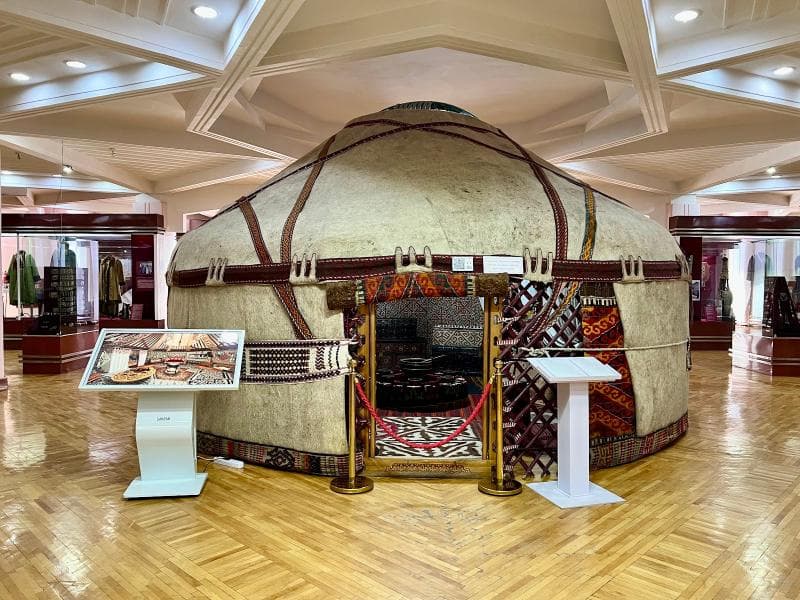
Discover Kazakhstan's rich history and culture at the Central State Museum in Almaty. Explore ancient artifacts, nomadic traditions, and the iconic 'Golden Man' replica.
Overview
The Central State Museum of Kazakhstan, nestled in the vibrant city of Almaty, stands as a pivotal institution for understanding the nation's rich tapestry of history and culture. As one of the largest and oldest museums across Central Asia, it offers an expansive journey through Kazakhstan's past, from its prehistoric origins to its modern-day identity. Housed within a distinctive architectural landmark, the museum's collection boasts between 200,000 and 300,000 artifacts, making it an essential destination for any curious traveler seeking profound insights into this captivating land.
History & Cultural Background
The museum's narrative began in 1931 when it first opened its doors within the historic Ascension Cathedral in Almaty. This beautiful wooden cathedral, designed by Andrey Pavlochich Zenkov, itself holds a tale of resilience, famously withstanding a powerful earthquake in 1911. However, to accommodate its ever-growing collection and significance, the museum transitioned to a purpose-built modern facility in 1985. This new building, a striking example of 1980s Kazakh architecture with its white walls and blue domes, was designed by a team including Yu.G. Ratushny, Z.M. Mustafina, and B.A. Rzagaliev. Its roots delve even deeper, tracing back to the 19th century with the Orenburg Regional Museum, reflecting the evolving administrative landscape of the region. In 2005, the museum gained further recognition as a research organization, solidifying its role in historical expeditions and expanding its activities.
What Makes It Special
Stepping inside the Central State Museum is like entering a treasure trove where each hall reveals a different facet of Kazakh heritage. One of its most iconic displays is the replica of the 'Golden Man,' a Scythian warrior's gold armor that has become a powerful national symbol of Kazakhstan. While the original now resides in the National Museum in Astana, this meticulous recreation still captures the imagination, hinting at the rich archaeological discoveries of the region. The museum's paleontology collection transports visitors millions of years into the past with ancient fossils, petrified wood, and remnants of prehistoric life discovered across Kazakhstan.
Beyond ancient history, the ethnographic halls immerse you in the traditional Kazakh nomadic lifestyle. Here, full-scale nomadic yurts, intricately designed traditional clothing, exquisite jewelry, and historic weapons paint a vivid picture of the Kazakh people's cultural richness. Another remarkable feature is the collection of over 200 paintings by Nikolai Gavrilovich Khludov, an esteemed Russian painter and ethnographer whose artworks beautifully capture 19th-century Kazakh traditions and landscapes. The architectural design of the museum building itself, with its distinctive domes, is considered a significant example of modern Kazakh architecture, adding to the visitor's experience.
Stories, Fun Facts & Local Details
The discovery of the original 'Golden Man' in 1969 by archaeologist Kemal Akishev was a monumental event, unearthing the remains of a Scythian warrior adorned with thousands of gold pieces, making it a cornerstone of Kazakh identity. The museum actively participates in cultural events, including 'Night in the Museum,' opening its doors for special evening experiences. It also houses the country's largest restoration center, diligently working to preserve precious artworks and artifacts for future generations. A fun detail from its early history is how the museum's collections followed the shifting capital of the Kazakh SSR, moving from Orenburg to Kyzyl-Orda and eventually to Almaty, accumulating diverse artifacts along the way. These dedicated efforts underscore the museum's role not just as a display space, but as a living archive and research hub for Kazakh history and culture.
Visitor Perspective
The Central State Museum is conveniently located in Almaty's Samal-1 microdistrict, easily accessible from the Abay metro station, just a short walk away, and by various public bus routes. Visitors are encouraged to dedicate approximately 1.5 to 2 hours to comfortably explore its extensive halls. The museum generally operates from 09:00 to 20:00, with ticket offices closing at 19:30, and is closed on Tuesdays. For foreign citizens, admission is typically 5,000 Kazakhstani Tenge. To enhance the experience, guided tours are available in Kazakh, Russian, and English, though booking in advance is recommended for English-language tours. The exhibits are designed with clear explanations, often featuring multilingual labels, making it accessible for international visitors. Families will find the paleontology and ethnographic halls, with their engaging displays like full-scale yurts, particularly enjoyable for children. A visit here is not merely a stop on a travel itinerary, but an immersive step into the heart of Kazakhstan's past and present.
Coordinates: 76.95083, 43.23583
View on Google Maps💬 How Travelers Describe This Place
Based on community votes
Beautiful
804Unique
733Must See
563Interesting
404Photogenic
336
Traveler Stories
Discover memorable experiences shared by travelers who have visited this place.
No traveler stories yet.
Be the first traveler to share what made this place memorable.
Things to see at Central State Museum Of Kazakhstan



Tour
By
Spot
Discover amazing places around the world. Your journey starts here.
Explore
© 2026 TourBySpot. All rights reserved.