Golden Man Exhibit
Almaty, Kazakhstan
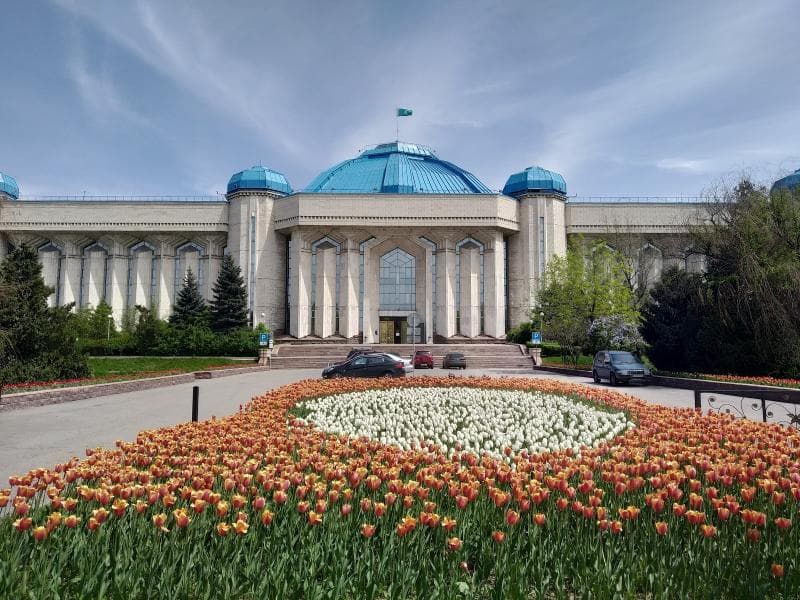
Discover the awe-inspiring Golden Man Exhibit at the Central State Museum Of Kazakhstan in Almaty, showcasing a glittering Saka warrior's reconstruction and ancient history.
Overview
Deep within the heart of Almaty, Kazakhstan, the Central State Museum offers a captivating journey through the nation's rich history and culture. Among its most treasured displays is the magnificent 'Golden Man Exhibit', a stunning reconstruction that vividly brings to life an ancient warrior's opulent burial attire. While the original artifacts are carefully preserved and showcased in the National Museum in Astana, it is here in Almaty that visitors can witness a remarkable recreation of this iconic figure, allowing for an immersive experience into Kazakhstan's profound past. This exhibit serves as a powerful symbol of national identity and offers a unique window into the sophisticated nomadic civilizations that once thrived on the Kazakh steppe.
The Central State Museum itself is one of the largest and oldest museums in Central Asia, established in 1931 and housed in a distinctive modern building since 1985. Its extensive collection, spanning from the Paleolithic era to the present day, provides a comprehensive overview of Kazakhstan's archaeological, ethnographic, and cultural heritage, with the 'Golden Man' standing as a centerpiece of its archaeological treasures.
History & Cultural Background
The story of the Golden Man began in 1969, with a groundbreaking archaeological discovery at the Issyk burial mound (kurgan), approximately 50 kilometers east of Almaty. Archaeologists unearthed the remains of a young individual, estimated to be between 16 and 18 years old, dating back to the 4th or 5th century BC. This individual, a member of the ancient Saka tribal confederation, was found interred in an extraordinary suit of armor made almost entirely of gold. The sheer opulence of the burial led to the immediate moniker, 'Golden Man' (Altyn Adam).
The discovery was pivotal, challenging previous assumptions about the nomadic peoples of the Central Asian steppes. It revealed a highly developed society with complex social structures, advanced metallurgical skills, and a rich spiritual world. Alongside the golden attire, a silver bowl bearing an unidentified inscription was also found, suggesting the Saka possessed their own system of writing, further highlighting their sophistication.
What Makes It Special
What truly sets the Golden Man apart is the unparalleled artistry and sheer volume of gold that adorned the individual. The suit comprises over 4,000 meticulously crafted gold pieces, many of which were small plates pressed or stamped with intricate designs and sewn onto leather garments. The most striking element is the towering, conical headdress, standing approximately 70 centimeters tall, adorned with elaborate motifs of winged horses, trees of life, mythical mountains, and various animals.
The artistic style, known as the 'Animal Style', features exquisitely rendered images of leopards, mountain goats, and eagles, reflecting the nomadic worldview and their deep connection to nature. This elaborate regalia is not merely decorative; it speaks volumes about the status, beliefs, and artistic prowess of the Saka people. Witnessing the reconstruction of this ancient figure provides a tangible link to a powerful and refined civilization that once dominated the vast Eurasian steppes.
Stories, Fun Facts & Local Details
The Golden Man quickly transcended its archaeological origins to become a powerful national symbol for independent Kazakhstan. Referred to as 'Altyn Adam' in Kazakh, it embodies the spirit of ancient chivalry, sovereignty, and the rich cultural heritage of the Kazakh people. Its image is ubiquitous, appearing on national emblems, banknotes, and even inspiring the statue atop the Independence Monument in Almaty.
A point of fascination and scholarly debate has been the gender of the individual. While commonly referred to as the 'Golden Man', initial uncertainty existed, with some suggesting it could have been a prince or a princess, emphasizing that its gender remains unidentified. Regardless, the figure is revered as Kazakhstan's 'Cultural Ambassador', traveling internationally in various exhibitions to share the country's rich civilizational history with the world.
Visitor Perspective
Visiting the Central State Museum in Almaty to see the Golden Man Exhibit is an inspiring experience for any curious traveler. The museum's grand building, with its distinctive blue central dome, provides a fitting setting for such a monumental artifact, echoing traditional Kazakh yurt architecture. Upon entering the hall dedicated to archaeology, visitors are often struck by the sheer presence of the Golden Man's reconstruction. The thousands of golden ornaments shimmer under the lights, offering a visceral sense of the original's splendor.
Beyond the Golden Man, the surrounding exhibits provide crucial context, displaying other artifacts from the Saka period and further elucidating the life and times of these ancient nomads. The museum offers a comprehensive narrative of Kazakhstan's past, from its prehistoric roots to its modern-day identity, making the Golden Man Exhibit a powerful gateway to understanding the nation's enduring legacy. It’s an essential stop for anyone seeking to connect with the deep historical and cultural currents of Central Asia.
Coordinates: 76.95083, 43.23583
View on Google Maps💬 How Travelers Describe This Place
Based on community votes
Beautiful
876Interesting
875Photogenic
718Unique
648Must See
235
Traveler Stories
Discover memorable experiences shared by travelers who have visited this place.
No traveler stories yet.
Be the first traveler to share what made this place memorable.

Tour
By
Spot
Discover amazing places around the world. Your journey starts here.
Explore
© 2026 TourBySpot. All rights reserved.