Ancient Artifacts
Almaty, Kazakhstan
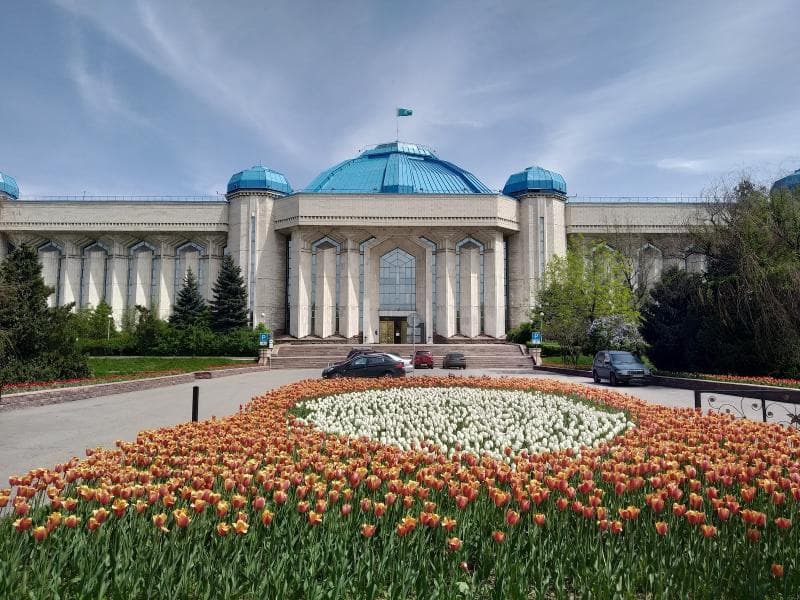
Uncover Kazakhstan's ancient past at the Central State Museum, Almaty. Explore the 'Ancient Artifacts' collection, featuring the 'Golden Man' and Scythian gold.
Overview
The Central State Museum Of Kazakhstan in Almaty is a treasure trove for anyone eager to explore the ancient past of this fascinating region. Housing one of Central Asia's most extensive collections, the museum's 'Ancient Artifacts' sections provide a profound journey through millennia of history, from prehistoric times to the early medieval period. Visitors can delve into the rich archaeological heritage of Kazakhstan, witnessing the enduring legacies of ancient cultures and nomadic civilizations that once thrived across the vast Eurasian steppe.
These significant collections are primarily showcased in Hall 1, dedicated to Paleontology and Archaeology, and the revered 'Hall of Gold,' which highlights spectacular gold adornments. The exhibits collectively feature over 300,000 artifacts, offering a comprehensive look at the region's historical and cultural evolution.
History & Cultural Background
The Central State Museum Of Kazakhstan traces its origins back to the 19th century, with its predecessor, the Orenburg Regional Museum Collection, established in the 1830s. The institution, formally founded in 1931, moved into its current distinctive modern building in Almaty in 1985.
The museum's ancient artifact collection is a testament to generations of archaeological endeavors across Kazakhstan. Decades of research and numerous excavations have unearthed a wealth of materials that illuminate the country's ancient and medieval history. These efforts have preserved invaluable insights into the lives, beliefs, and artistic achievements of early inhabitants, providing crucial context for understanding Kazakhstan's deep-rooted cultural identity.
What Makes It Special
The 'Ancient Artifacts' exhibition stands out for its extraordinary diversity and the sheer historical depth it covers. One of the most iconic displays is the replica of the 'Golden Man,' a national symbol of Kazakhstan. This meticulously recreated golden armor belonged to a Scythian warrior from the 3rd or 4th century BC, whose remains were discovered in 1969. The intricate gold work reflects the sophisticated craftsmanship of ancient steppe nomads.
Beyond the 'Golden Man,' the museum boasts an impressive 'Hall of Gold' featuring a dazzling array of gold adornments primarily from Scythian burials dating between the 6th and 3rd centuries BC. This collection also includes gold artifacts from other early nomadic tribes such as the Saks, Savromats, and Usuns.
The Paleontology and Archaeology hall presents a fascinating collection of fossils, ancient tree fragments, and remains stretching back millions of years. This includes unique osteological materials, imprints of insects and fish, and microscopic endospores and plant pollen, all excavated from over 300 sites across Kazakhstan. Additionally, visitors can observe balbals, which are totem-like stones with carved faces of revered warriors or chieftains, placed at sacred sites by early nomadic Turks.
Stories, Fun Facts & Local Details
The discovery of the 'Golden Man' was a monumental archaeological event that captured the imagination of the nation. The warrior's gold-clad remains, found in 1969, provided tangible evidence of the rich and complex cultures that flourished on the Kazakh steppes millennia ago, challenging previous perceptions of nomadic societies. The detailed restoration of this figure, led by specialists like K. Altynbekov, showcased incredible dedication to preserving history.
Many artifacts in the 'Ancient Artifacts' section offer glimpses into the daily lives and grand rituals of ancient communities. For instance, the exhibits include horse bridles, battle axes, helmets, and household items belonging to various ancient tribes. The Silk Road artifacts also highlight Kazakhstan's historical role as a crucial crossroads of trade and cultural exchange, linking East and West through millennia.
The sheer scale of paleontological finds, from petrified trees to ancient microspores, tells the story of an evolving landscape and ecosystem long before human civilizations emerged, providing a deeper connection to the very origins of life in the region.
Visitor Perspective
Exploring the 'Ancient Artifacts' section of the Central State Museum Of Kazakhstan is like stepping into a time machine, offering a profound sense of connection to the past. The museum is well-structured, with clear signage in Kazakh, Russian, and often English, making it accessible for international visitors. For a more enriched experience, guided tours are available, and some displays even feature QR codes for additional explanations, allowing curious travelers to dive deeper into specific exhibits at their own pace.
While the main archaeological hall offers a broad overview, the dedicated 'Hall of Gold' provides a more focused and awe-inspiring experience, though it may sometimes require a separate ticket. The thoughtful arrangement of artifacts, from the intricate gold pieces to the reconstructed ancient structures, provides an immersive educational experience. It truly allows one to appreciate the intricate history and cultural tapestry that forms the foundation of modern Kazakhstan.
Coordinates: 76.95083, 43.23583
View on Google Maps💬 How Travelers Describe This Place
Based on community votes
Unique
551Beautiful
547Must See
336Interesting
298Photogenic
212
Traveler Stories
Discover memorable experiences shared by travelers who have visited this place.
No traveler stories yet.
Be the first traveler to share what made this place memorable.

Tour
By
Spot
Discover amazing places around the world. Your journey starts here.
Explore
© 2026 TourBySpot. All rights reserved.