Archaeology Hall
Almaty, Kazakhstan
Explore the Archaeology Hall at the Central State Museum of Kazakhstan in Almaty, featuring the Golden Man, ancient gold artifacts, and prehistoric finds.
Overview
Nestled in Almaty, Kazakhstan, the Central State Museum stands as a paramount cultural institution, being one of Central Asia's largest and oldest museums. Within its grand structure lies the Archaeology Hall, a captivating space that unveils the ancient history of this vast land. This hall, often considered the first main exhibition, alongside the 'Archaeological Gold of Kazakhstan' exhibit (Hall 5), transports visitors on a profound journey through time, from the earliest paleontological records to the rich tapestry of ancient civilizations that once thrived here.
The museum itself safeguards an impressive collection of over 300,000 artifacts, offering a comprehensive look at Kazakhstan's heritage. The Archaeology Hall specifically is dedicated to showcasing archaeological findings that illustrate human activity and the natural history of the region across millennia, providing a foundational understanding of Kazakhstan's past.
History & Cultural Background
The Central State Museum's roots trace back to the 19th century, with its predecessor being the Orenburg Regional Museum Collection. It was officially established in 1931, initially housed within the historic Almaty Cathedral, before moving to its distinctive modern building in 1985. The museum's archaeological collection is a direct result of extensive excavations conducted throughout Kazakhstan, documenting periods from the Stone and Bronze Ages through to the Middle Ages.
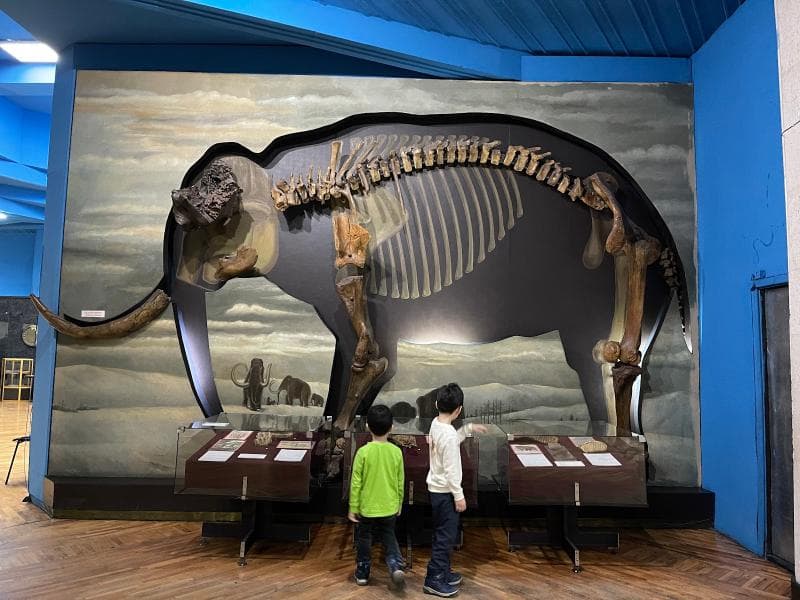
Exhibits in the Archaeology Hall begin with paleontological treasures, including unique osteological materials, fragments of petrified trees, and fossilized imprints of insects and fish, some dating back millions of years. Moving forward in time, the hall features fascinating archaeological displays, showcasing ancient constructions used for funerals, household items, and models of medieval architecture, tracing the evolution of human civilization in the region from the Paleolithic era.
What Makes It Special
The Archaeology Hall is particularly renowned for its breathtaking presentation of the 'Golden Man' replica. This meticulously reconstructed gold armor of a Scythian (Saka) warrior, discovered in the Issyk kurgan, is not merely an exhibit but a powerful national symbol of Kazakhstan's ancient heritage. The original artifacts from this legendary burial site are also displayed nearby, offering an authentic glimpse into the wealth and craftsmanship of early nomadic cultures.
Another highlight is the 'Archaeological Gold of Kazakhstan' exhibit, often housed in a separate section (Hall 5 or an 'Open Fund'). This exhibit features original gold items from early nomadic peoples—Saks, Savromats, and Usuns—unearthed from significant kurgans such as Chilikty, Tarasu, and Kargalinskiy. These treasures, dating from the 7th-6th centuries BCE to the 1st-2nd centuries CE, illuminate the sophisticated artistry and rich burial traditions of ancient Central Asia. The hall also includes intricate dioramas that bring ancient landscapes and daily life to vivid reality, and its multilingual displays ensure accessibility for visitors from around the globe.
Stories, Fun Facts & Local Details
The discovery of the 'Golden Man' in 1969 near Issyk was a pivotal moment in Kazakh archaeology. The remains, believed to be those of a young man, were found adorned with over four kilograms of intricate gold ornaments, demonstrating the advanced metallurgical skills and societal hierarchies of the Saka people. Intriguingly, the Issyk kurgan also yielded a silver bowl inscribed with mysterious runes, adding another layer of enigma to this significant find.
Beyond its contents, the museum building itself holds cultural significance. Completed in 1985, its striking white walls and blue domes are a modern architectural interpretation that subtly references traditional Kazakh and Central Asian design, including the circular geometry of the nomadic yurt. This architectural nod connects the museum to the very nomadic heritage it seeks to preserve and interpret.
Visitor Perspective
For any curious traveler, the Archaeology Hall offers an essential starting point for understanding Kazakhstan's deep historical roots. Visitors can expect a 'walk-through' museum experience, rich in visual information, though less focused on interactive digital displays. Exploring the hall's diverse collections, from ancient fossils to the resplendent 'Golden Man', provides invaluable historical context that enhances the appreciation of Kazakhstan's ancient sites and vibrant culture.
While a focused visit to the archaeological highlights, including the 'Golden Man' and the Saka gold collections, can be completed in about two hours, those wishing to delve deeper into the full scope of archaeological and paleontological exhibits, alongside the museum's other halls, might comfortably spend four to five hours absorbing the vast array of knowledge and cultural richness on display.
Coordinates: 76.95083, 43.23583
View on Google Maps💬 How Travelers Describe This Place
Based on community votes
Unique
982Photogenic
876Must See
458Interesting
235Beautiful
197
Traveler Stories
Discover memorable experiences shared by travelers who have visited this place.
No traveler stories yet.
Be the first traveler to share what made this place memorable.

Tour
By
Spot
Discover amazing places around the world. Your journey starts here.
Explore
© 2026 TourBySpot. All rights reserved.